
Dental Sealants
Dental sealants cover the grooves of back teeth with a protective coating that helps prevent decay where brushing misses.
[1]The short answer
Dental sealants are protective coatings placed in the grooves of back teeth. They create a barrier that helps keep food and decay-causing bacteria away from areas a toothbrush may not reach.
[1]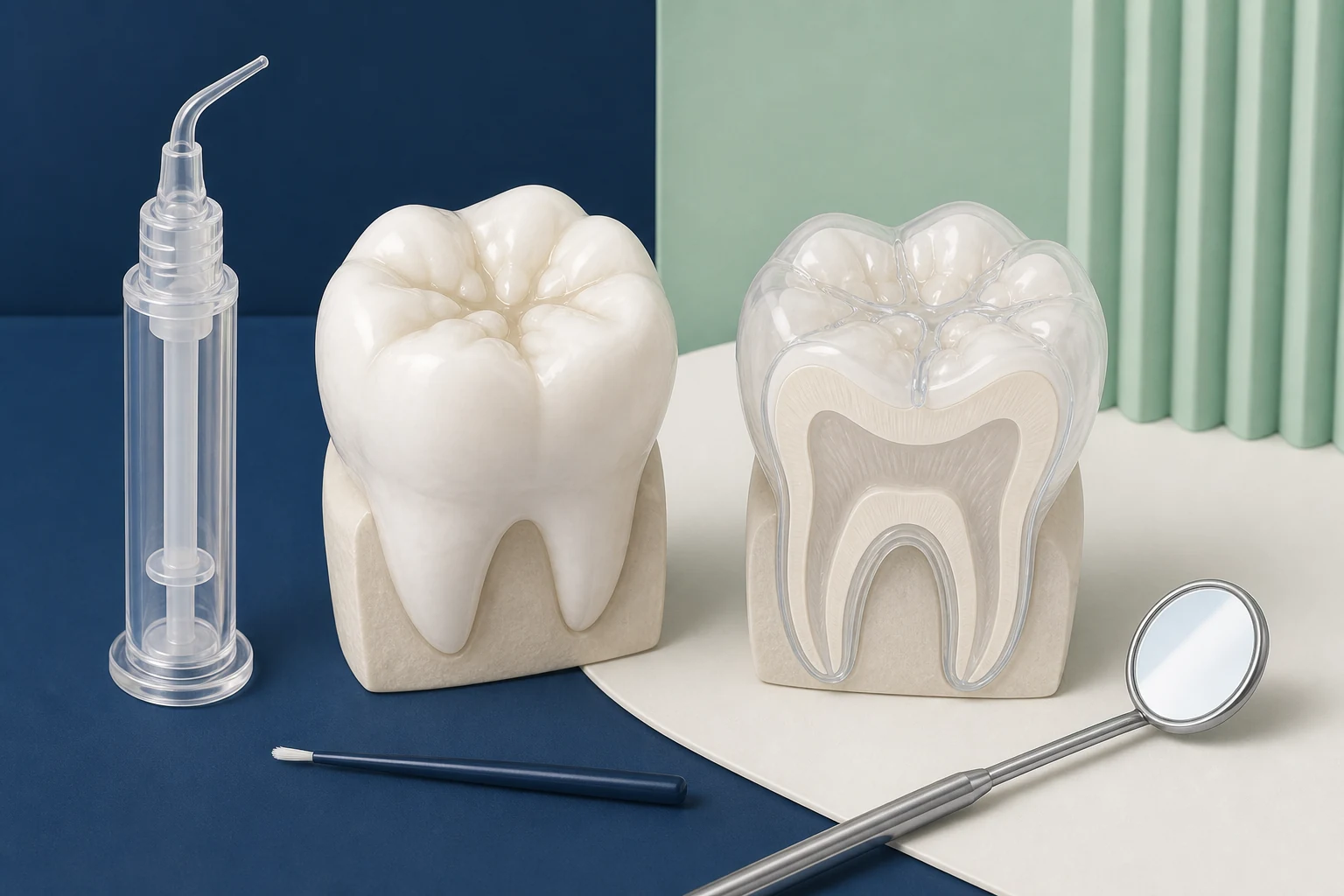
What the change looks like
What is it?
Who needs it?
Does it hurt?
Is it safe?
Dental sealants are used as a preventive coating on chewing surfaces. The safety concern addressed by the material includes the composition of sealant materials and their use in preventing caries.
[1]How long does it last?
What happens during the visit?
What is recovery like?
What are the alternatives?
Fluoride is another preventive approach, while a filling is used when tooth decay requires restorative treatment. Sealants specifically protect pits and fissures before decay makes a restoration necessary.
[1]What should I expect?
Is it covered by insurance in the UAE?
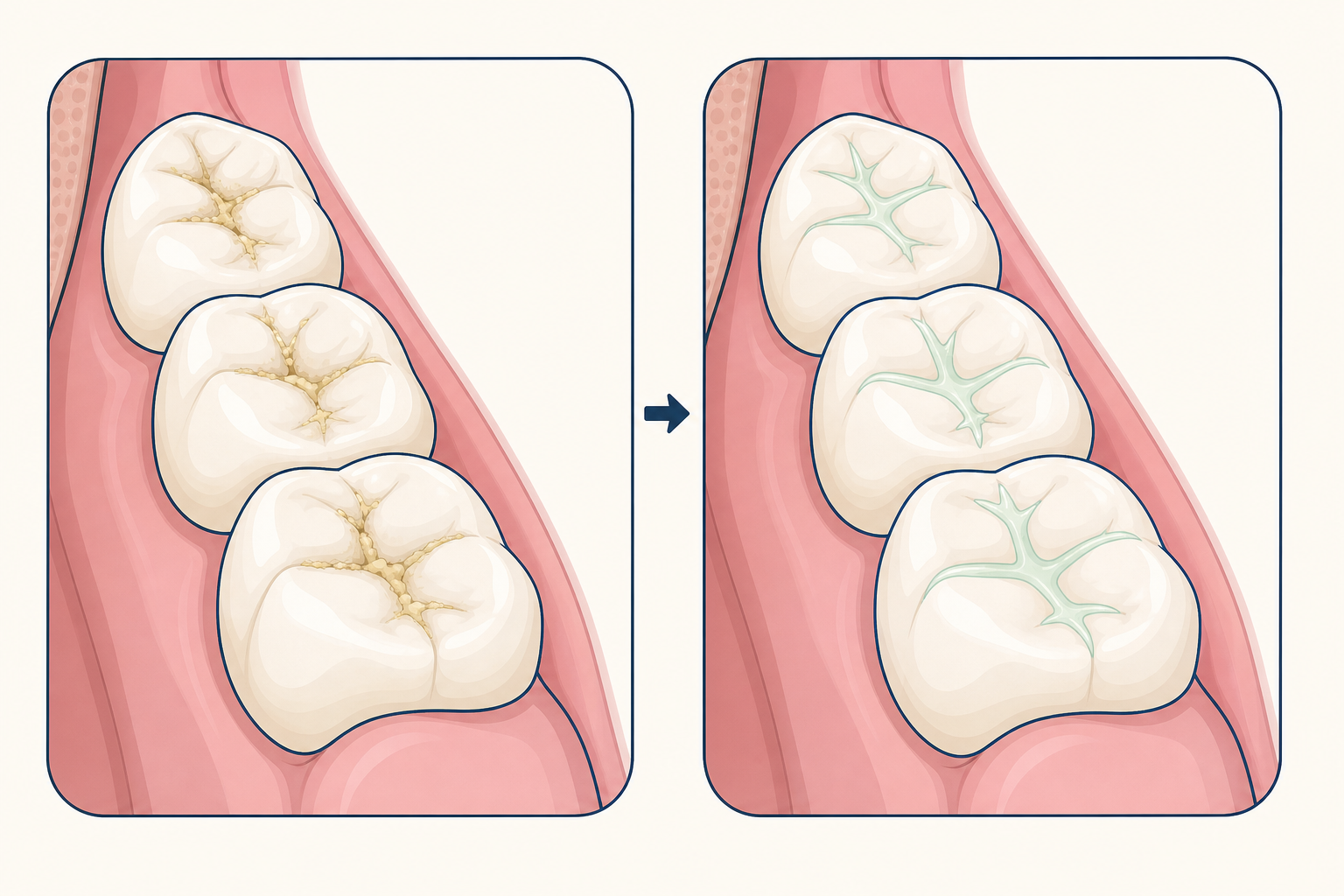
Sealants form a physical barrier in the pits and fissures of chewing surfaces, where food and bacterial biofilm can collect.
[1]Frequently asked questions
Who wrote this page
This library is published by Dental Nation, a licensed dental group practising in the United Arab Emirates. Pages are written and overseen by the same clinical team that treats patients in our clinics, and are held to a fixed editorial standard for safety and accuracy.
This page is patient education, not medical advice, and cannot replace an examination. Anything urgent — facial swelling, trauma, uncontrolled bleeding or severe pain — needs a dentist or emergency care now.