
Sealants for kids teeth
Dental sealants are thin resin coatings placed in deep chewing grooves to help protect a child’s back teeth from plaque and decay.
The short answer
Dental sealants are thin resin coatings placed in deep chewing grooves to help protect a child’s back teeth from plaque and decay. They are painted onto cleaned enamel and hardened with a dental curing light.
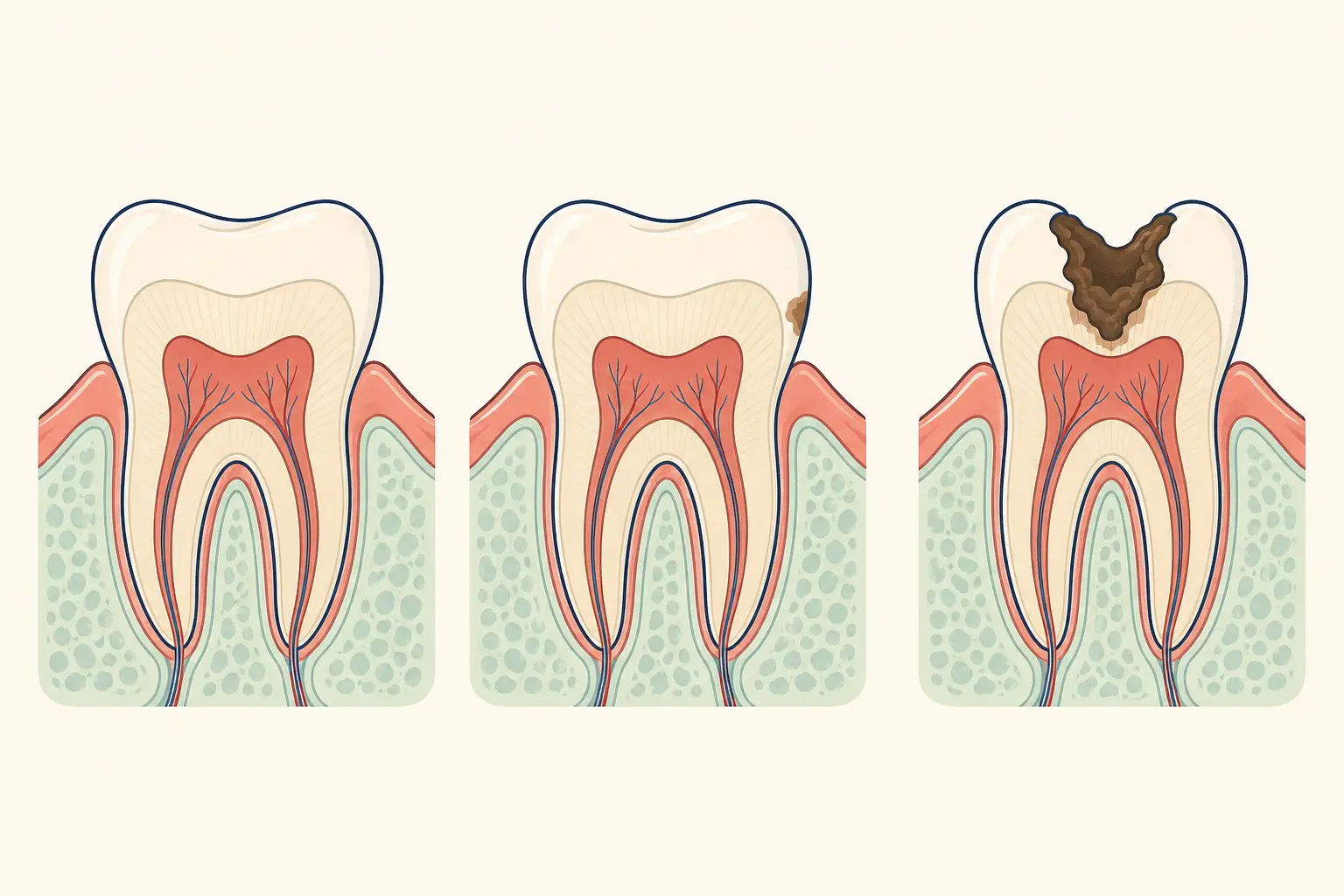
Which parts of a child’s molars do sealants cover?
A sealant covers pits and fissures on the chewing surfaces of molars, where toothbrush bristles may not reach well. It does not replace fluoride toothpaste, brushing, flossing, or treatment of decay that is already present.
What happens when a dentist places a sealant?
The dentist dries and cleans the tooth, checks that the enamel is suitable, applies the resin, and cures it before checking the bite. Keep brushing twice daily with fluoride toothpaste and have the sealant inspected at routine visits.
When should a child have a sealant checked?
Book an examination if a child has pain, a visible hole, food trapping, sensitivity, or a sealant that feels sharp or has partly come away. The dentist can check for decay beneath or beside the coating.
Is this tooth ready for a sealant and which material fits?
Ask whether the tooth is fully erupted, whether the grooves are sound, and which material will be used. Ask how the sealant will be monitored and what to do if an edge chips.
Frequently asked questions
Does placing a sealant hurt?
The procedure does not require drilling healthy enamel; the tooth is cleaned, conditioned, coated, and cured.
Can children still get cavities after sealants?
Yes. Sealants protect covered grooves, while decay can develop on uncovered surfaces or where plaque remains.
Keep reading
Who wrote this page
This library is published by Dental Nation, a licensed dental group practising in the United Arab Emirates. Pages are written and overseen by the same clinical team that treats patients in our clinics, and are held to a fixed editorial standard for safety and accuracy.
This page is patient education, not medical advice, and cannot replace an examination. Anything urgent — facial swelling, trauma, uncontrolled bleeding or severe pain — needs a dentist or emergency care now.