
How do you clean veneers?
Daily brushing with fluoride toothpaste and interdental cleaning protect the natural tooth structure beneath and beside each veneer.
[4]The short answer
Two daily brushings with fluoride toothpaste, together with interdental cleaning every day, form the basis of veneer care The tooth structure adjacent to each restoration remains susceptible to decay and gum inflammation, making professional recall visits essential
[4]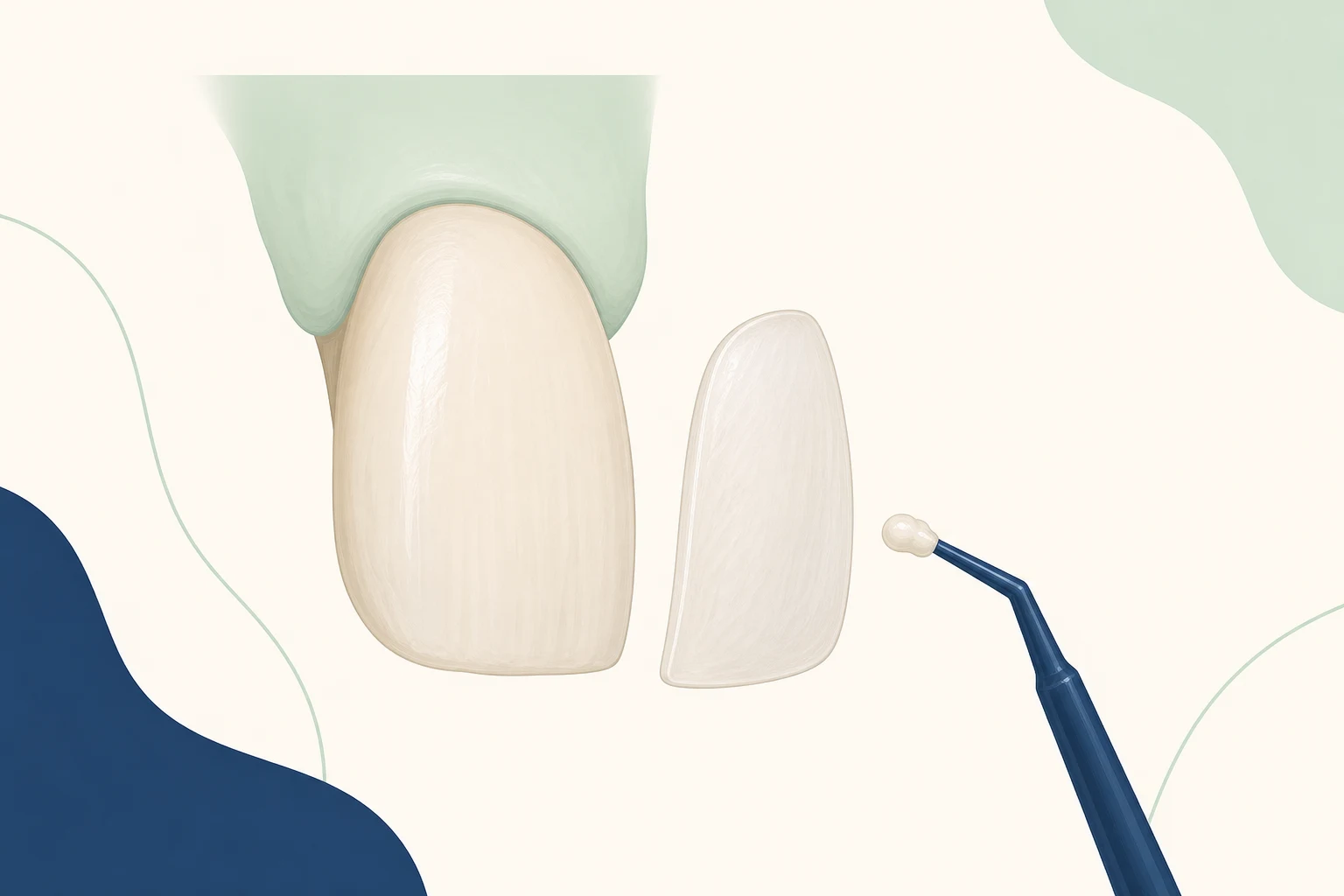
Daily brushing and interdental cleaning for veneered teeth
| Answer part | What the research shows |
|---|---|
| Direct answer | Two daily brushings with fluoride toothpaste, together with interdental cleaning every day, form the basis of veneer care.[4] |
| What changes it | Veneers bond to the labial face of the tooth and leave a junction where plaque accumulates between the restoration edge and the gum.[4] |
Technique and tool selection at the veneer margin
Veneers bond to the labial face of the tooth and leave a junction where plaque accumulates between the restoration edge and the gum Floss, interdental brushes, or water flossers can clear that junction without mechanical force that risks stressing the bond A soft-bristled toothbrush and low-abrasion fluoride paste avoid micro-scratching the bonded surface during routine cleaning Clenching and grinding habits increase mechanical load on the veneer and on the marginal seal; the dentist may advise an occlusal guard to reduce overnight force on the restoration
[4]Disease risk beneath and beside the restoration
The enamel and dentine immediately adjacent to the veneer border can demineralise if plaque persists at that site Active decay or gum infection at the margin requires treatment in its own right and cannot be masked by the cosmetic covering A professional recall allows the clinician to probe the sulcus around each veneer, check for marginal staining that may indicate leakage, and assess gum health in areas the patient may find difficult to clean at home
[4][6]| Stage | Source-backed step |
|---|---|
| When to get help | The enamel and dentine immediately adjacent to the veneer border can demineralise if plaque persists at that site.[4][6] |
| Decision step | A bonded facing can fracture, debond, or develop a marginal gap that is not visible to the patient.[4][6][7][8] |
Symptoms at a veneer that need clinical assessment
A bonded facing can fracture, debond, or develop a marginal gap that is not visible to the patient Persistent food trapping at one veneer site, gum bleeding confined to the veneer border, or new temperature sensitivity at the restored tooth are reasons to contact the dental team before the next scheduled visit When pain intensifies quickly, swelling extends beyond the immediate area, or fever accompanies dental symptoms, use the clinic's urgent contact
[4][6][7][8]Frequently asked questions
Can an electric toothbrush be used on veneers,?
Electric toothbrushes are compatible with veneered teeth when used with a soft or extra-soft head and a low-abrasion fluoride paste Setting the pressure indicator light as a guide prevents excessive force at the marginal junction The treating dentist can advise on the brush mode and contact pressure best suited to the restoration material
[4]How do I know if plaque is building up at the veneer margin,?
A disclosing tablet or solution stains retained plaque pink or red, making the margin zone visible after brushing Recurring gum tenderness at the veneer edge, or bleeding when flossing that junction, indicates plaque is not being fully cleared Adjusting interdental technique or tool size, and confirming the approach with the dentist, usually resolves early marginal inflammation
[4]What cleaning habit poses the greatest risk of dislodging a veneer,?
Lateral scrubbing with a hard-bristled brush, biting down on items that stress the bonded edge, or using highly abrasive polishing products creates repeated mechanical force at the margin Veneers are irreversible restorations; enamel is removed during preparation; so avoiding unnecessary stress on the bond prolongs the service life of the restoration
[4]Who wrote this page
This library is published by Dental Nation, a licensed dental group practising in the United Arab Emirates. Pages are written and overseen by the same clinical team that treats patients in our clinics, and are held to a fixed editorial standard for safety and accuracy.
This page is patient education, not medical advice, and cannot replace an examination. Anything urgent — facial swelling, trauma, uncontrolled bleeding or severe pain — needs a dentist or emergency care now.