
How many veneers do I need?
Veneer count is determined case by case: the number depends on which teeth sit inside the visible smile zone, the target shade, facial symmetry.
[1][2]The short answer
Smile-zone span, shade targets, symmetry requirements, existing restorations, and whether alternative treatments could reach the same goal without veneer placement all determine the count; no standard number applies across patients.
[1][2]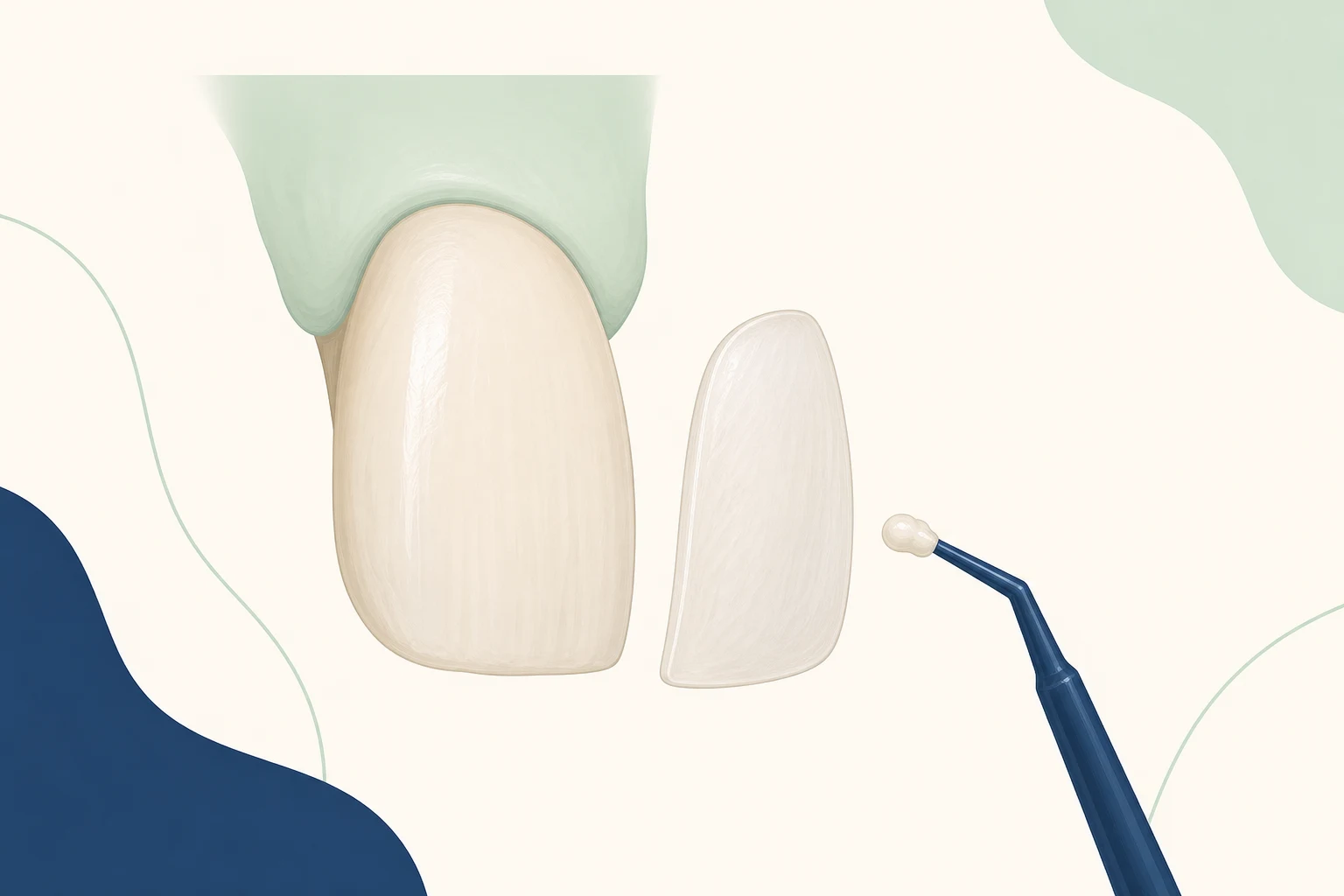
Why veneer count varies between patients
| Answer part | What the research shows |
|---|---|
| Direct answer | Smile-zone span, shade targets, symmetry requirements, existing restorations, and whether alternative treatments could reach the same goal without veneer placement all determine the count; no standard number applies across patients.[1][2] |
| What changes it | Before confirming a veneer count, the clinician assesses enamel thickness, gum health, bite pattern, and the condition of every existing restoration.[1] |
Oral health conditions that must be resolved first
Before confirming a veneer count, the clinician assesses enamel thickness, gum health, bite pattern, and the condition of every existing restoration. Active decay and periodontal infection are treated before any cosmetic payer review is placed, because bonding over untreated tissue shortens the restoration's lifespan and can mask ongoing disease.
[1]Enamel removal is permanent and shapes the count decision
Preparing each tooth for a veneer removes a thin enamel layer that cannot be replaced. Because every tooth included in the count undergoes permanent alteration, limiting payer review to teeth with a genuine clinical reason reduces long-term maintenance. A crown encloses the full tooth surface and is the appropriate restoration when the treated area extends beyond the front face.
[1]| Stage | Source-backed step |
|---|---|
| When to get help | Preparing each tooth for a veneer removes a thin enamel layer that cannot be replaced.[1] |
| Decision step | Veneers can fracture, detach, or loosen during their lifespan, and infection progressing beneath a bonded restoration may not be immediately apparent.[1][3][4][5] |
Post-placement signs that need prompt attention
Veneers can fracture, detach, or loosen during their lifespan, and infection progressing beneath a bonded restoration may not be immediately apparent. Contact the clinic promptly if a placed veneer feels unstable, if pain at the treated site intensifies, or if swelling develops nearby. Fever, spreading facial swelling, or difficulty opening the jaw indicates urgent care.
[1][3][4][5]Frequently asked questions
Does the width of my smile determine how many veneers I need,?
Teeth visible across the smile arc; including lateral incisors and sometimes premolars; are more likely to be included in the planned count. The shade chosen for the veneers must integrate with adjacent natural teeth, so the final number reflects both the visible zone and the colour-matching boundary.
[1][2]Could bleaching or orthodontics reduce the number of veneers I need,?
If the primary concern is colour and the natural teeth are healthy, bleaching may satisfy the goal without placing any veneer. Orthodontic treatment can reposition teeth where spacing or alignment is the clinical issue. The clinician evaluates both alternatives before confirming how many restorations are necessary.
[1][2]Does an existing crown or filling affect the veneer count,?
Existing restorations are part of the shade assessment before the count is confirmed. The clinician examines where each previous restoration sits in the visible zone, because its material and colour affect the target shade and how many teeth need payer review to achieve consistency.
[1]Who wrote this page
This library is published by Dental Nation, a licensed dental group practising in the United Arab Emirates. Pages are written and overseen by the same clinical team that treats patients in our clinics, and are held to a fixed editorial standard for safety and accuracy.
This page is patient education, not medical advice, and cannot replace an examination. Anything urgent — facial swelling, trauma, uncontrolled bleeding or severe pain — needs a dentist or emergency care now.