
Porcelain or composite veneers?
Porcelain and composite veneers are made differently, wear differently, and fail differently; each factor in preparation, repair approach, surface appearance.
[2]The short answer
Porcelain veneers are ceramic shells fabricated in a dental laboratory and bonded to the prepared tooth; composite veneers are built up from tooth-coloured resin applied and sculpted directly on the tooth surface.
[2]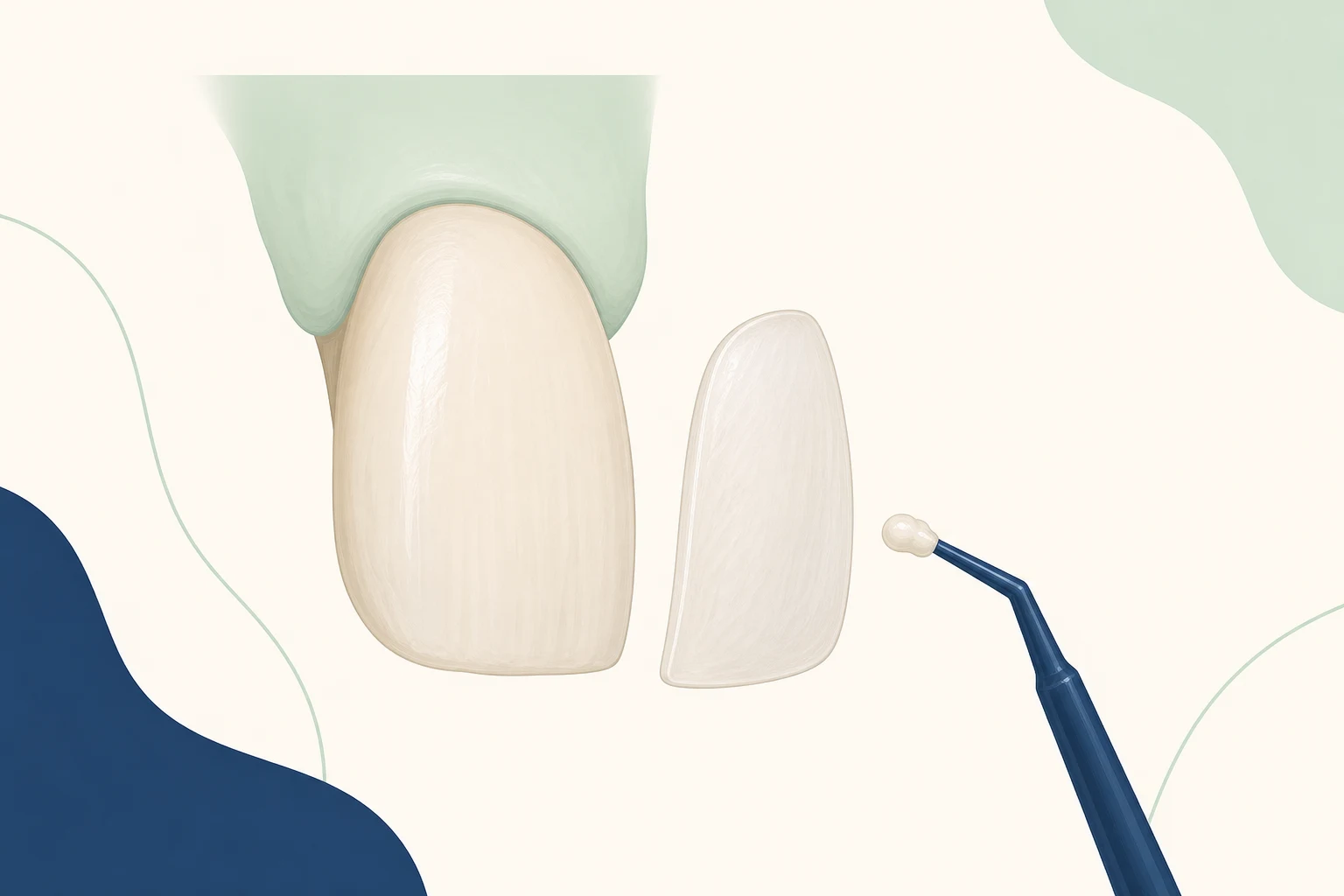
How each material is fabricated and placed
| Answer part | What the research shows |
|---|---|
| Direct answer | Porcelain veneers are ceramic shells fabricated in a dental laboratory and bonded to the prepared tooth; composite veneers are built up from tooth-coloured resin applied and sculpted directly on the tooth surface.[2] |
| What changes it | Preparation extent, how repair works if damage occurs, surface appearance across years of use, wear resistance, and cleaning requirements all contribute to the material decision.[2] |
Clinical factors that guide the material decision
Preparation extent, how repair works if damage occurs, surface appearance across years of use, wear resistance, and cleaning requirements all contribute to the material decision. The clinician also evaluates the specific treatment goal; whether colour correction, reshaping, or gap closure drives the case; and examines bite force, gum health, and any existing restorations before recommending one option.
[2]Conservative options and oral health prerequisites
Active cavities and gum infection are treated before any cosmetic restoration is placed. If colour is the sole concern and the natural teeth are healthy, bleaching is explored first. Tooth-coloured resin bonding may address a small localised chip or defect without preparing the full front face of the tooth.
[2][3]Enamel preparation is permanent and symptoms to act on
Preparing a tooth for any veneer type permanently removes enamel that cannot regrow. Either material can chip or detach, and disease beneath the bonded surface may not be detected without clinical examination. Pain at a treated tooth that worsens, an altered bite, or swelling along the gum margin are reasons to seek prompt dental assessment.
[2][4][5][6]Frequently asked questions
Is one veneer material more resistant to surface discolouration than the other,?
Appearance and wear are both material selection factors. The clinician discusses expected colour behaviour over time for both options, because surface response to diet and cleaning habits differs between porcelain and composite. Maintenance and polishing requirements form part of the long-term plan for the chosen material.
[2]Which veneer type can be repaired more easily if it chips,?
Repair feasibility is one of the factors that distinguishes the two materials. The approach to restoring a damaged area differs between laboratory-fabricated porcelain and chair-side composite, and the clinician explains the repair pathway for each before treatment. Knowing the repair process is part of selecting the right material for the clinical situation.
[2]Does a patient's grinding habit influence the material choice,?
Bite force and wear characteristics are examined before either material is selected. Heavy loading from bruxism affects how both veneer types behave over time, and a protective device may be incorporated into the long-term management plan regardless of which material is placed. The clinician maps the occlusal pattern before committing to a recommendation.
[2]Who wrote this page
This library is published by Dental Nation, a licensed dental group practising in the United Arab Emirates. Pages are written and overseen by the same clinical team that treats patients in our clinics, and are held to a fixed editorial standard for safety and accuracy.
This page is patient education, not medical advice, and cannot replace an examination. Anything urgent — facial swelling, trauma, uncontrolled bleeding or severe pain — needs a dentist or emergency care now.