

Dental Nation
Treatment guide

Ceramic Fillings

A tooth-coloured ceramic restoration repairs a decay-related hole while balancing appearance, strength, wear and bonding.

[1][2]

The short answer

Ceramic fillings are tooth-coloured indirect restorations that repair a hole caused by tooth decay.

[1][2]
Ceramic Fillings dental educational illustration

What the change looks like
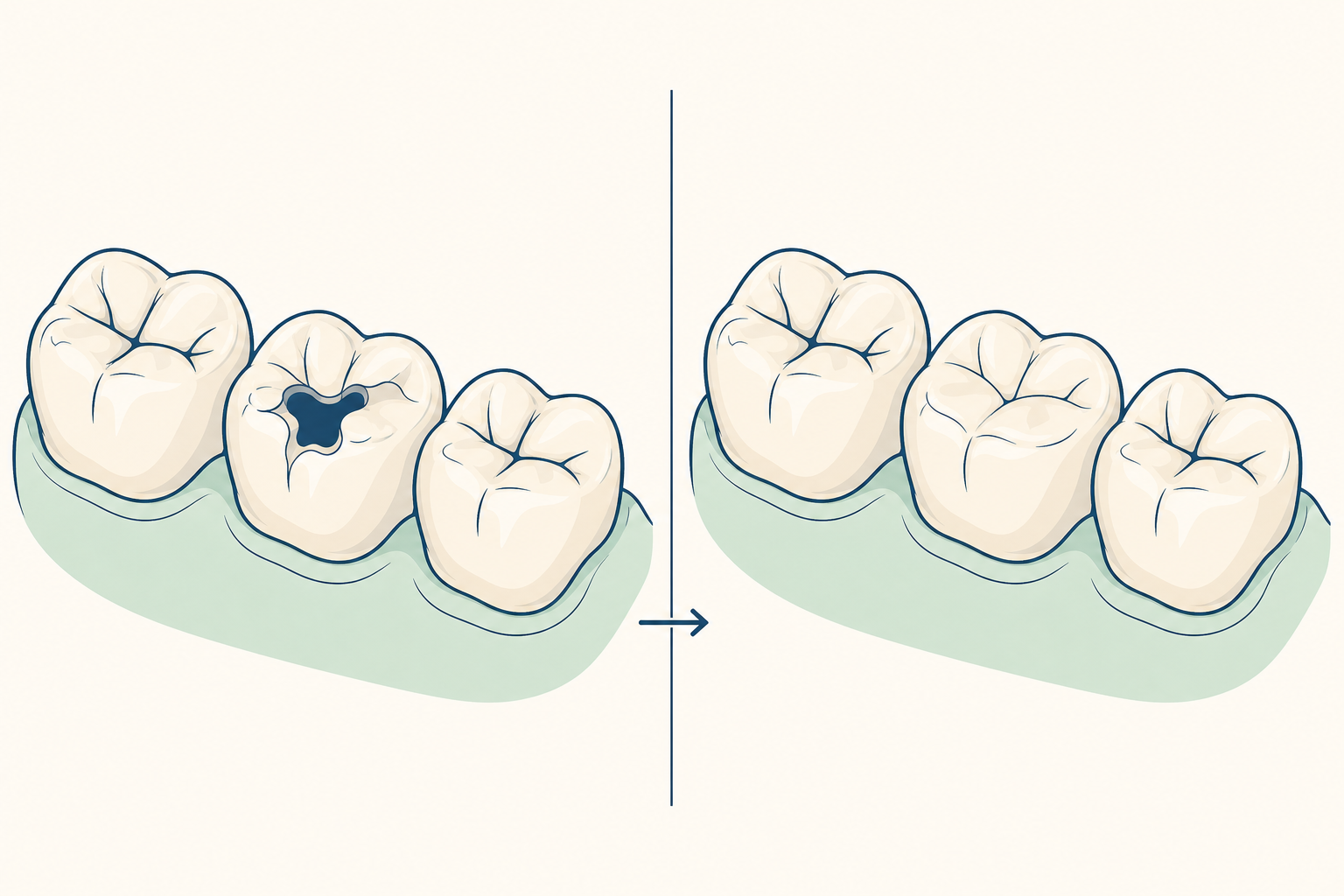
Illustrative diagram: Ceramic Fillings
Illustration — a representative diagram, not a patient photo.
The DN First Look799 AED
Book The DN First Look

What are ceramic fillings?

Ceramics are one of the material categories used for indirect restorations. Their tooth-coloured appearance, chemical inertness and wear resistance are among the reasons they are used in restorative dentistry.

[1]
Features of ceramic indirect restorations
FeatureWhat it means
AppearanceCeramic materials are used for tooth-coloured restorations.[1]
Material propertiesCeramics have chemical inertness and wear resistance, but their hardness and brittleness also matter.[1]

[1]

Who may consider a ceramic filling?

A filling is used when decay has created a hole in a tooth. Ceramic can be considered where a tooth-coloured indirect restoration is wanted, because indirect materials differ in strength, durability, appearance and cost.

[1][2]

Does it hurt?

The placement detail supported here is that an indirect restoration may be conventionally cemented or adhesively bonded to the tooth. The method is linked to the material properties and clinical situation.

[1]

Is it safe?

Ceramics can fracture without warning when they are flexed excessively. Their hardness can also wear the opposing teeth, so material choice needs to match the restoration's intended clinical function.

[1]

How long does it last?

Ceramics have wear resistance, yet excessive flexing can cause a fracture and their hardness can damage opposing teeth through wear. Those material limits affect longevity alongside the restoration's intended use.

[1]

How is a ceramic filling fitted?

Ceramic fillings are indirect restorations, so the completed restoration is fitted to the tooth rather than formed there. It may be secured with conventional cement or through adhesive bonding.

[1]

What happens after a ceramic filling is fitted?

The restoration remains fixed to the tooth through either conventional cementation or adhesive bonding. Water-based and resin-based cements are available for indirect restorations.

[1]
Ways an indirect restoration can be fixed to a tooth
MethodSupported detail
Conventional cementationSome indirect restorations are conventionally cemented.[1]
Adhesive bondingSome indirect restorations require adhesive bonding, depending on material properties and the clinical situation.[1]

[1]

What are the alternatives to ceramic fillings?

Indirect restorations can be made from noble metal alloys, base metal alloys, ceramics, resin-based composites or metal-ceramics. Lithium silicate and zirconia-reinforced lithium silicate are ceramic alternatives with similar properties and indications.

[1][2]

What should you expect from the material choice?

Indirect restorative materials present different combinations of strength, durability, cosmetic appearance and cost. Ceramic standards classify materials by intended clinical use and set minimum mechanical-strength and chemical-solubility requirements for each class.

[1][2]

What affects the cost of a ceramic filling?

The material itself is one cost consideration: indirect restorations vary in strength, durability and cosmetic qualities as well as cost. Conventional cementation and adhesive bonding are also different ways an indirect restoration may be fitted.

[1][2]

Frequently asked questions

Can a ceramic filling repair tooth decay?

A filling repairs the hole in a tooth that decay has caused, and ceramic is a tooth-coloured indirect restorative material.

[1][2]
Why can ceramic affect the tooth opposite it?

Ceramic hardness can cause wear damage to opposing teeth.

[1]
Are ceramic fillings cemented or bonded?

Indirect restorations can be conventionally cemented or may require adhesive bonding.

[1]