
Composite or ceramic fillings
Direct composite repairs a tooth in place, while ceramic restoration uses an indirect, tooth-coloured material with wear and fracture trade-offs.
[1][2][3][4]The short answer
Composite fillings are placed directly on tooth structure, while ceramic restorations are made indirectly and bring different wear and fracture considerations.
[1][2][3][4]
The two options, side by side
Which option does what?
| Decision point | Composite filling | Ceramic restoration |
|---|---|---|
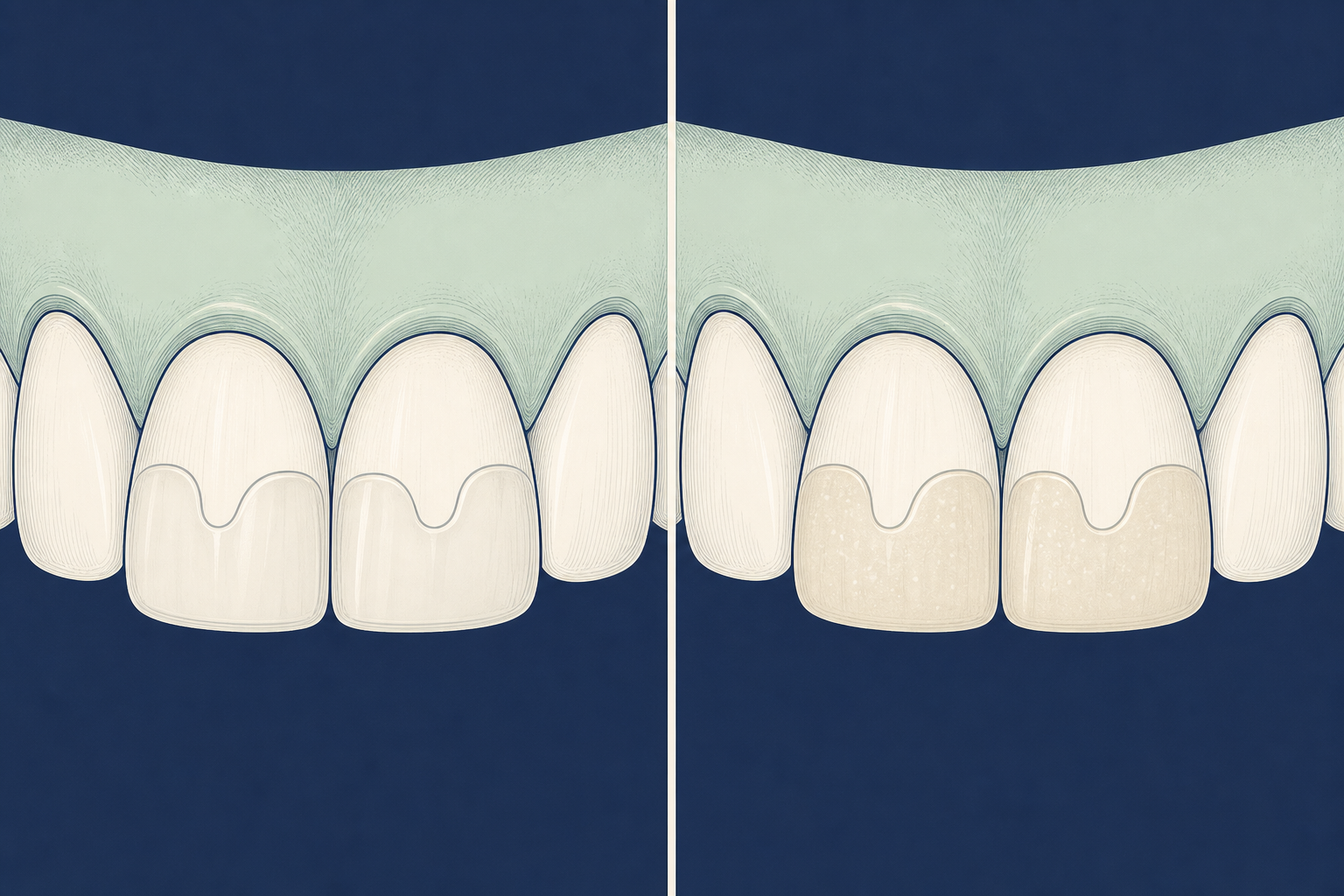
| Placement | Placed directly onto tooth structure | Prepared as an indirect restoration[1][2][3][4] |
| Material focus | A tooth-coloured filling material | A tooth-coloured material valued for chemical inertness and wear resistance[1][2][3][4] |
Choose composite when direct placement fits
Choose ceramic when an indirect restoration fits
What changes the cost?
How long do they last?
What can go wrong?
When is neither enough?
What should guide the choice?
Frequently asked questions
Who wrote this page
This library is published by Dental Nation, a licensed dental group practising in the United Arab Emirates. Pages are written and overseen by the same clinical team that treats patients in our clinics, and are held to a fixed editorial standard for safety and accuracy.
This page is patient education, not medical advice, and cannot replace an examination. Anything urgent — facial swelling, trauma, uncontrolled bleeding or severe pain — needs a dentist or emergency care now.