
Silver vs white fillings
Composite fillings match tooth colour and can cost more than amalgam; some people should avoid amalgam because of mercury-related risk factors.
[1][2]The short answer
Composite resin is a tooth-coloured filling that can be used on front or back teeth. It provides durability and fracture resistance in small to mid-size fillings under moderate chewing pressure. Amalgam is a metal filling whose mercury-related precautions matter for some patients.
[1][2]
The two options, side by side
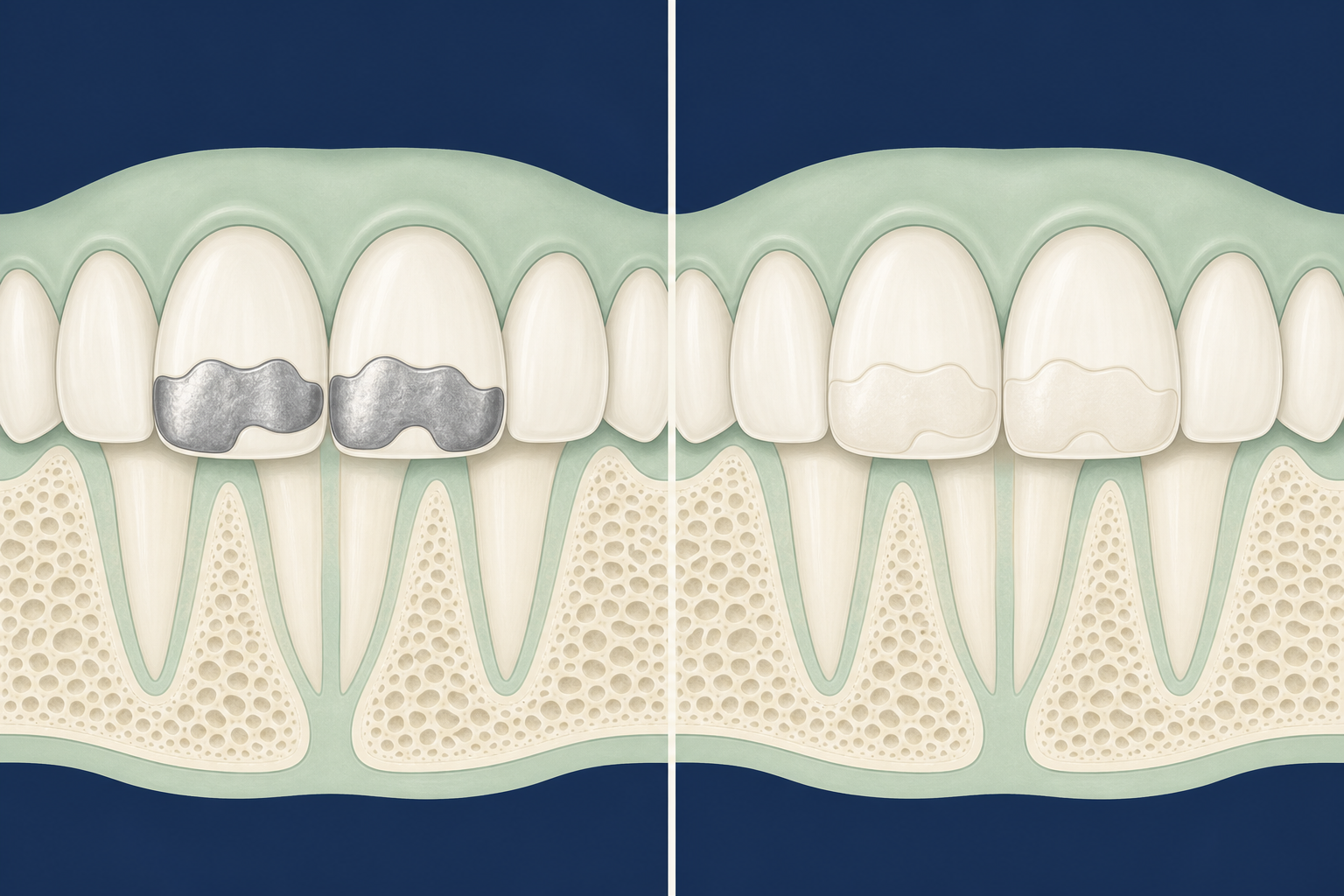
What is the practical difference?
Choose composite when appearance matters
Consider amalgam with its material precautions in view
People with allergy or heightened sensitivity to mercury, silver, copper, or tin should not receive amalgam. People who are pregnant, planning pregnancy, nursing, younger children, and people with neurological disease or impaired kidney function are among groups encouraged to use non-amalgam restorations where appropriate.
[1][2]Which filling can cost more?
How durable are the materials?
What risks and limitations matter?
When is prevention the better option?
What should guide the material choice?
Frequently asked questions
Who wrote this page
This library is published by Dental Nation, a licensed dental group practising in the United Arab Emirates. Pages are written and overseen by the same clinical team that treats patients in our clinics, and are held to a fixed editorial standard for safety and accuracy.
This page is patient education, not medical advice, and cannot replace an examination. Anything urgent — facial swelling, trauma, uncontrolled bleeding or severe pain — needs a dentist or emergency care now.