
Are veneers safe?
Traditional veneer placement removes enamel permanently; candidates need oral health and bite assessed first.
[1]The short answer
Veneers can be placed safely on appropriate teeth, but the procedure is not reversible and carries risks that include tooth sensitivity, restoration fracture, bond failure, margin decay and eventual replacement. Oral health status and the bite need assessment first.
[1]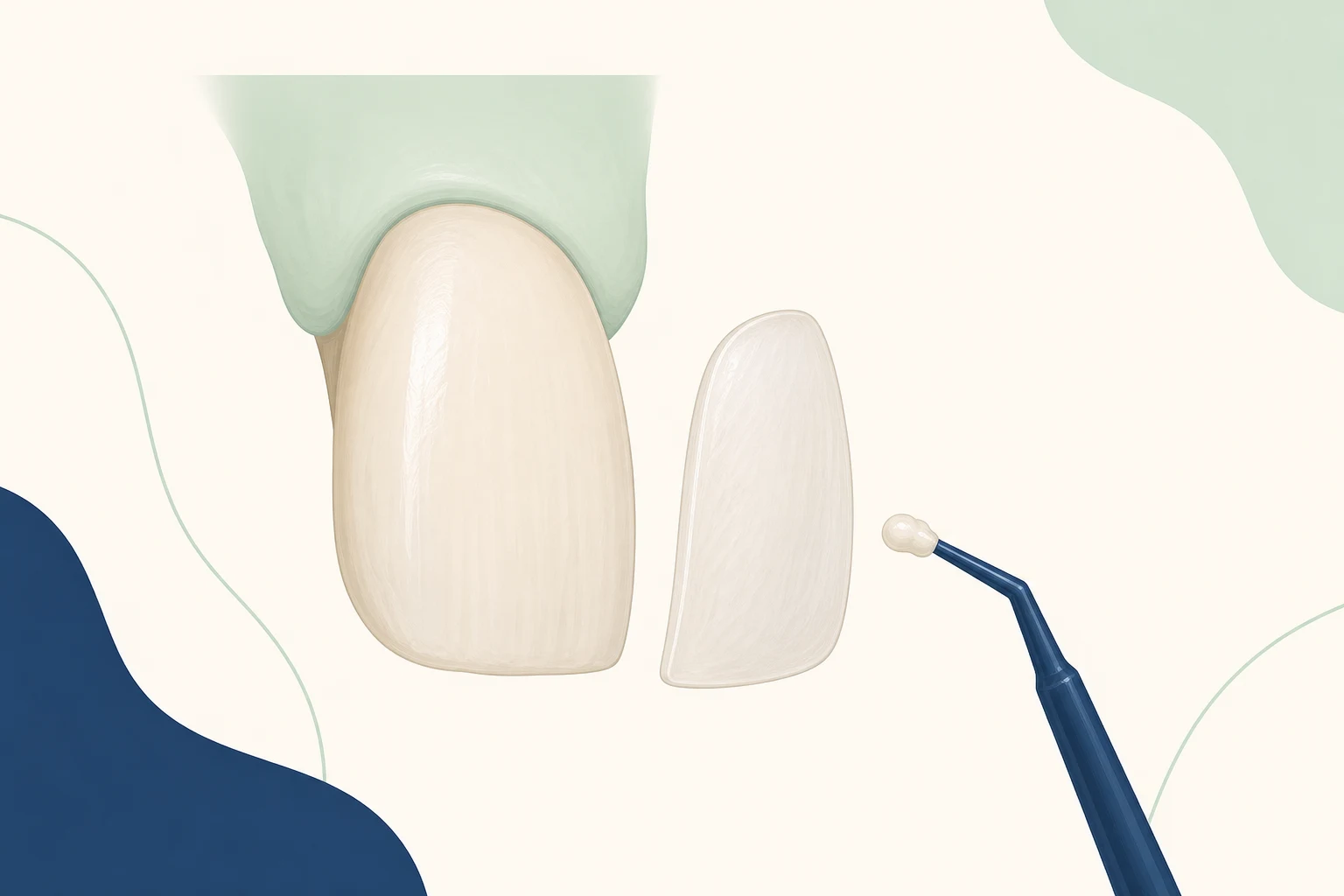
Suitability and the irreversibility condition
| Answer part | What the research shows |
|---|---|
| Direct answer | Veneers can be placed safely on appropriate teeth, but the procedure is not reversible and carries risks that include tooth sensitivity, restoration fracture, bond failure, margin decay and eventual replacement.[1] |
| What changes it | The starting tooth condition, location, health history and earlier dental work all affect whether veneer placement is appropriate.[1] |
What shifts the clinical picture
The starting tooth condition, location, health history and earlier dental work all affect whether veneer placement is appropriate. Active decay or gum disease must be resolved before cosmetic payer review is considered. Clenching, grinding and a deep overbite can each reduce longevity and change the maintenance requirements after placement.
[1]When urgency changes the conversation
Breathing, swallowing or speech affected by swelling indicates a medical emergency and falls outside routine aftercare. Once enamel has been removed for veneer preparation, that step cannot be undone. Contact the dental team sooner when pain or swelling progresses, when eating or sleep is disrupted, or when symptoms fall outside the instructions given after the procedure.
[1][3][4][5]| Stage | Source-backed step |
|---|---|
| When to get help | Breathing, swallowing or speech affected by swelling indicates a medical emergency and falls outside routine aftercare.[1][3][4][5] |
| Decision step | A veneer covers only the front surface of a tooth; a crown encases the whole tooth.[1] |
Veneer against crown: what the difference means
A veneer covers only the front surface of a tooth; a crown encases the whole tooth. That structural difference changes preparation depth, enamel removal and the reversibility of each procedure. Bonding may suit a small repair where less tooth removal is acceptable. Orthodontic treatment repositions teeth rather than covering their surface appearance.
[1]Frequently asked questions
Why does enamel removal matter for the safety decision,?
Once enamel is removed during veneer preparation, it cannot be replaced, which makes the choice to proceed permanent from that point forward. Before that step, the dentist should assess the teeth, gums, bite and any less invasive options that could achieve a comparable result.
[1]Which post-placement changes should prompt a dental call,?
Chipping, cracking, loosening and eventual replacement are known risks for this type of restoration. Untreated decay or disease can progress beneath or around the bonded surface. Let the dental team know about any rapid change.
[1]Why must active gum disease be resolved before veneers are placed,?
Gum disease that is still active must be brought under control before a veneer is placed, because the condition can persist beneath or around the restoration and continue to affect the tooth. Covering untreated disease does not resolve it and can complicate future care.
[1]Who wrote this page
This library is published by Dental Nation, a licensed dental group practising in the United Arab Emirates. Pages are written and overseen by the same clinical team that treats patients in our clinics, and are held to a fixed editorial standard for safety and accuracy.
This page is patient education, not medical advice, and cannot replace an examination. Anything urgent — facial swelling, trauma, uncontrolled bleeding or severe pain — needs a dentist or emergency care now.