
Do veneers damage your teeth?
Removing enamel for a traditional veneer cannot be undone; the tooth is permanently altered after preparation
[1]The short answer
Traditional veneers require permanent enamel reduction; the tooth surface cannot revert to its original state after preparation Suitability depends on an assessment of tooth structure, gum health, bite, and whether conservative preparation can achieve the intended result
[1]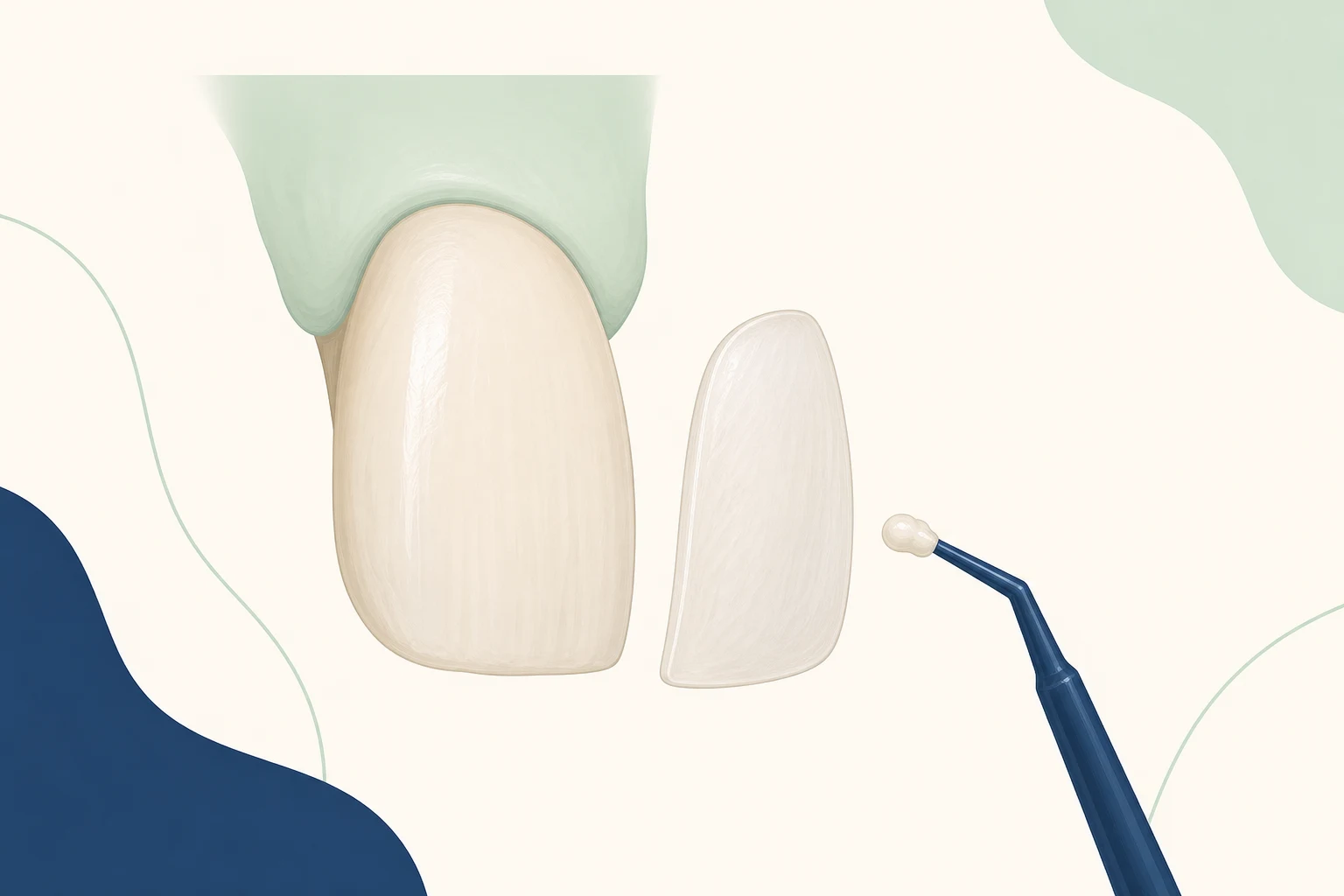
Enamel loss is permanent: the core trade-off
| Answer part | What the research shows |
|---|---|
| Direct answer | Traditional veneers require permanent enamel reduction; the tooth surface cannot revert to its original state after preparation.[1] |
| What changes it | Before veneer preparation begins, the clinician examines teeth, gums, existing restorations and the relationship between upper and lower teeth.[1] |
What the pre-treatment assessment must establish
Before veneer preparation begins, the clinician examines teeth, gums, existing restorations and the relationship between upper and lower teeth Active decay or periodontal disease must be treated first; a cosmetic surface layer cannot correct an underlying problem Preparation depth and the extent of enamel reduction are planned at this stage Photographs and models help explain the approach but do not replace clinical diagnosis or the informed consent required for an irreversible procedure
[1]Ongoing risks after a veneer is placed
Chips, fractures, detachment, and eventual replacement are all part of a veneer's expected clinical lifespan Disease can also develop beneath or around the restoration regardless of what the outer surface shows When a veneer loosens, causes new sensitivity, or pain develops near the treated tooth, contacting the dental team without delay is preferable to waiting for a scheduled appointment
[1][3][4]| Stage | Source-backed step |
|---|---|
| When to get help | Chips, fractures, detachment, and eventual replacement are all part of a veneer's expected clinical lifespan.[1][3][4] |
| Decision step | Veneers cover only the facial surface of a tooth; crowns encase the entire structure and are the clinical choice when structural support or broader coverage is the priority.[1] |
How a veneer compares with crown and bonding options
Veneers cover only the facial surface of a tooth; crowns encase the entire structure and are the clinical choice when structural support or broader payer review is the priority Composite bonding is a less invasive alternative for smaller surface corrections and does not require enamel removal The pre-treatment examination determines which option matches the actual clinical picture; including tooth structure, bite, and the functional demands on the restored tooth
[1]Frequently asked questions
How much enamel is typically removed when preparing a tooth for a veneer,?
The amount depends on the starting tooth shape, chosen material, and whether an existing restoration is present Preparation may be minimal in some cases, but it always results in a permanent change to the tooth surface The irreversibility of enamel removal is why the decision requires careful examination and explicit consent before work begins
[1]Can a veneer chip, crack, or come loose after it is placed,?
Yes Chips, cracks, loosening, and eventual replacement are all expected possibilities over the lifespan of a veneer Disease may also develop beneath or around the restoration independently of how the outer surface appears Reporting any abrupt change; new sensitivity, loosening, or pain; to the dental team promptly allows it to be assessed before the situation progresses
[1][3]When is composite bonding a better choice than a veneer for a front tooth,?
Composite bonding is considered when the surface repair is small, the tooth structure is intact, and avoiding enamel removal is a priority A veneer is more appropriate when the required front-surface change is more extensive, when shade and contour targets cannot be met by bonding alone, or when the material chosen requires a prepared margin for a stable long-term result
[1]Who wrote this page
This library is published by Dental Nation, a licensed dental group practising in the United Arab Emirates. Pages are written and overseen by the same clinical team that treats patients in our clinics, and are held to a fixed editorial standard for safety and accuracy.
This page is patient education, not medical advice, and cannot replace an examination. Anything urgent — facial swelling, trauma, uncontrolled bleeding or severe pain — needs a dentist or emergency care now.