
Do veneers need special toothpaste?
Fluoride toothpaste protects tooth structure at veneer margins.
[3]The short answer
Fluoride toothpaste is appropriate for most veneer materials; the treating dentist can specify the right product for the individual restoration Products with excessive abrasive content risk affecting bonded surfaces, and the surrounding natural tooth structure still requires thorough plaque control
[3]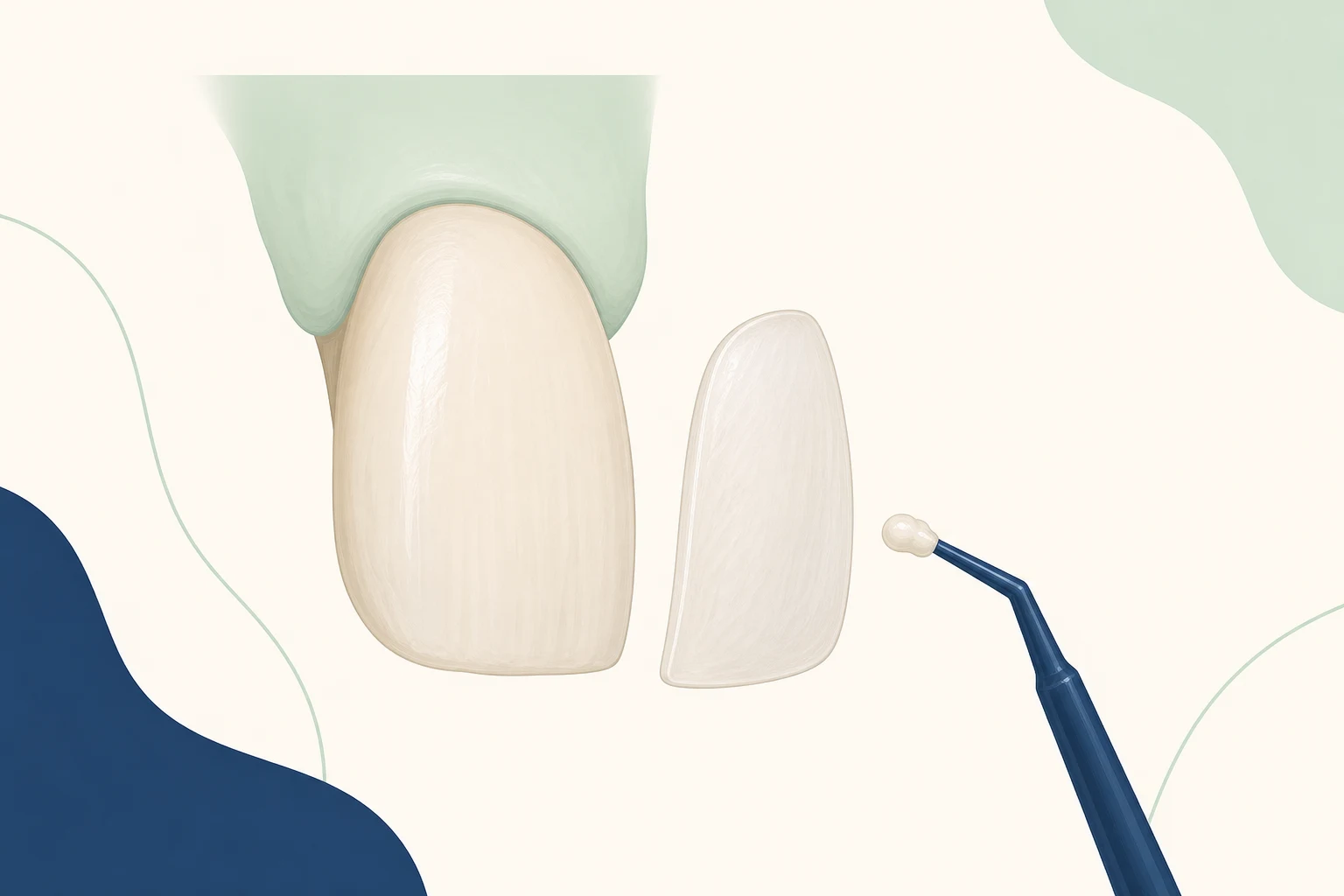
Toothpaste abrasiveness and veneer surface integrity
| Answer part | What the research shows |
|---|---|
| Direct answer | Fluoride toothpaste is appropriate for most veneer materials; the treating dentist can specify the right product for the individual restoration.[3] |
| What changes it | Veneer materials; porcelain and composite resin; differ in surface hardness and their response to prolonged abrasive contact.[3][4] |
Why the veneer material determines the appropriate formula
Veneer materials; porcelain and composite resin; differ in surface hardness and their response to prolonged abrasive contact High-abrasion pastes and whitening formulas that rely on peroxide or coarse polishing agents may progressively dull the bonded face or weaken the marginal seal Existing restorations will not lighten from bleaching agents, so a whitening paste confers no cosmetic benefit while introducing unnecessary surface stress The clinician who placed the restoration knows the specific material and can confirm which products are appropriate
[3][4]Protecting natural tooth structure at and around the margin
The natural enamel and dentine at the veneer border remain susceptible to decay regardless of the restoration Fluoride toothpaste remineralises exposed surfaces and reduces acid demineralisation at those margins Gum recession, plaque accumulation at the bonding line, or new thermal sensitivity at a veneered tooth are clinical signals worth reporting at the next visit or sooner if they worsen
[3][5]| Stage | Source-backed step |
|---|---|
| When to get help | The natural enamel and dentine at the veneer border remain susceptible to decay regardless of the restoration.[3][5] |
| Decision step | Traditional veneer placement removes a thin enamel layer, committing the tooth permanently to a restoration.[3][5][6][7] |
What the clinician considers when recommending a product
Traditional veneer placement removes a thin enamel layer, committing the tooth permanently to a restoration The dentist reviews bite load, grinding habits, gum health, and the depth of enamel preparation when placing a covering and again at recall visits Where abrasive wear is identified at the marginal boundary or the surface finish shows micro-scratching, the maintenance protocol; including toothpaste choice; may be revised Swelling, fever, spreading pain, or a loose veneer warrant same-day contact rather than the next scheduled appointment
[3][5][6][7]Frequently asked questions
Is whitening toothpaste safe for porcelain veneers,?
Whitening pastes that rely on high-RDA abrasives or peroxide are generally not recommended for porcelain or composite bonded surfaces Existing restorations will not change colour from bleaching agents, so the only practical effect is surface abrasion without cosmetic gain Confirm the suitability of any specialty formula with the treating dentist
[3][4]Why does fluoride matter for a tooth that already has a veneer,?
The veneer itself is not susceptible to cavities, but the natural tooth structure at and beneath the margin is Fluoride toothpaste remineralises exposed enamel and dentine at that junction Gum tissue surrounding the restoration can also develop inflammation if plaque control at the margin is inadequate
[3]Which signs near a veneer edge need prompt dental attention,?
New temperature sensitivity, visible gum swelling along the veneer border, a loose or shifted feel, or a changed bite each warrant dental assessment Fever, spreading soft-tissue swelling, or pain that intensifies over hours calls for same-day contact with the dental team
[3][5][6][7]Who wrote this page
This library is published by Dental Nation, a licensed dental group practising in the United Arab Emirates. Pages are written and overseen by the same clinical team that treats patients in our clinics, and are held to a fixed editorial standard for safety and accuracy.
This page is patient education, not medical advice, and cannot replace an examination. Anything urgent — facial swelling, trauma, uncontrolled bleeding or severe pain — needs a dentist or emergency care now.