
Do veneers hurt?
Veneer preparation removes a thin layer of front-tooth enamel, and the bonding appointment can leave brief sensitivity in the surrounding tissue.
[1]The short answer
Veneer preparation and bonding can produce short-lived tooth sensitivity, but severe or persistent pain, a bite that sits higher than normal, or a loose restoration each call for clinical evaluation rather than observation at home
[1]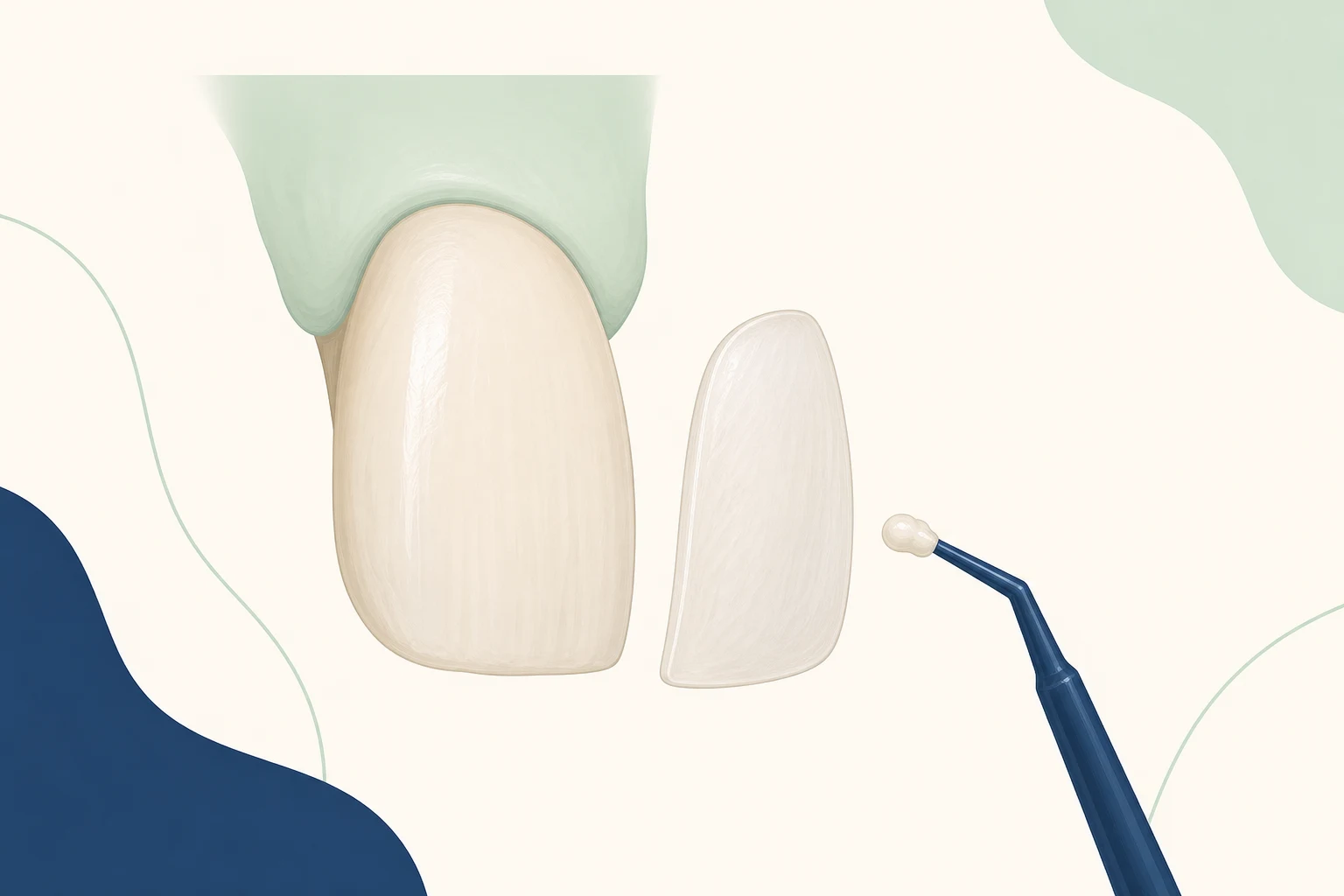
Sensitivity after preparation and bonding
| Answer part | What the research shows |
|---|---|
| Direct answer | Veneer preparation and bonding can produce short-lived tooth sensitivity, but severe or persistent pain, a bite that sits higher than normal, or a loose restoration each call for clinical evaluation rather than observation at home.[1] |
| What changes it | Because veneer treatment affects enamel, gums, existing restorations and bite in ways unique to each tooth, thorough examination is the starting point for any pain assessment.[1] |
Information that shapes the clinical picture
Because veneer treatment affects enamel, gums, existing restorations and bite in ways unique to each tooth, thorough examination is the starting point for any pain assessment The diagnosis, duration of symptoms, previous dental work and any relevant medical condition all determine whether the discomfort is expected or a warning sign Active decay or periodontal disease takes clinical priority over surface payer review
[1]Pain patterns that signal a problem needing prompt attention
Enamel removal makes veneer placement irreversible, which means a shell that chips, loosens or permits disease to advance beneath the bond carries clinical consequences Report pain that worsens across successive days, swelling of the jaw or face, difficulty biting or chewing, or any sensation markedly different from the recovery the clinician described Facial swelling that spreads toward the throat requires urgent care
[1][3][4][5]| Stage | Source-backed step |
|---|---|
| When to get help | Enamel removal makes veneer placement irreversible, which means a shell that chips, loosens or permits disease to advance beneath the bond carries clinical consequences.[1][3][4][5] |
| Decision step | A veneer bonds to the front face of a tooth after enamel is reduced; this contrasts with a crown, which encircles the entire tooth structure.[1] |
Veneer coverage set against other restoration paths
A veneer bonds to the front face of a tooth after enamel is reduced; this contrasts with a crown, which encircles the entire tooth structure Bonding composite resin directly is an option for minor surface chips because it typically involves no enamel reduction When the underlying tooth position rather than its surface is the issue, orthodontic movement addresses the cause that a bonded shell cannot
[1]Frequently asked questions
Why does bite height matter after veneer placement,?
A high bite concentrates uneven pressure on the bonded shell during chewing, raising fracture risk and producing jaw muscle soreness over time Shade match, contour, margin position and occlusal clearance should be confirmed at the fitting visit and rechecked whenever new discomfort develops
[1]Which tooth features raise sensitivity risk during preparation,?
Preparation depth, proximity to the pulp and the quantity of sound enamel remaining after reduction all affect how the dentine responds to temperature and pressure after bonding Teeth carrying large pre-existing restorations or with a documented sensitivity history carry a higher likelihood of post-procedure discomfort
[1]How can I tell whether a veneer has come loose,?
Detectable movement when pressing the tooth, a visible gap at the gum margin, edge discolouration, or a change in how the teeth meet when biting are all signs that the bond may have failed Prompt clinical assessment is more useful than waiting, because the underlying enamel surface is also exposed once the bond breaks
[1]Who wrote this page
This library is published by Dental Nation, a licensed dental group practising in the United Arab Emirates. Pages are written and overseen by the same clinical team that treats patients in our clinics, and are held to a fixed editorial standard for safety and accuracy.
This page is patient education, not medical advice, and cannot replace an examination. Anything urgent — facial swelling, trauma, uncontrolled bleeding or severe pain — needs a dentist or emergency care now.