
Can veneers fix crooked teeth?
Veneers alter the visible face of a tooth without shifting its root.
[4]The short answer
Veneers can conceal the look of mild tooth position or shape irregularities, but they do not shift roots or alter the bite Where position is the primary clinical concern, orthodontic treatment preserves more tooth structure
[4]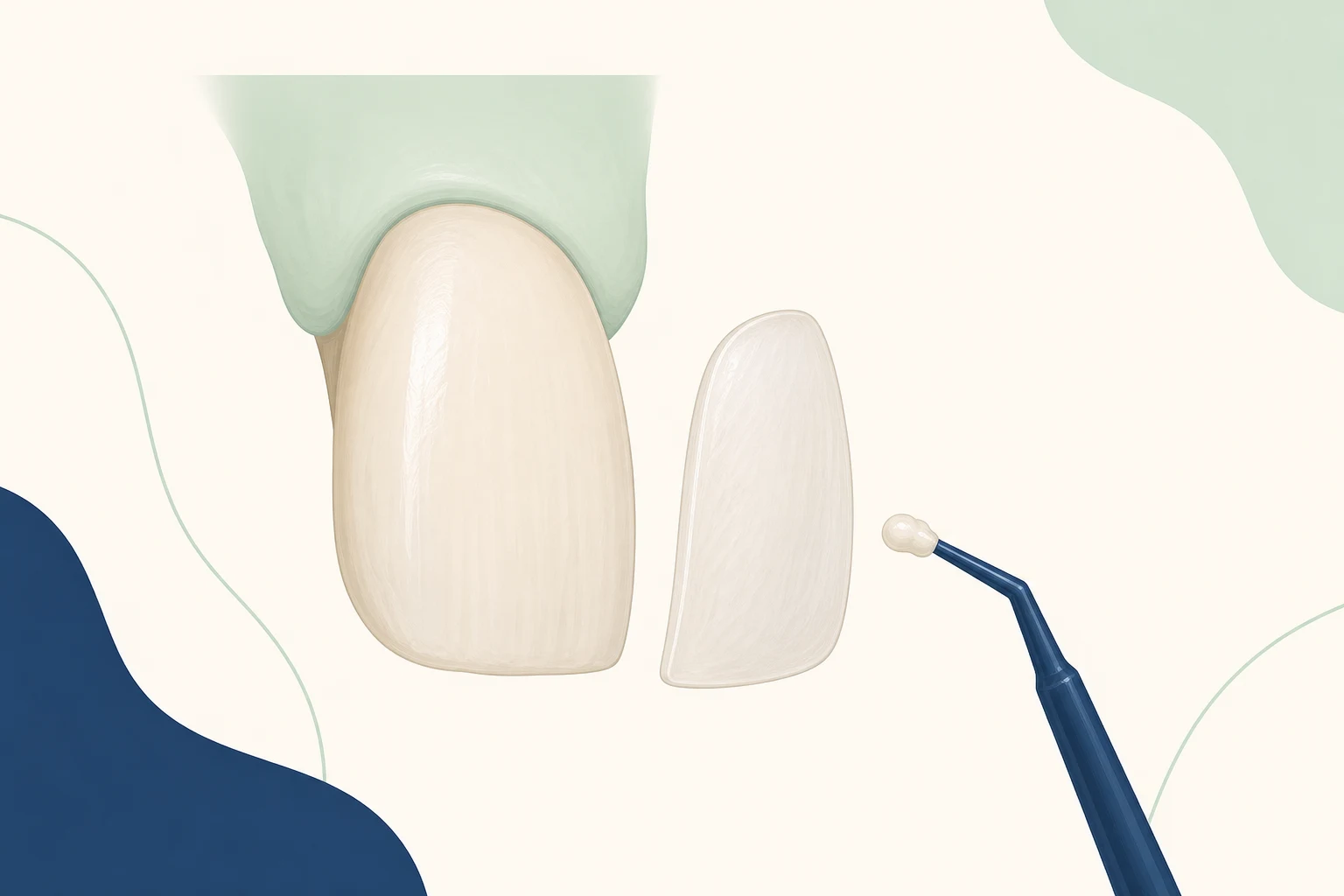
Surface coverage versus root movement: the core distinction
| Answer part | What the research shows |
|---|---|
| Direct answer | Veneers can conceal the look of mild tooth position or shape irregularities, but they do not shift roots or alter the bite. Where position is the primary clinical concern, orthodontic treatment preserves more tooth structure.[4] |
| What changes it | The clinician assesses root angulation, jaw relationship, bite depth, gum attachment, and enamel volume before deciding whether a veneer is appropriate.[4] |
Factors the dentist weighs before recommending a path
The clinician assesses root angulation, jaw relationship, bite depth, gum attachment, and enamel volume before deciding whether a veneer is appropriate A confirmed grinding habit or deep overbite raises fracture risk substantially and may make veneers unsuitable Adjacent teeth and existing restorations are also examined, since surface preparation affects the surrounding dentition
[4]Clinical urgency: when a changed bite or loose veneer needs early care
Following veneer placement, a bite that feels different, a veneer that has partially detached, or new pain around the bonded tooth are all reasons to seek assessment sooner rather than later Swelling that limits swallowing, breathing, or speaking is a dental emergency that requires same-day contact Do not wait for a routine appointment when any of these signs appear
[4][6][7][8]| Stage | Source-backed step |
|---|---|
| When to get help | Following veneer placement, a bite that feels different, a veneer that has partially detached, or new pain around the bonded tooth are all reasons to seek assessment sooner rather than later.[4][6][7][8] |
| Decision step | Fixed braces and clear aligners apply controlled force to roots over months or years to correct position; they do not alter surface colour or shape.[4] |
Orthodontic appliances and crowns: two alternatives that work differently
Fixed braces and clear aligners apply controlled force to roots over months or years to correct position; they do not alter surface colour or shape A crown encases the entire visible portion of a tooth and is selected when decay or fracture compromises more than the front face A veneer addresses surface appearance only; it cannot do the work of either appliance
[4]Frequently asked questions
In which situations would a veneer be appropriate for a visibly crooked tooth,?
A veneer may be appropriate when a single tooth is slightly shorter, narrower, or rotated by only a small degree and root position is clinically acceptable When multiple teeth are misaligned or the bite is involved, orthodontics is the more tissue-conservative starting point
[4]What does an orthodontic assessment cover that a veneer consultation does not,?
An orthodontic record includes root positions, jaw skeletal relationships, bite depth, and available spacing; measurements that go beyond the surface evaluation of a veneer consultation Both cover gum health and existing restorations, but orthodontic diagnosis also depends on radiographic and sometimes cephalometric data
[4]Is it necessary to contact the clinic quickly if the bite changes after veneers,?
Yes A bite that feels altered after veneer placement, a restoration that feels loose, or new pain concentrated around the treated tooth all warrant prompt contact Delay risks further damage to the veneer, the prepared tooth, or the opposing dentition
[4][6][7][8]Who wrote this page
This library is published by Dental Nation, a licensed dental group practising in the United Arab Emirates. Pages are written and overseen by the same clinical team that treats patients in our clinics, and are held to a fixed editorial standard for safety and accuracy.
This page is patient education, not medical advice, and cannot replace an examination. Anything urgent — facial swelling, trauma, uncontrolled bleeding or severe pain — needs a dentist or emergency care now.