
Can I eat normally with veneers?
Normal eating resumes after veneers when the treating dentist confirms the bond is stable.
[1]The short answer
Usually, yes; once the treating dentist confirms normal eating can resume Avoid placing concentrated force on veneer edges and biting hard objects Report movement, discomfort or a changed bite
[1]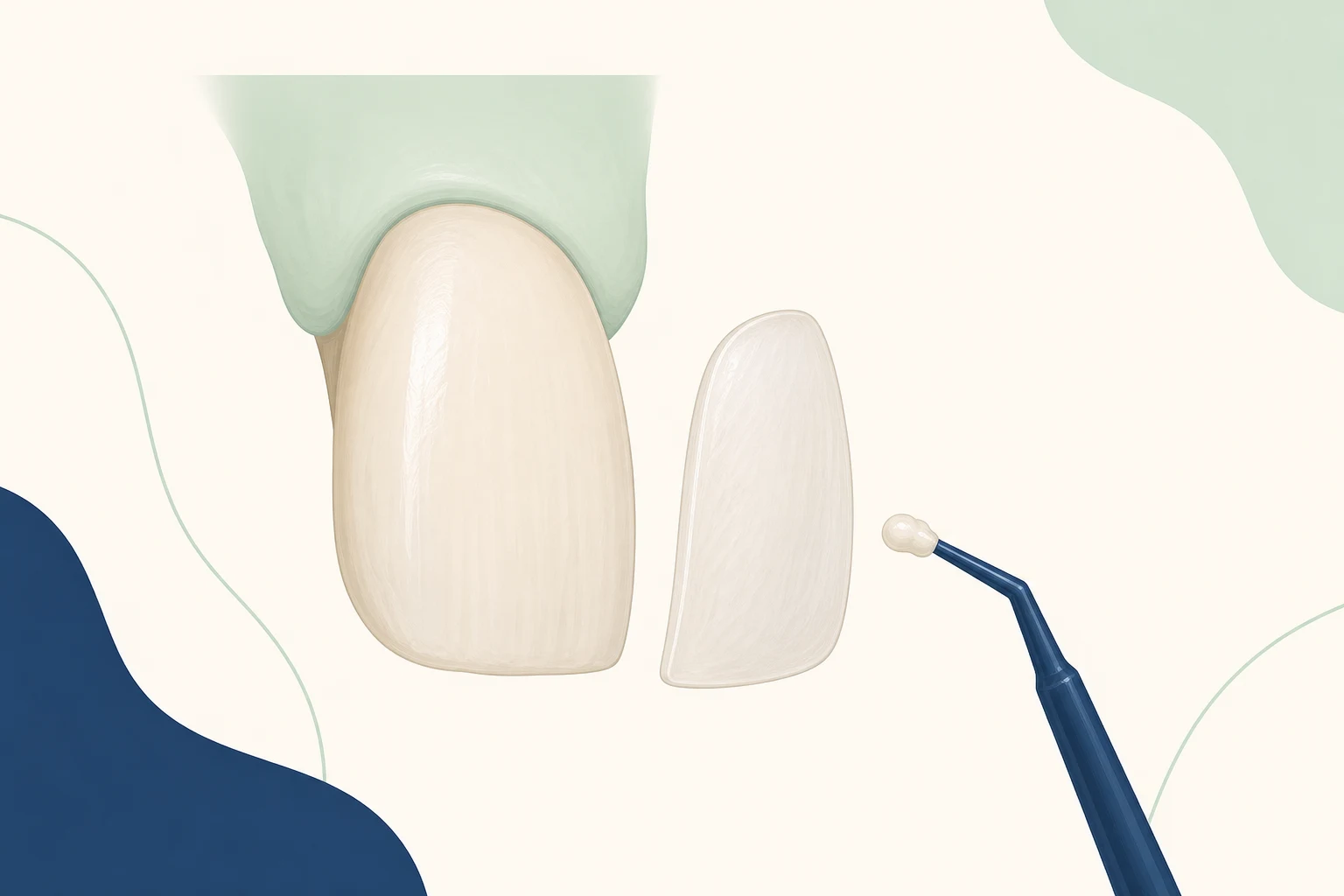
Chewing and biting after veneer placement
| Answer part | What the research shows |
|---|---|
| Direct answer | Usually, yes; once the treating dentist confirms normal eating can resume. Avoid placing concentrated force on veneer edges and biting hard objects. Report movement, discomfort or a changed bite.[1] |
| What changes it | Veneers are thin ceramic or composite coverings bonded to the front surface of a tooth; they differ from crowns, which encase the whole tooth.[1] |
What keeps veneers intact long-term
Veneers are thin ceramic or composite coverings bonded to the front surface of a tooth; they differ from crowns, which encase the whole tooth Because preparation removes enamel permanently, the bond must be protected: hard foods, ice, fingernails and objects that place sudden force on veneer edges raise fracture and de-bonding risk Clenching or grinding habits, a deep overbite and active gum disease can each reduce longevity
[1]Changes that need an earlier appointment
A chip, crack, loosened restoration or a bite that feels different since placement are all reasons to contact the dental team rather than wait for a scheduled visit Decay or infection present at bonding does not stop at the veneer margin; it can advance around and beneath the bonded surface If swelling affects breathing or swallowing, that requires emergency care rather than a dental call
[1][3][4][5]| Stage | Source-backed step |
|---|---|
| When to get help | A chip, crack, loosened restoration or a bite that feels different since placement are all reasons to contact the dental team rather than wait for a scheduled visit.[1][3][4][5] |
| Decision step | Composite bonding may suit a small chip or worn edge with less enamel removal and lower cost.[1] |
Alternatives to consider before proceeding
Composite bonding may suit a small chip or worn edge with less enamel removal and lower cost Orthodontic treatment can correct position without any surface payer review Because veneer placement is not reversible, the dentist should examine teeth, gums, existing restorations and the bite before committing to this approach; decay or active gum disease must be resolved first
[1]Frequently asked questions
Does the eating restriction end once bonding sets,?
The treating dentist decides when normal eating is safe to resume, based on the restoration type, the setting time of the cement used and the patient's bite Certain habits; biting nails, chewing ice, using teeth to open packages; remain off-limits indefinitely because they place sudden concentrated force on the veneer edge
[1]Which post-placement symptoms mean the veneer has failed,?
Movement, a clicking sensation, visible separation at the margin or a tooth that suddenly feels sharp are signs of bond failure or fracture Sensitivity that persists or worsens after the first few days of placement should also be reported Shade, contour and cleaning access can all shift if the restoration is damaged
[1]Why must decay and gum disease be resolved before veneers,?
A veneer covers the front of a tooth but does not stop disease progressing beneath or around the restoration Bonding over active decay or inflamed gum tissue can trap infection and complicate later treatment, including removal or replacement of the veneer
[1]Who wrote this page
This library is published by Dental Nation, a licensed dental group practising in the United Arab Emirates. Pages are written and overseen by the same clinical team that treats patients in our clinics, and are held to a fixed editorial standard for safety and accuracy.
This page is patient education, not medical advice, and cannot replace an examination. Anything urgent — facial swelling, trauma, uncontrolled bleeding or severe pain — needs a dentist or emergency care now.