
Are veneers worth it?
Veneer preparation removes enamel that cannot be replaced, making the decision irreversible.
[1]The short answer
Veneers may be worthwhile when a front-surface restoration directly answers the colour or contour problem and the person accepts irreversible preparation, maintenance and future replacement A more conservative option may be better for another goal
[1]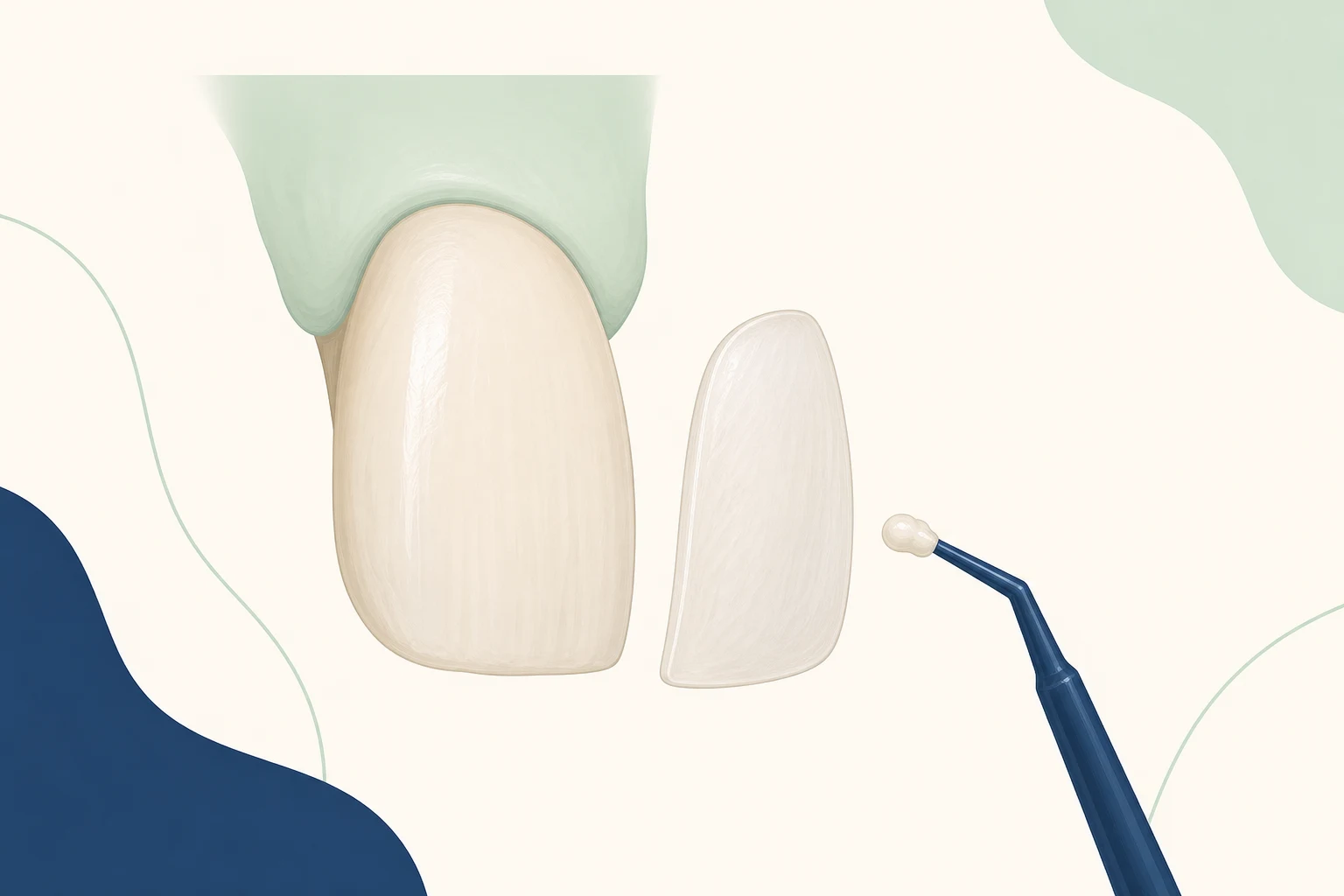
The front-surface trade-off
| Answer part | What the research shows |
|---|---|
| Direct answer | Veneers may be worthwhile when a front-surface restoration directly answers the colour or contour problem and the person accepts irreversible preparation, maintenance and future replacement.[1] |
| What changes it | Thorough assessment covers the teeth, gums, bite and prior restorations before any preparation begins.[1] |
What the clinical assessment covers
Thorough assessment covers the teeth, gums, bite and prior restorations before any preparation begins Active caries or gum disease requires treatment first; placing a veneer over diseased tissue is contraindicated Diagnosis, symptom timing, treatment history and any health condition that modifies care all affect whether the outcome will match the goal
[1]Permanence and what can go wrong
Enamel removed during preparation does not regenerate, so the alteration is permanent The covering material can fracture, detach or wear over years and will eventually need replacement Decay or disease progressing beneath an intact surface may not be detectable without examination Pain, swelling or visible damage to a placed veneer warrants prompt contact with the dental team
[1][3][4][5]Comparing veneers, crowns, bonding and orthodontics
A veneer sits on the labial face only; a crown encases the entire tooth structure Composite bonding deposits material directly onto the tooth with little or no enamel reduction, making it the more conservative path for small chips or limited discolouration Where tooth position is the underlying problem, orthodontic movement changes the alignment rather than the surface
[1]Frequently asked questions
Does a fractured or detached veneer need same-day care,?
Contact the dental team promptly when a veneer breaks, separates or feels loose Decay can advance beneath a failed restoration without producing symptoms, so early assessment limits the risk of further structural damage
[1][3][4][5]How does a veneer differ from a crown when weighing these options,?
A veneer bonds to the labial face of the tooth and requires removal of a thin front layer only A crown reduces the tooth on all surfaces to allow full encasement When colour or contour concerns are limited to the visible front face, a veneer is the less invasive path; a crown is indicated when the whole tooth needs structural support
[1]When does composite bonding make more sense than a veneer,?
Composite bonding involves little or no enamel reduction, so the change is reversible in a way that veneer preparation is not For a single chip or isolated discolouration, bonding can address the problem without the permanence of enamel removal Veneers tend to give a more uniform result when multiple front teeth share the same colour or contour goal
[1]Who wrote this page
This library is published by Dental Nation, a licensed dental group practising in the United Arab Emirates. Pages are written and overseen by the same clinical team that treats patients in our clinics, and are held to a fixed editorial standard for safety and accuracy.
This page is patient education, not medical advice, and cannot replace an examination. Anything urgent — facial swelling, trauma, uncontrolled bleeding or severe pain — needs a dentist or emergency care now.