
Treatment comparison
Drill-free caries arrest
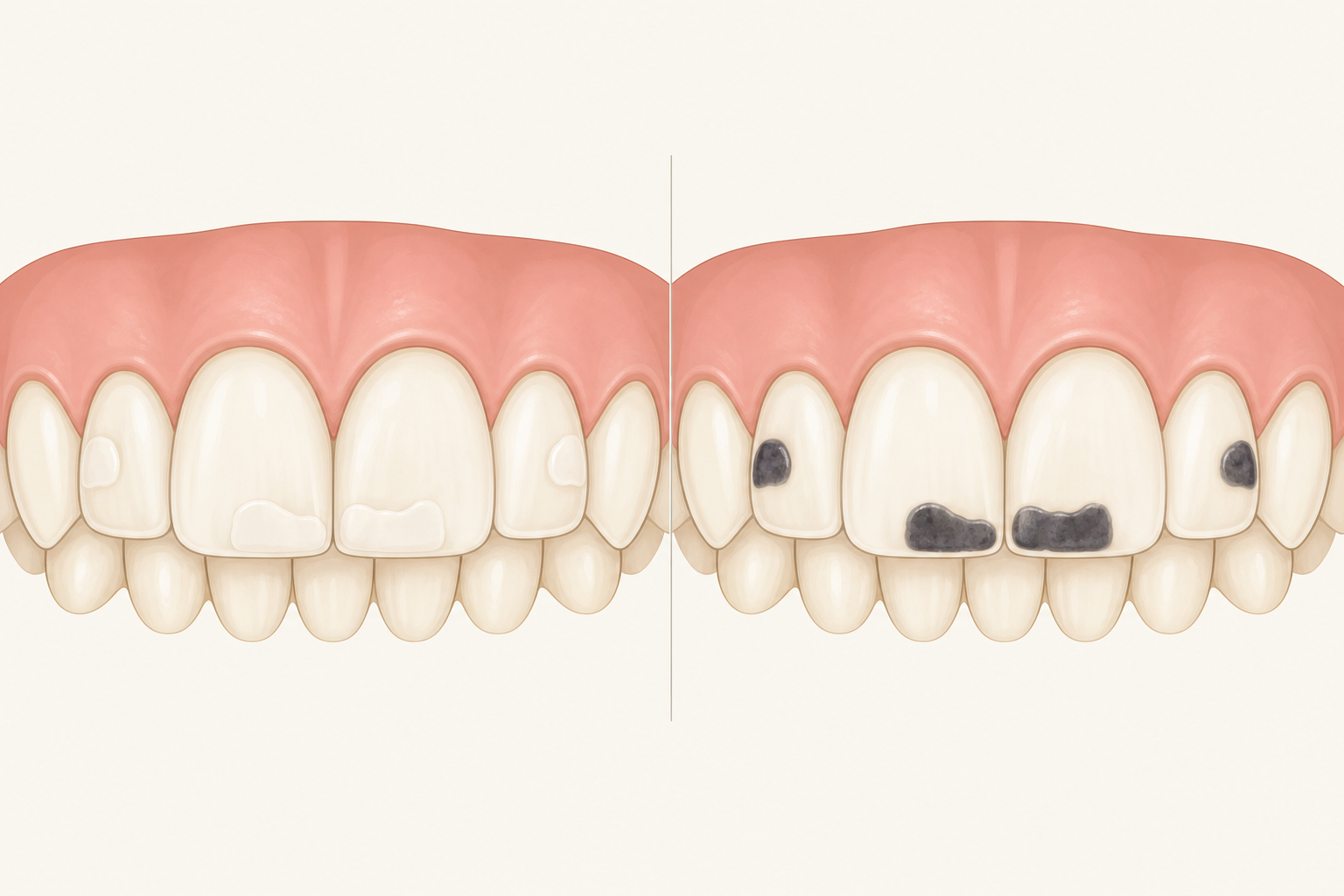
Silver diamine fluoride can arrest a child’s cavity without drilling, while a filling removes decay and restores the tooth.
[1][2]The short answer
Silver diamine fluoride can arrest a child’s cavitated decay without drilling, while a filling removes decay and restores the tooth.
[1][2]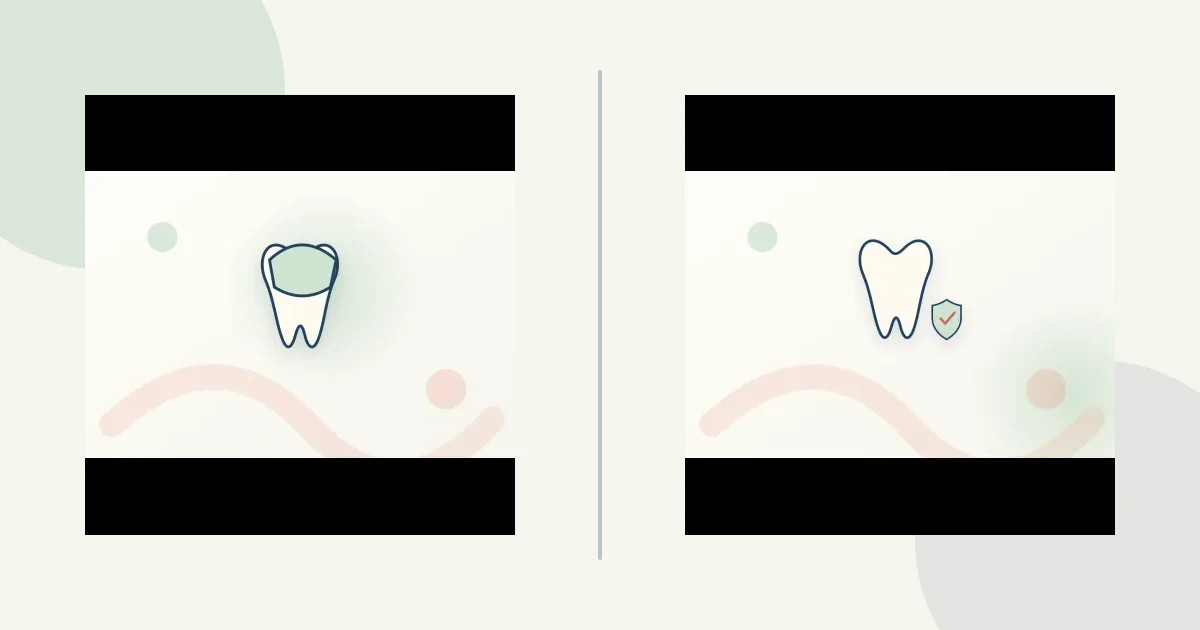
The two options, side by side
The DN First Look799 AED
Book The DN First LookWhat is the difference between a filling and SDF?
| Option | Main action | What the evidence describes |
|---|---|---|
| Filling | Decay is removed and the space is filled with a material | Restores the tooth after caries removal[1][2] |
| Silver diamine fluoride | Applied to carious tooth structure without drilling | Arrests caries and is used in children and adolescents[1][2] |
| Option | Main action | What the evidence describes |
|---|---|---|
| Filling | Decay is removed and the space is filled with a material | Restores the tooth after caries removal[1][2] |
| Silver diamine fluoride | Applied to carious tooth structure without drilling | Arrests caries and is used in children and adolescents[1][2] |
When does a filling fit the problem?
When can SDF be useful?
Which option costs less?
What happens after treatment?
What are the drawbacks?
When is neither approach enough?
How is the treatment choice framed?
Frequently asked questions
Who wrote this page
This library is published by Dental Nation, a licensed dental group practising in the United Arab Emirates. Pages are written and overseen by the same clinical team that treats patients in our clinics, and are held to a fixed editorial standard for safety and accuracy.
This page is patient education, not medical advice, and cannot replace an examination. Anything urgent — facial swelling, trauma, uncontrolled bleeding or severe pain — needs a dentist or emergency care now.