
Material for kids / root caries
Moderate chewing pressure suits composite, while resin-modified glass ionomer has stronger caries-prevention evidence in comparisons.
[1][2][3]The short answer
Composite fillings suit small to mid-size cavities under moderate chewing pressure, while resin-modified glass ionomer has shown stronger caries prevention in comparisons.
[1][2][3]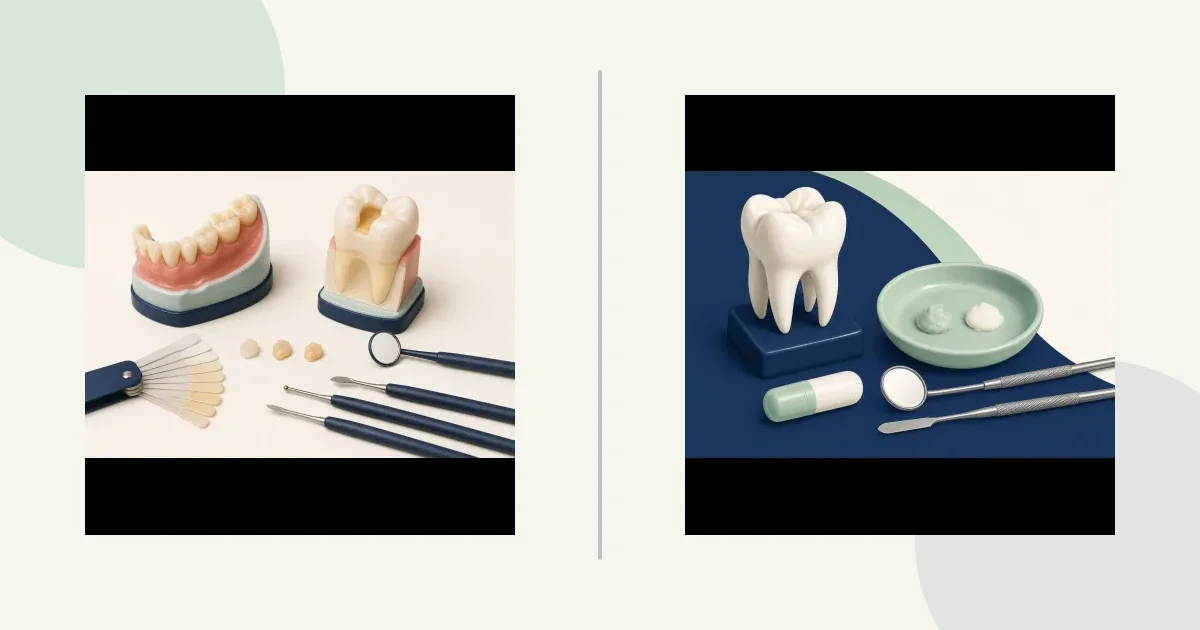
The two options, side by side
Which filling fits the main job?
| Material | Supported distinction |
|---|---|
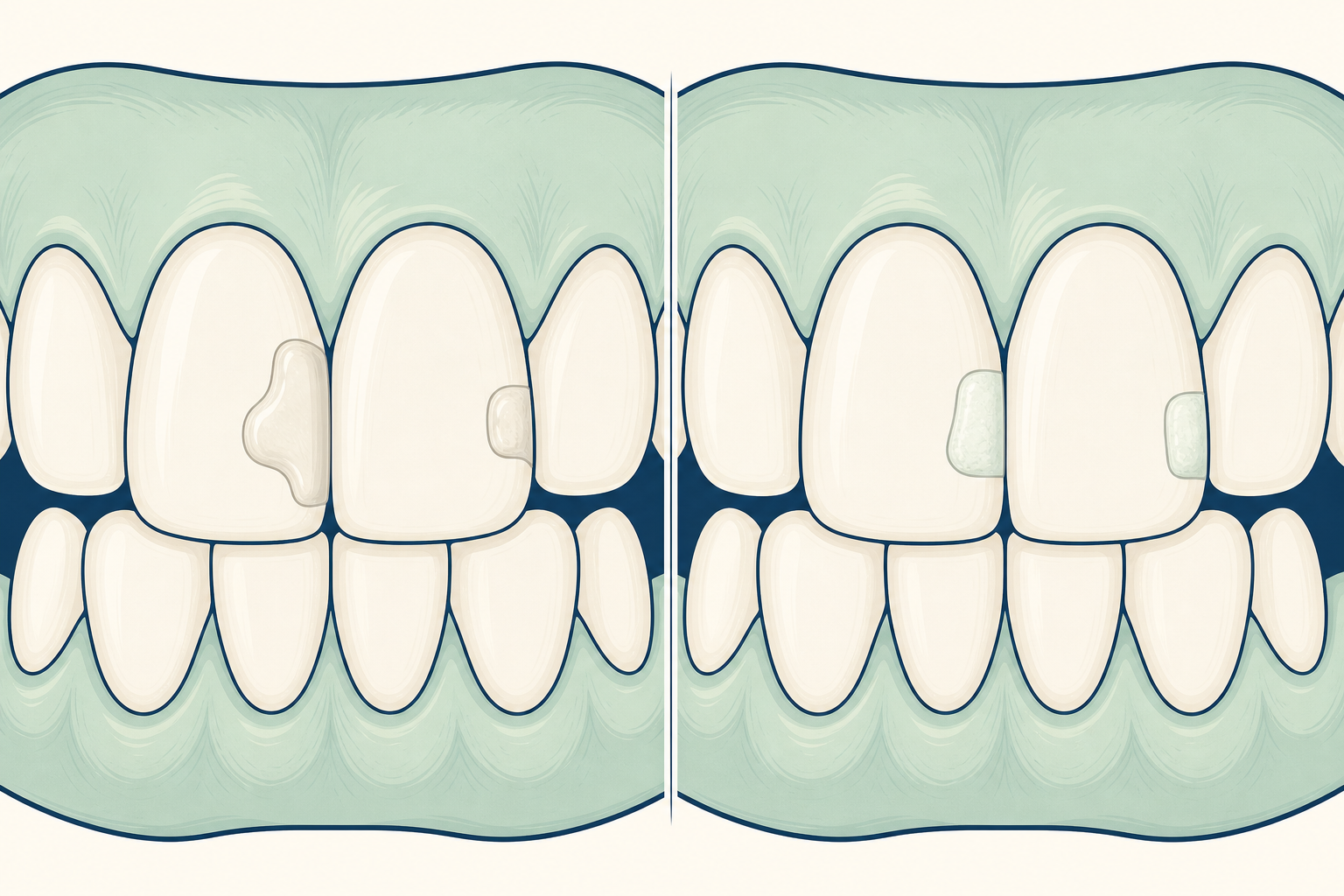
| Composite | A tooth-coloured filling with good durability and fracture resistance for small to mid-size fillings under moderate chewing pressure.[2][3] |
| Resin-modified glass ionomer | A meta-analysis found it more caries preventive than composite resin, with or without fluoride.[1][2][3] |
When does composite make sense?
When does glass ionomer make sense?
Glass ionomer has a caries-prevention advantage in parts of the reviewed evidence. In permanent teeth, single-surface glass ionomer restorations had fewer caries lesions after six years than amalgam restorations, and resin-modified glass ionomer outperformed composite resin for caries prevention in a meta-analysis.
[1][2][3]What can change the cost and cover?
How long will the filling last?
What happens if decay keeps progressing?
When is neither filling enough?
What guides the material choice?
Frequently asked questions
Who wrote this page
This library is published by Dental Nation, a licensed dental group practising in the United Arab Emirates. Pages are written and overseen by the same clinical team that treats patients in our clinics, and are held to a fixed editorial standard for safety and accuracy.
This page is patient education, not medical advice, and cannot replace an examination. Anything urgent — facial swelling, trauma, uncontrolled bleeding or severe pain — needs a dentist or emergency care now.