
Dental Nation
Treatment guide

Core Buildup

A core buildup restores lost tooth structure before a fixed prosthesis, while remaining tooth structure affects retention and fracture risk.

[1]

The short answer

A core buildup rebuilds missing coronal tooth structure so a later fixed prosthesis can be retained.

[1]
Core Buildup dental educational illustration

What the change looks like
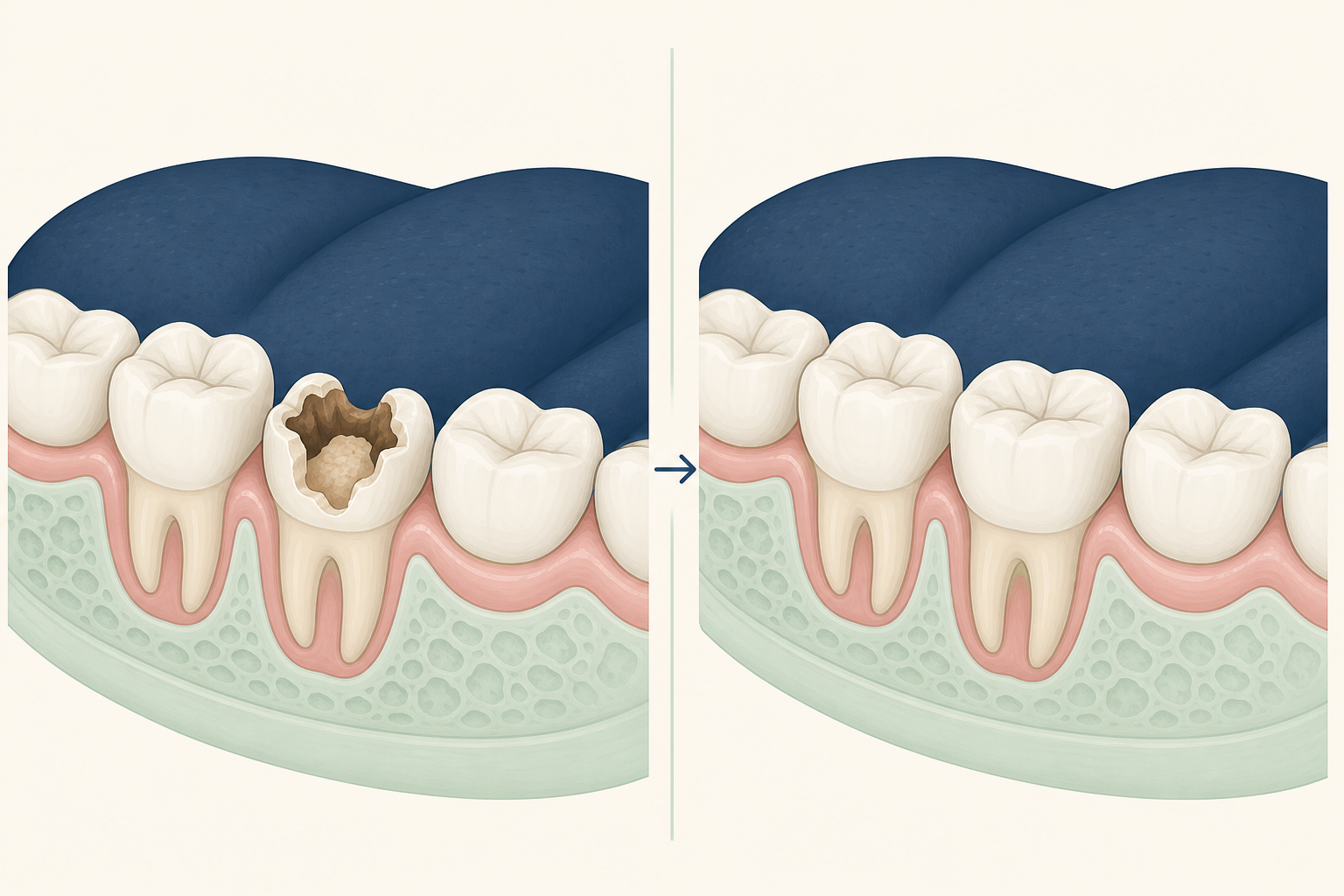
Illustrative diagram: Core Buildup
Illustration — a representative diagram, not a patient photo.
The DN First Look799 AED
Book The DN First Look

What is a core buildup?

What the buildup contributes
FeatureClinical role
Core buildupReplaces missing coronal tooth structure[1]
Pins when includedMay form part of the D2950 procedure descriptor[1]

[1]

Who may need one?

A core buildup is used when loss of coronal tooth tissue leaves too little structure for the planned fixed prosthesis to retain. Root-filled teeth and teeth with larger access cavities may need protection against fracture under occlusal load.

[1][3]

Does it hurt?

Core buildup restores missing coronal tooth structure before a fixed prosthesis. Preserving the remaining tooth tissue matters because fracture resistance is affected by the tooth structure left above the future crown margin.

[1][3]

Is it safe?

A randomized trial found an overall 8 percent failure rate before the fixed prosthesis was incorporated. The remaining tooth structure, including a ferrule of 1 to 2 mm, affects fracture resistance.

[2][3][4]

How long does it last?

The studied sequence placed the fixed dental prosthesis after a mean interval of 12.2 weeks, and the trial measured failures before that prosthesis was incorporated. This interval is a study sequence, not a promised lifetime for the buildup.

[2][3][4]

What happens during the procedure?

Missing coronal structure is rebuilt with a core material, with pins included where the D2950 descriptor applies. The rebuilt tooth is then incorporated into a fixed prosthesis.

[1][3]

What is recovery like?

The studied sequence moved from core buildup to fixed prosthesis over a mean of 12.2 weeks. During that interval, early failure was assessed before the permanent prosthesis became part of the tooth's restoration.

[2][3][4]
Measured points in the restorative sequence
StageReported detail
Before fixed prosthesisOverall failure rate was 8 percent in the trial[2][3][4]
Mean interval12.2 weeks from buildup to fixed prosthesis placement[2][3][4]

[2][3][4]

What are the alternatives?

For posterior teeth with minimal access cavities, composite resin may be used. Larger access cavities and greater coronal loss may call for amalgam or composite with a resin bonding system, while larger defects may need protection from fracture.

[2][3][4]

What should I expect from the material?

Material selection is only one part of fracture resistance. A 1 to 2 mm ferrule of tooth tissue above the crown finish line is reported as more important than the type of core or post material. The buildup's job is to replace missing coronal structure so the fixed prosthesis has tooth structure to retain.

[1][3]

Will insurance cover it in the UAE?

A core buildup quote should identify the rebuilding procedure, any pins included under the D2950 descriptor and the fixed prosthesis planned after the buildup.

[1]

Frequently asked questions

How long was the gap before the fixed prosthesis in the core buildup trial?

The mean time between core buildup and fixed dental prosthesis placement was 12.2 weeks.

[2][3][4]