
Medication-Related Osteonecrosis of the Jaw (MRONJ)
Jawbone that stays exposed for eight weeks after certain medicines can be MRONJ, with pain, infection, or altered sensation.
[1][2]The short answer
MRONJ is jawbone that remains exposed or can be probed through a fistula for eight weeks in a person who has used certain bone-modifying or angiogenic medicines.
[1][2]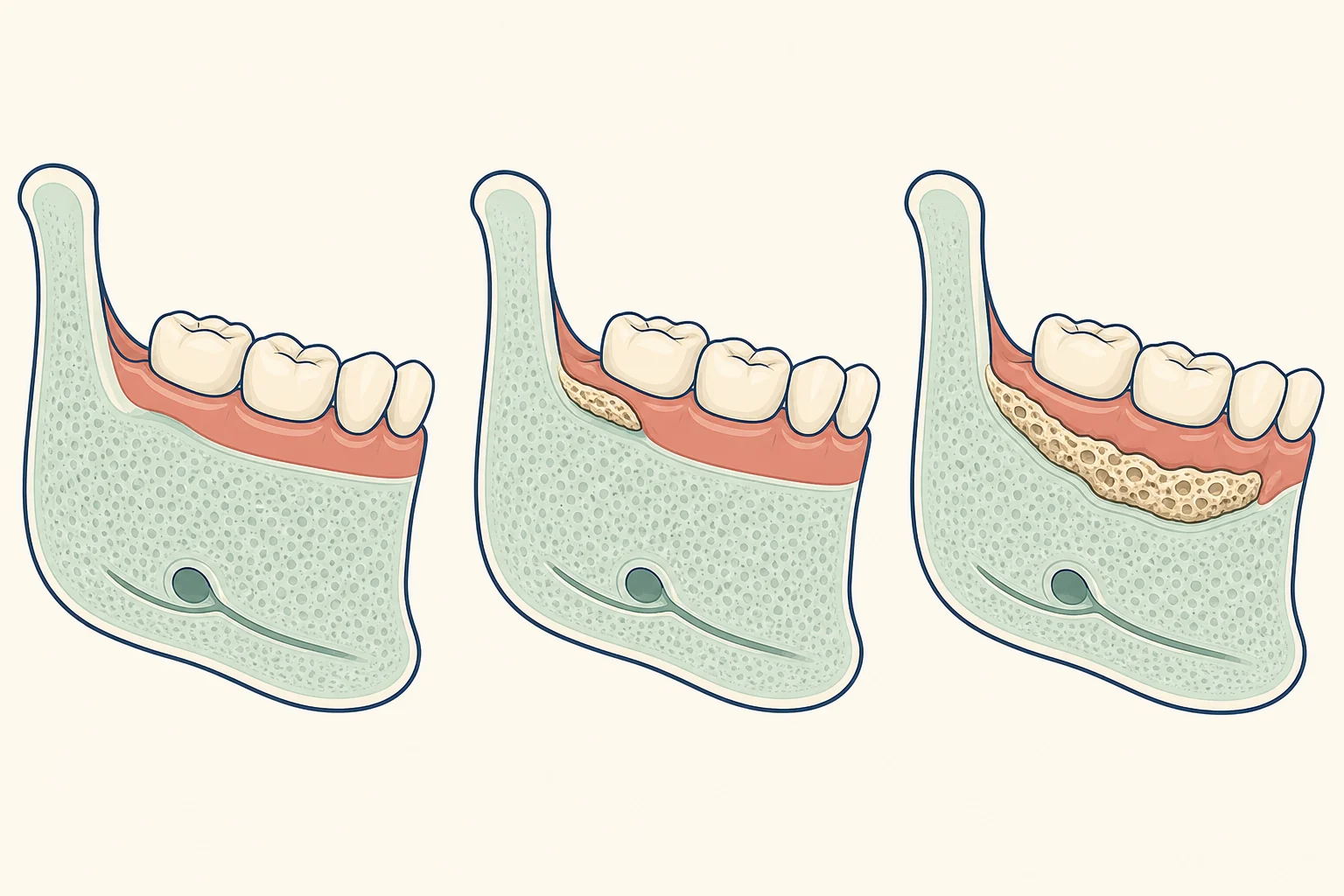
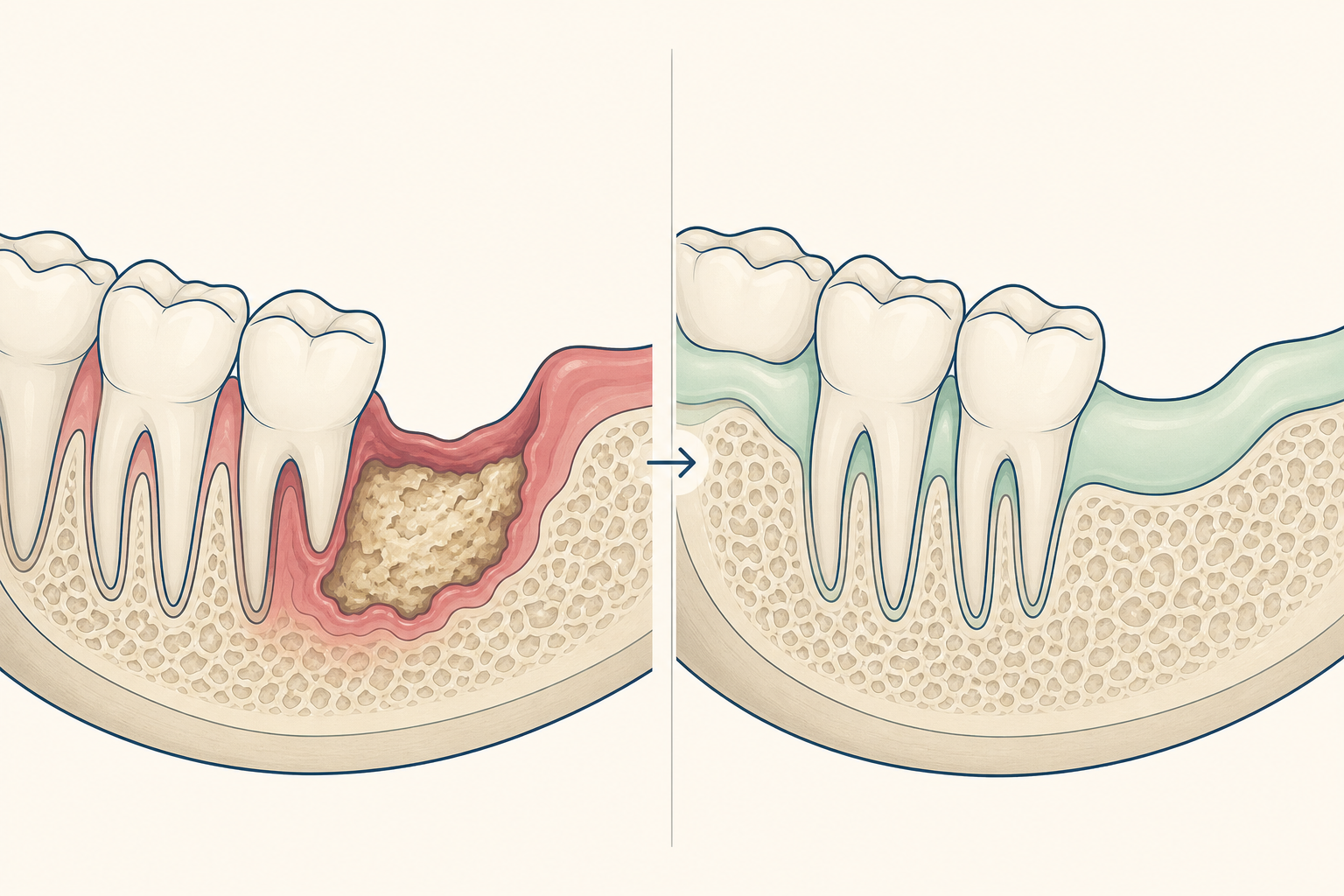
What the change looks like
What symptoms can MRONJ cause?
What causes medication-related osteonecrosis of the jaw?
How do clinicians stage MRONJ?
Who has a higher risk of MRONJ?
How is MRONJ diagnosed?
How is MRONJ treated at different stages?
What care may be involved for MRONJ?
What can happen as MRONJ progresses?
How can MRONJ risk be reduced?
Frequently asked questions
Who wrote this page
This library is published by Dental Nation, a licensed dental group practising in the United Arab Emirates. Pages are written and overseen by the same clinical team that treats patients in our clinics, and are held to a fixed editorial standard for safety and accuracy.
This page is patient education, not medical advice, and cannot replace an examination. Anything urgent — facial swelling, trauma, uncontrolled bleeding or severe pain — needs a dentist or emergency care now.