
Teeth Cleaning (Scale & Polish)
Deep cleaning removes plaque and tartar from below the gumline when pockets need more than routine brushing.
[1]The short answer
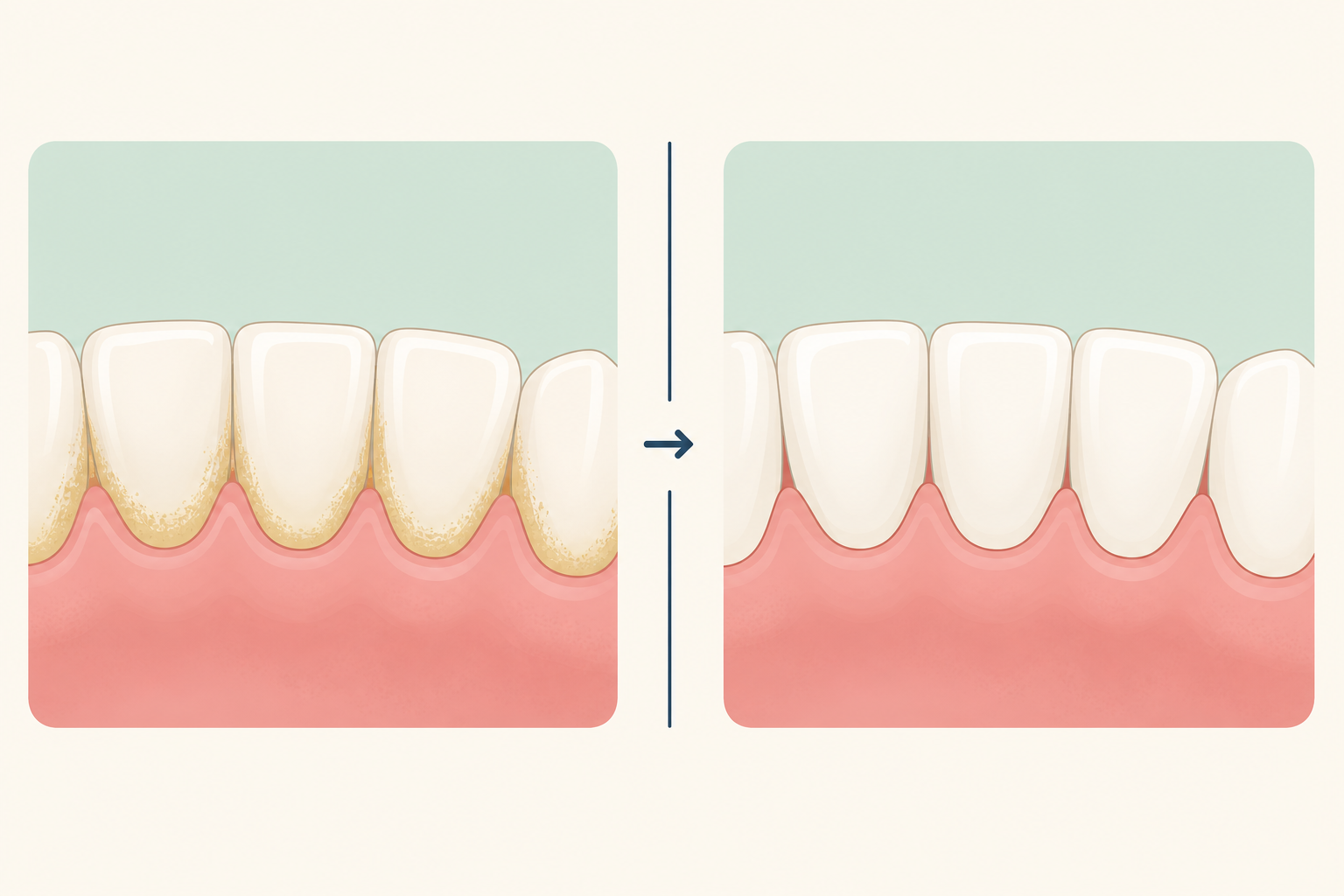
Scaling and root planing removes plaque, tartar and bacterial toxins from periodontal pockets, then smooths the tooth roots so gums can reattach.
[1]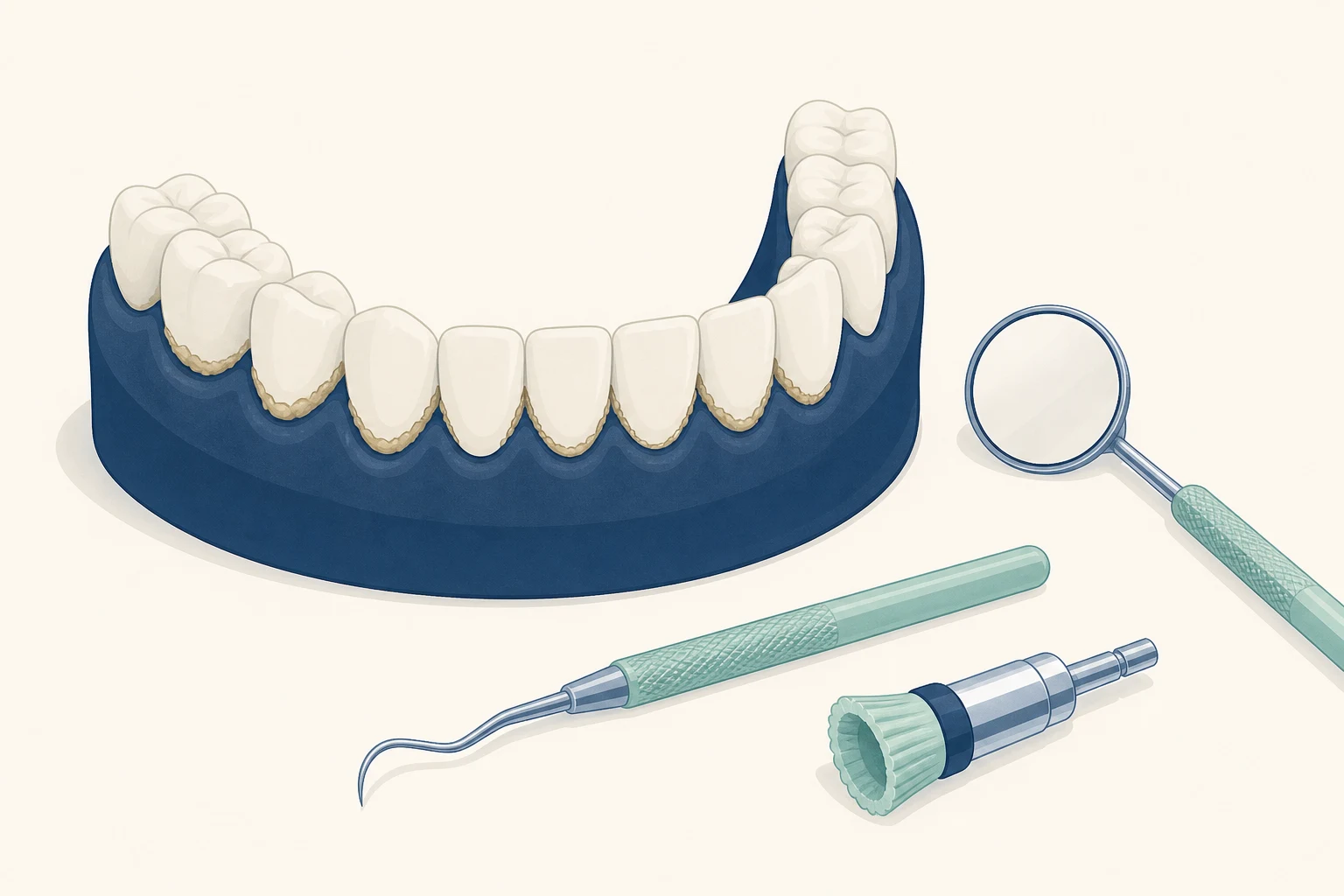
What the change looks like
What is it?
Who needs it?
Does it hurt?
A local anaesthetic may be used, and the treatment may take more than one visit. Afterward, pain can last a day or two and sensitivity can continue for up to a week.
[1]Is it safe?
How long does it last?
The cleaning itself may require more than one visit. A follow-up visit measures pocket depth after the gums heal; deeper pockets can mean that more treatment is needed, and ongoing maintenance is commonly required to sustain periodontal health.
[1]What happens during the visit?
What is recovery like?
For the first day or two, the treated gums may be painful. Tooth sensitivity may last up to a week, while swelling, tenderness and bleeding can occur after the cleaning. Good home care helps prevent gum disease becoming more serious or recurring.
[1]What are the alternatives?
Early gum disease without damage below the gumline may respond to professional cleaning. Other non-surgical options include laser treatment and tray delivery systems, while gum surgery may be considered when non-surgical treatment does not achieve periodontal health.
[2]What should I expect?
Is it covered by insurance in the UAE?
Scaling and root planing removes plaque and tartar from deep gum pockets, then smooths the root surface to help the gums reattach.
[1]Frequently asked questions
Why is root planing done after scaling?
Root planing smooths the tooth root after plaque and tartar are removed, helping the gum reattach and making it harder for plaque or toxins to adhere.
[1]