
Silver Diamine Fluoride (SDF)
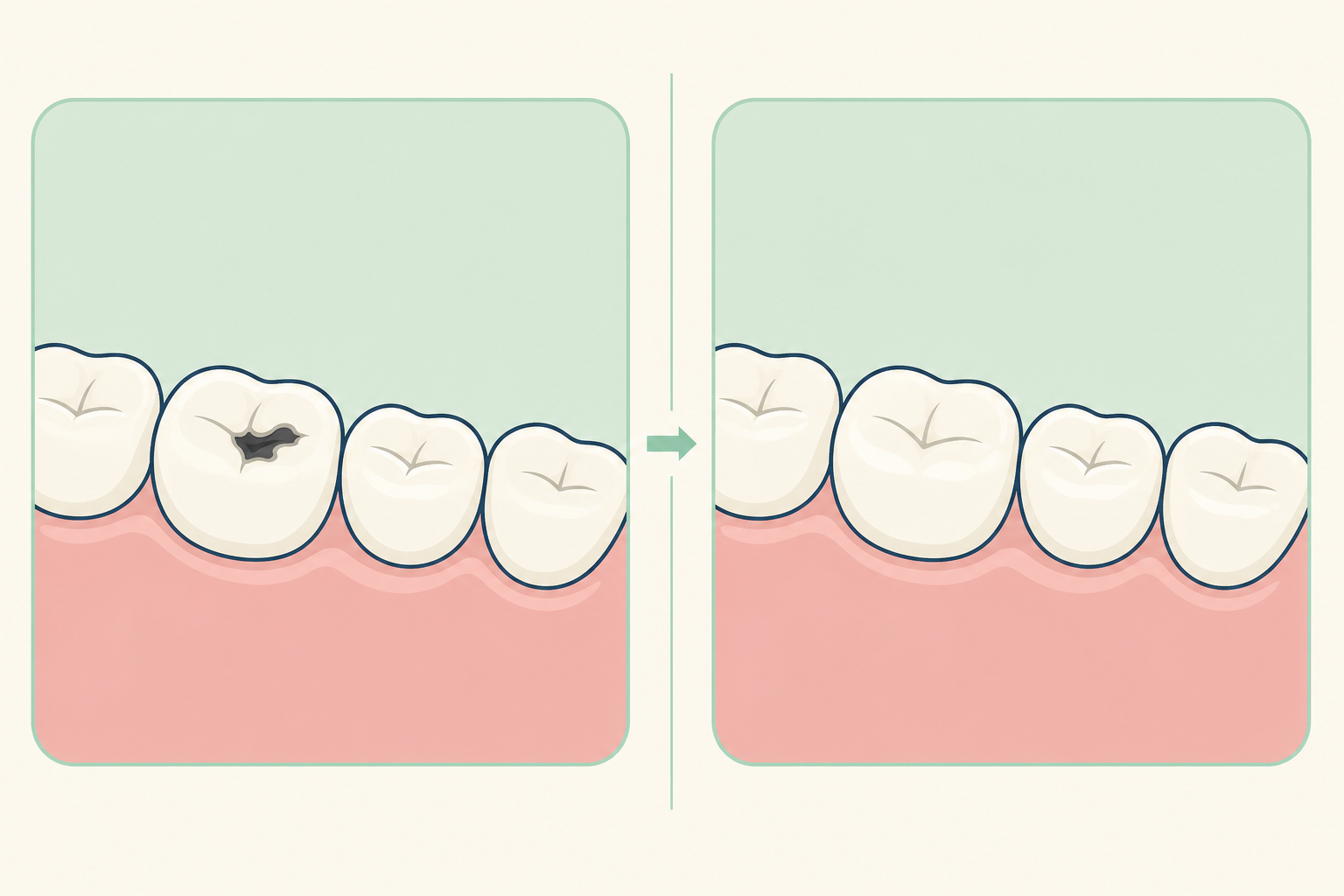
A 38 percent topical application can arrest cavitated caries in primary teeth, but it permanently blackens the treated lesion.
[1]The short answer
Silver diamine fluoride (SDF) is a 38 percent topical treatment used to arrest cavitated caries lesions in primary teeth. It is used within a broader caries-management programme for children, adolescents, and children with special health-care needs.
[1]
What the change looks like
What is it?
Who needs it?
SDF may be considered for children and adolescents with cavitated caries in primary teeth, including those with special health-care needs. Its recommendation is conditional, so it is one part of a comprehensive caries-management programme rather than a universal replacement for other care.
[1]Does it hurt?
SDF is applied topically to the carious area, so the procedure is an application rather than removal of the lesion with a drill. The treatment evidence supplied here does not establish a specific pain score or recovery sensation.
[1]Is it safe?
SDF should not be used in someone with an allergy to silver compounds. Its main disadvantage is a permanent black stain on enamel and dentinal caries lesions; contact with skin can create a temporary henna-like mark that fades as skin cells shed over about 14 days.
[1]How long does it last?
SDF is intended to arrest cavitated caries lesions, but the guidance does not give a single duration for that effect. The protocol is part of continuing caries management, so the child remains within a programme of care.
[1]What happens during the visit?
The procedure uses 38 percent SDF applied to a cavitated caries lesion in a primary tooth. The application is carried out as part of a caries-management programme, with the treatment choice accounting for the child’s disease burden and the possible undesirable effects.
[1]What is recovery like?
The visible result can be permanent blackening of the enamel and dentinal caries lesion. If SDF touches skin, the pigmentation is temporary and desquamation occurs over about 14 days; SDF can also permanently stain surfaces such as clothing and counters.
[1]What are the alternatives?
What should I expect?
Expect a topical 38 percent application aimed at arresting a cavitated lesion, together with discussion of its permanent black staining effect. The treatment sits within a wider plan for managing caries rather than standing alone.
[1]What should I ask about payment?
SDF is characterised as low cost, but no Dubai fee or insurance rule is stated here. The relevant financial distinction is that SDF is used as part of a wider caries-management programme.
[1]Frequently asked questions
What is the main point about Silver Diamine Fluoride (SDF)?
SDF is a topical dental treatment used in caries management, with the choice shaped by the child’s tooth, clinical needs, and follow-up plan.
[1]