
Baby Tooth Extraction
A primary tooth may need removal when it cannot be restored, is retained too long, or interferes with the permanent tooth beneath it.
[1]The short answer
Baby tooth extraction removes a primary tooth that cannot be restored, stays in too long, is impacted or injured, or interferes with eruption, while protecting nearby tissues and the permanent tooth beneath it.
[1]
What the change looks like
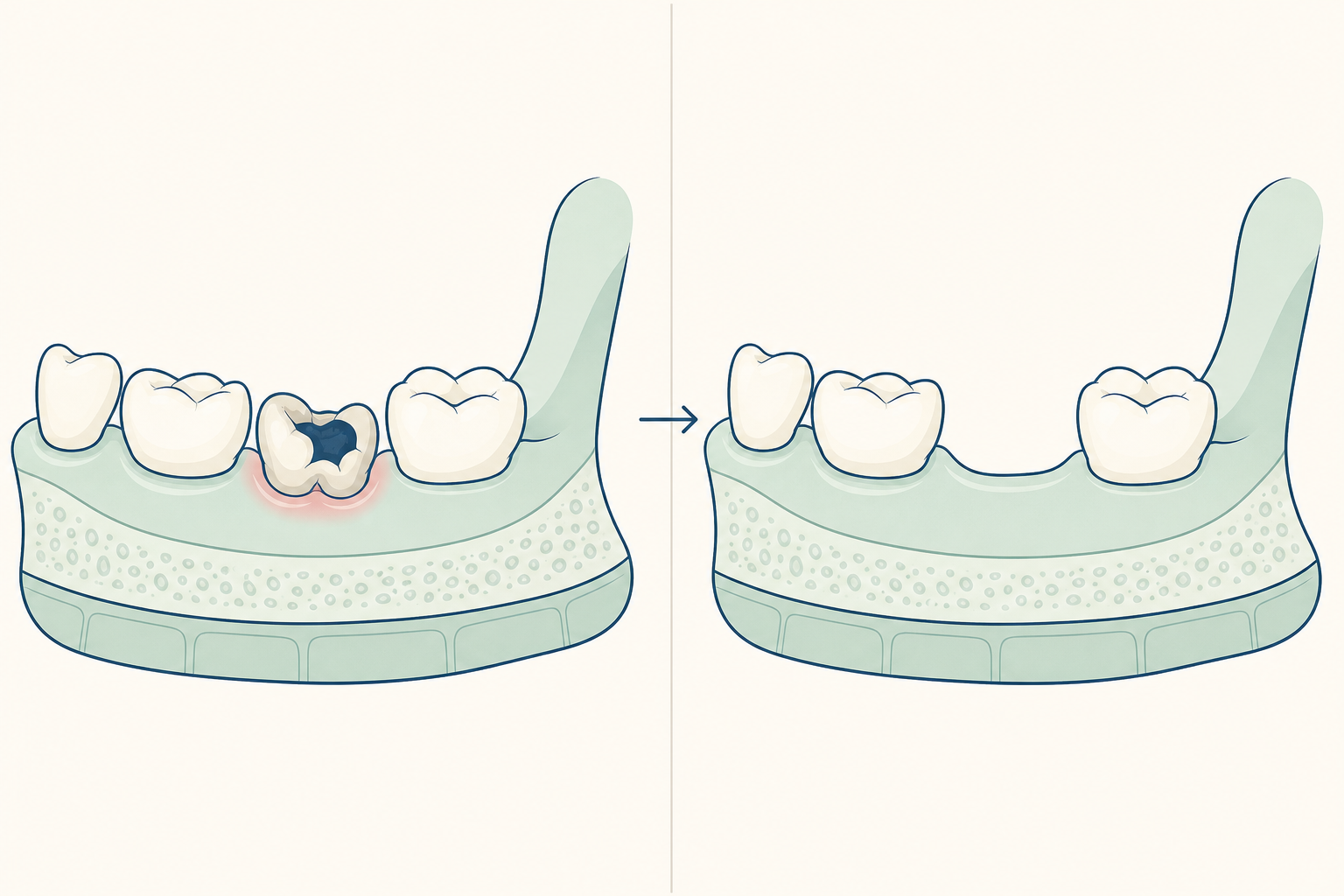
What is it?
| Situation | Why removal may be considered |
|---|---|
| A tooth cannot be restored | Extraction is one management option for a nonrestorable tooth.[1] |
| A tooth is retained, impacted, injured, extra, or delays eruption | Management aims to avoid injury to neighbouring teeth, permanent successors, and nearby tissues.[1] |
Who needs it?
Children may need a primary tooth removed when it is nonrestorable, over-retained, impacted, traumatised, supernumerary, or linked with an eruption delay or failure. The developing dentition and the permanent successor are part of the surgical planning.
[1]The same planning considers whether the tooth is close to neighbouring teeth or other nearby tissues that need protection during treatment.
[1]Does it hurt?
Pediatric oral surgery includes behaviour guidance and peri-operative management as well as attention to a child's developing anatomy and teeth.
[1]Is it safe?
A central safety aim is to avoid injury to neighbouring teeth, the permanent successors, and other nearby tissues during management of primary teeth.
[1]Swelling linked to an odontogenic infection may need incision and drainage. Cellulitis, fever, or lymph-node swelling can mean antibiotics are used alongside local dental care.
[1]How long does it last?
Removal is used for a tooth with a defined problem, such as being nonrestorable, retained too long, impacted, injured, or preventing normal eruption.
[1]What happens during the procedure?
The procedure is planned around the child's developing anatomy and dentition, with behaviour guidance and peri-operative care considered alongside removal of the tooth.
[1]When infection is the reason for treatment, the management route may be pulp therapy or extraction; an infection with swelling may also need incision and drainage.
[1]What is recovery like?
Post-operative management is part of pediatric oral surgery, alongside the care given before and during the procedure.
[1]What are the alternatives?
What should you expect?
The team considers parental consent, growth, developing teeth, behaviour guidance, and care before and after surgery when managing a child's extraction.
[1]The goal is to deal with the problem tooth while taking care around the permanent successor and the surrounding tissues.
[1]Insurance and financing in the UAE
A child's extraction is planned with the developing dentition and the permanent tooth beneath the baby tooth in mind.
[1]Frequently asked questions
Why would a baby tooth be removed before it falls out naturally?
Removal may be considered when a primary tooth cannot be restored, remains too long, is impacted or injured, or delays or blocks eruption.
[1]