
Stainless steel crown or filling for baby teeth
A stainless steel crown covers a badly damaged baby tooth, while a filling restores a smaller prepared area.
[1][2]The short answer
A crown covers and protects a heavily damaged baby tooth, while a filling restores a smaller prepared area after decay removal.
[1][2]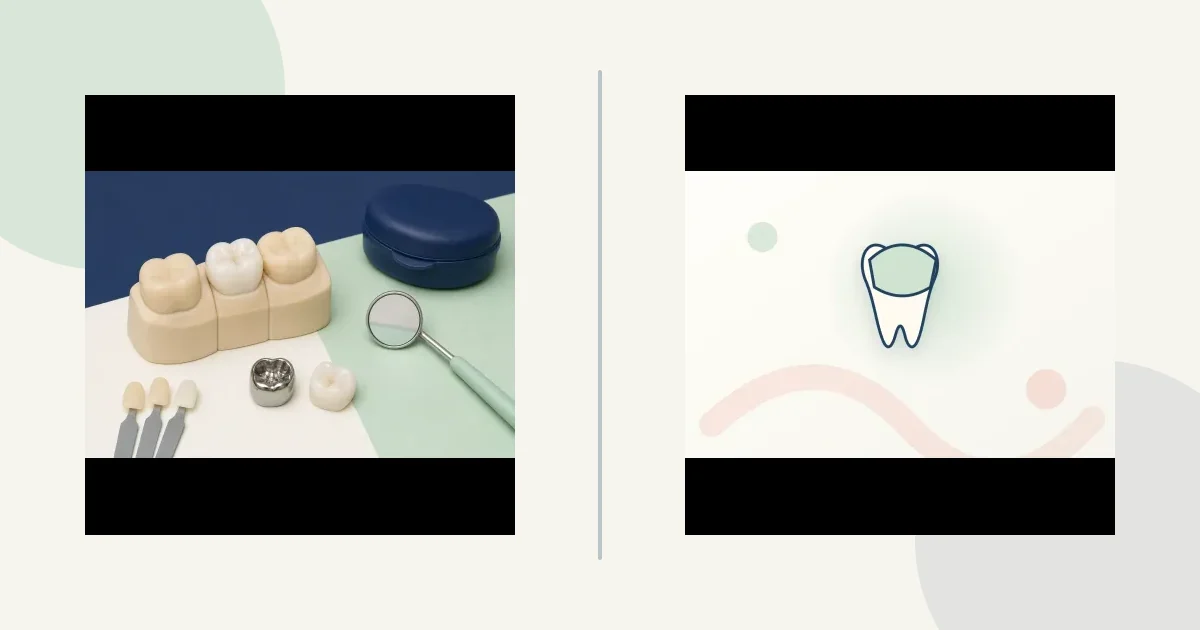
The two options, side by side
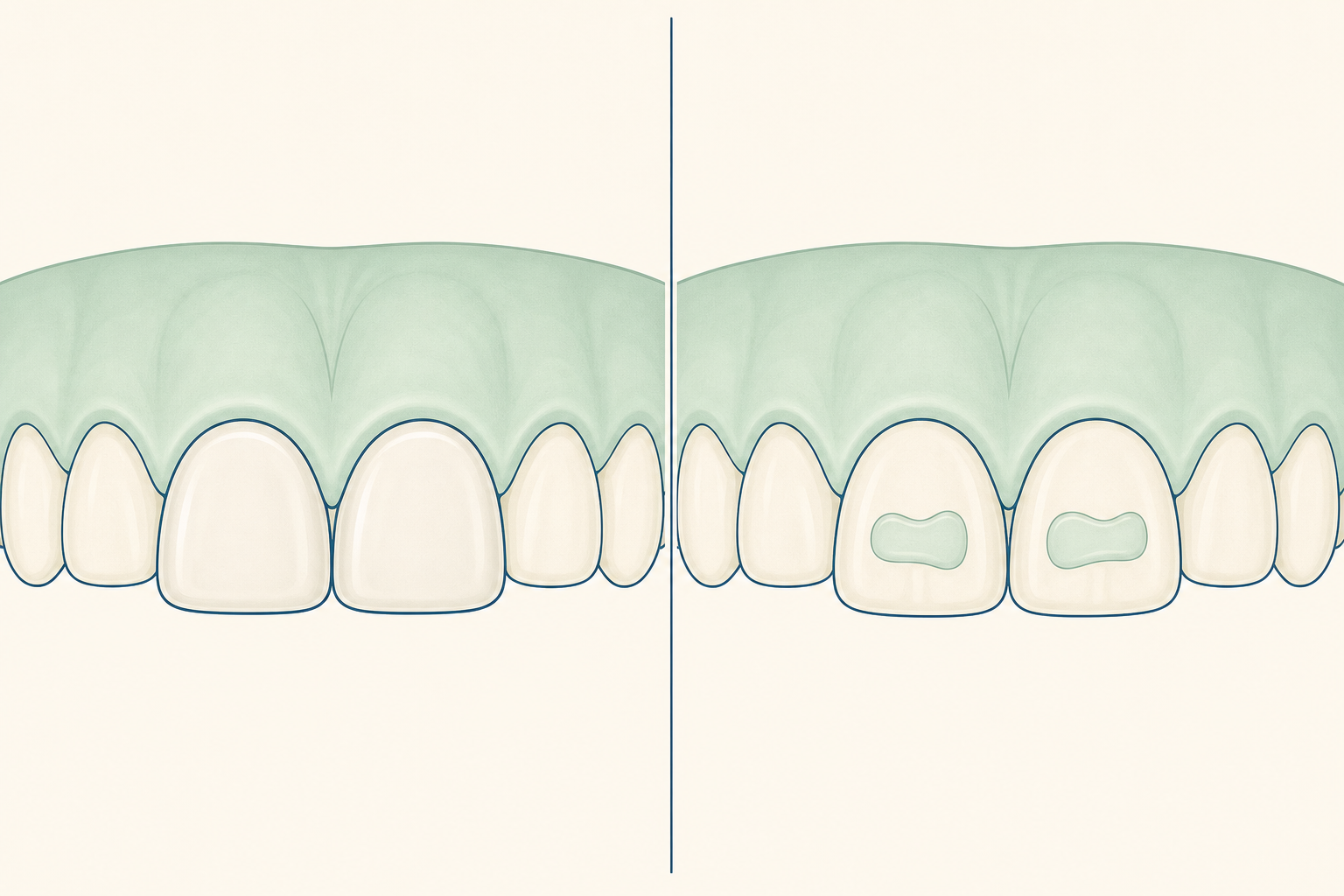
Which repair suits a baby tooth?
| Option | Tooth situation | Treatment role |
|---|---|---|
| Pediatric crown | Extensive damage or a tooth needing full coverage | Covers and protects the remaining tooth[1][2] |
| Filling | Smaller area of decay after removal | Restores the prepared area with a restorative material[1][2] |
When is a crown the stronger option?
When can a filling be enough?
Which repair uses more material?
How do the repairs protect the tooth?
What are the treatment trade-offs?
Full coverage is a larger restoration than a small filling. When a tooth can be treated with a smaller repair, conserving sound tooth structure is part of minimally invasive restorative care.
[1]When might neither repair be right?
What guides the choice?
Look at how much of the baby tooth is damaged and how much sound structure remains. Extensive caries or a tooth treated after pulp therapy points toward coverage, while a limited prepared area can be restored with a filling.
[1]Frequently asked questions
Who wrote this page
This library is published by Dental Nation, a licensed dental group practising in the United Arab Emirates. Pages are written and overseen by the same clinical team that treats patients in our clinics, and are held to a fixed editorial standard for safety and accuracy.
This page is patient education, not medical advice, and cannot replace an examination. Anything urgent — facial swelling, trauma, uncontrolled bleeding or severe pain — needs a dentist or emergency care now.