Dental Nation
Treatment guide

Wisdom Tooth Extraction

Wisdom teeth can be removed when they cause pain, infection, decay, cysts, or damage to nearby teeth and bone.

[1][2]

The short answer

Wisdom tooth extraction removes a wisdom tooth that is causing pain, infection, decay, cysts, or damage nearby.

[1][2]
Wisdom Tooth Extraction dental educational illustration

What the change looks like

Illustrative diagram: Wisdom Tooth Extraction
Illustration — a representative diagram, not a patient photo.
The DN First Look799 AED
Book The DN First Look

What is wisdom tooth extraction?

Problems that can lead to removal
ProblemReason for extraction
Infection or decayRemoval can address the affected wisdom tooth[1][2]
Damage to nearby teeth or boneRemoval can prevent further problems[1][2]

[1][2]

Who may need it?

People may need removal when a wisdom tooth is painful, infected, decayed, impacted, associated with a cyst, or damaging nearby teeth or bone.

[1][2]

Does it hurt?

A local anaesthetic injection numbs the gum during removal. Sedation may be used to help a person relax, and general anaesthetic may be used for difficult removals.

[1][2]

Is it safe?

Complications can include dry socket, infection, and nerve damage that causes numbness or tingling in the tongue, lips, or chin.

[1][2]

How long does it last?

Wisdom tooth extraction often takes only a few minutes and should take no more than 40 minutes. Complex cases can take longer.

[1][2]

What happens during removal?

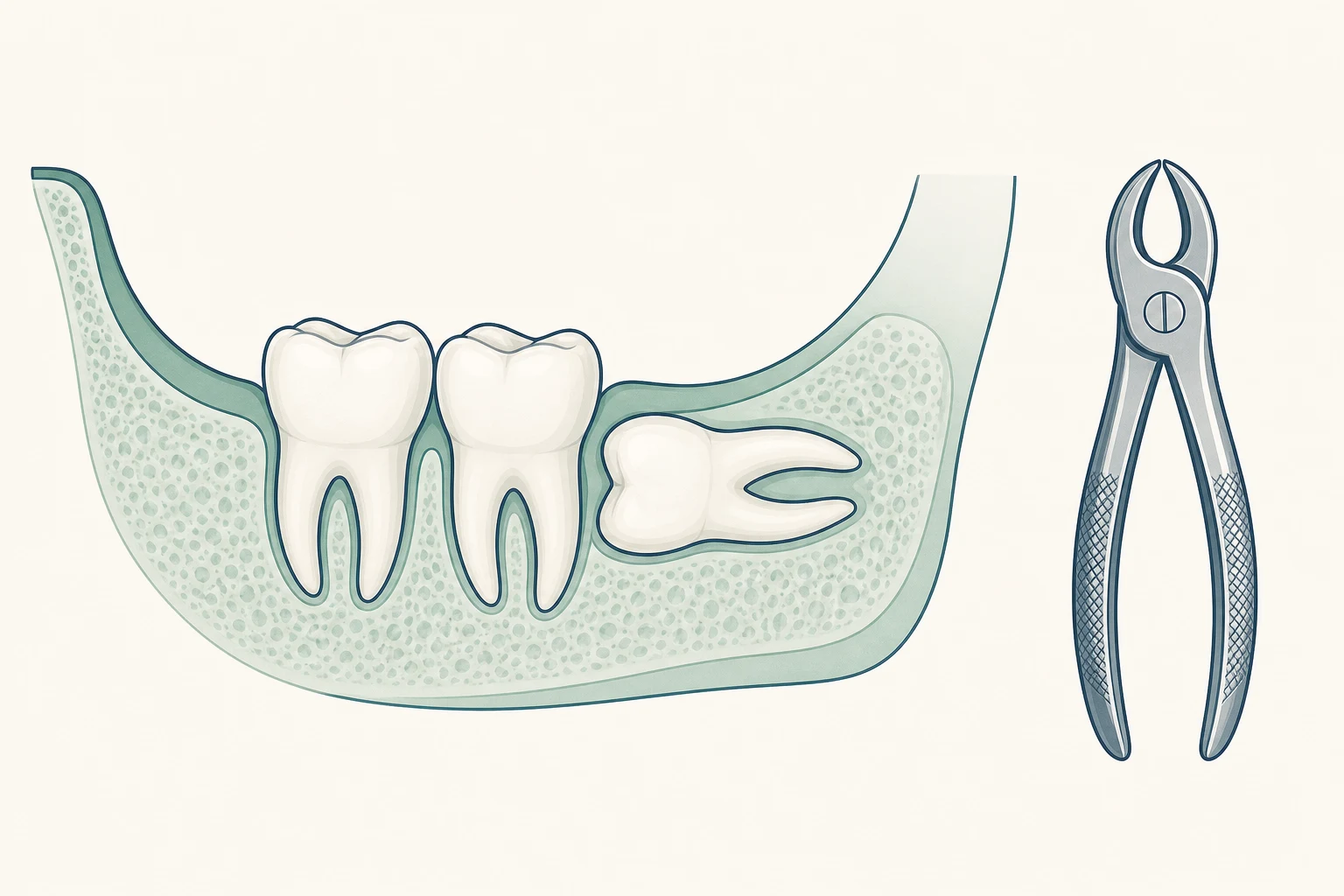
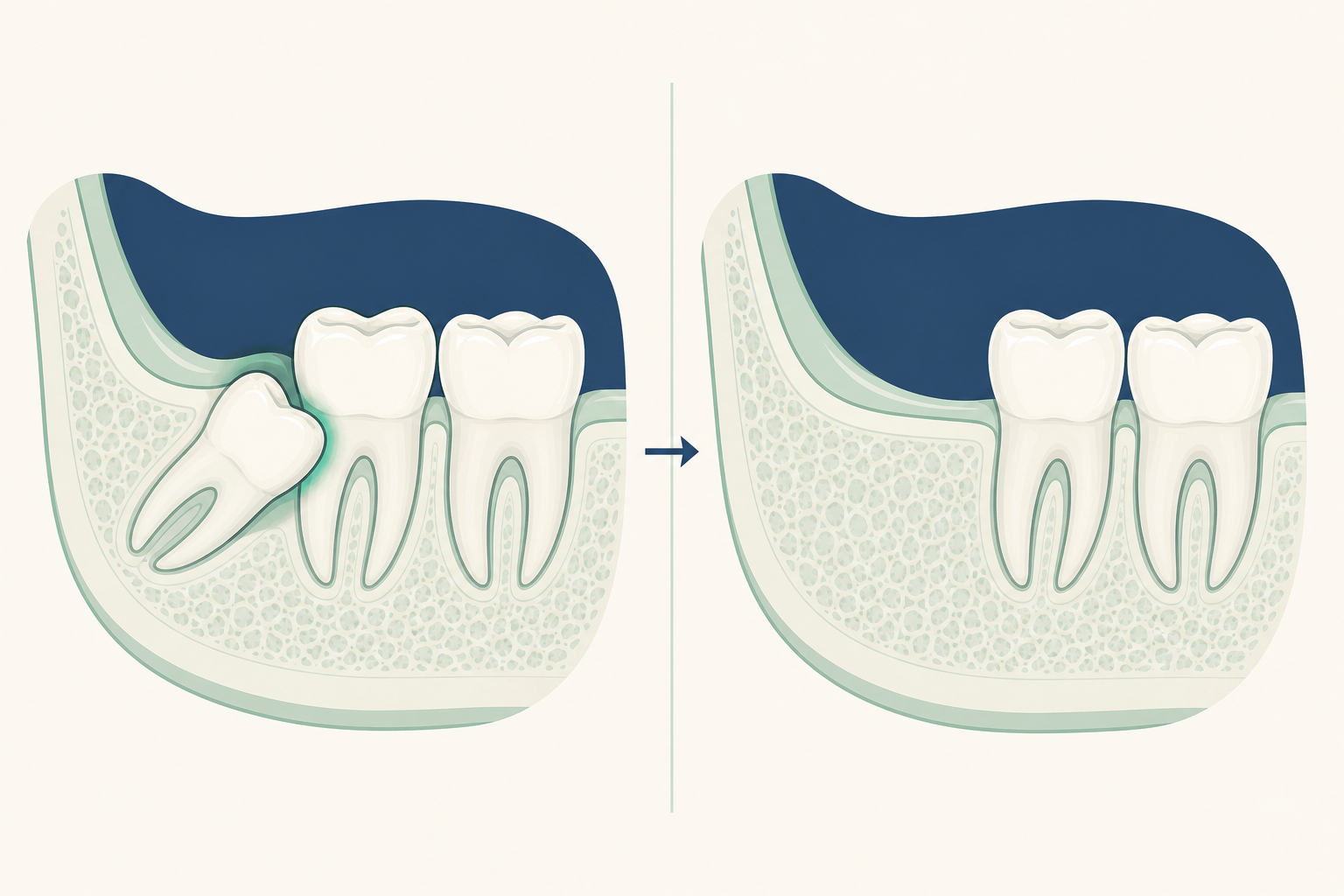
The gum may be cut if it covers the tooth, the socket is widened, and the tooth is removed whole or in two or three pieces. Dissolving stitches may close the gum.
[1][2]

What is recovery like?

Full recovery averages up to two weeks, although many people return to school, work, and usual routines within three to five days.

[1][2]
Recovery milestones
StageWhat to expect
First three to five daysChoose soft foods before adding more solid foods[1][2]
Third or fourth dayPain and swelling may be at their greatest[1][2]

[1][2]

What are the alternatives?

A wisdom tooth without symptoms may not need removal. Extraction is used when the tooth is linked to pain, infection, decay, cysts, or damage.

[1][2]

What should I expect afterwards?

Mild discomfort, slight bleeding, and swelling are expected after removal. Pain and swelling should steadily decrease after they reach their peak.

[1][2]

What does the UAE appointment include?

Wisdom tooth removal is a common oral surgery procedure used to protect other teeth from future problems.

[1][2]

Frequently asked questions

When can I eat after wisdom tooth removal?

Soft foods are advised for the first three to five days, then more solid foods can be added as comfort allows.

[1][2]
