
Dental Nation
Treatment guide

Resin Infiltration

White spots and some enamel defects can be colour-masked with resin placed into porous enamel.

[1][2]

The short answer

Resin infiltration can colour-mask selected white spot lesions and enamel development defects without filling the tooth.

[1][2]
Resin Infiltration dental educational illustration

What the change looks like
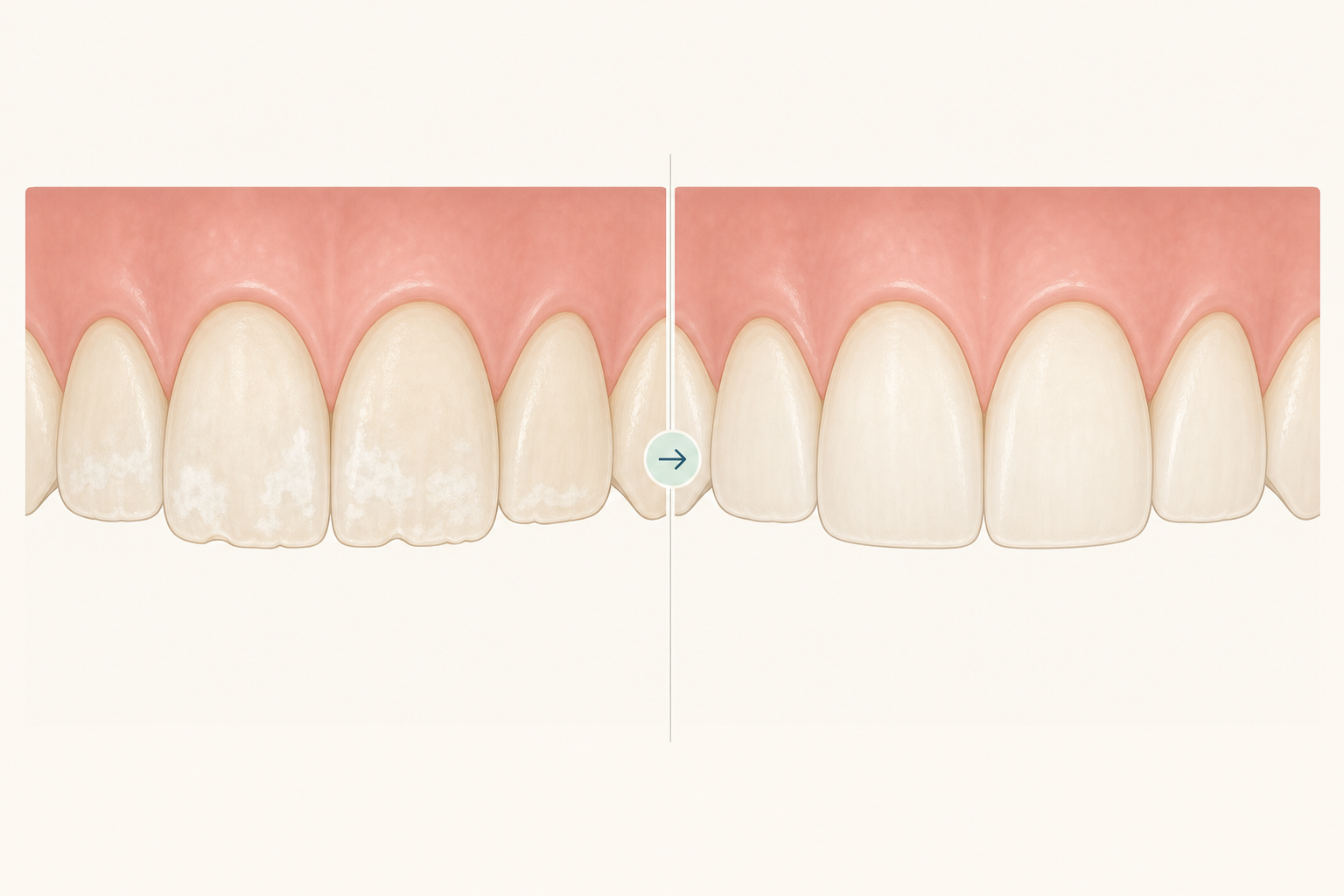
Illustrative diagram: Resin Infiltration
Illustration — a representative diagram, not a patient photo.
The DN Glow Up1,699 AED
Book The DN Glow Up

What can resin infiltration improve?

Where resin infiltration has been used
FindingReported aim
White spot lesionsImprove the appearance of the discoloured enamel.[1][2]
Small proximal carious lesionsSurround the lesion with polymerised unfilled resin to halt progression.[1][2]

[1][2]

What is resin infiltration?

For a non-cavitated lesion, the surface is conditioned with hydrochloric acid, dried with air and ethanol, then filled by capillary action with fluid resin. Light hardens the resin after it has reached the dentino-enamel junction or slightly beyond.

[1][2]

Who may consider it?

This approach has been used to improve discolouration from enamel development defects and white spot lesions. It is also a treatment option for small interproximal carious lesions in permanent teeth and, in some circumstances, primary teeth.

[1][2]

Does it hurt?

The recorded procedure involves surface conditioning, drying, two resin applications and light curing. The available clinical findings report treatment stages and colour changes, rather than a pain measurement.

[1][2]

Is it safe?

Resin infiltration is intended for non-cavitated lesions, and the stated technique includes strict use of a rubber dam. Research on colour masking includes studies with mixed quality and differing risks of bias.

[2]

How long does it last?

Partial or complete masking was reported immediately after treatment. Only two studies followed the original outcome for as long as one year, and both reported that the original masking remained during that period.

[2]

What happens during the procedure?

A specialised matrix is placed between teeth when treating a proximal lesion. After acid treatment and drying, fluid resin is infiltrated over several minutes in two applications, then polymerised with light.

[1][2]

What should I expect afterwards?

The reported visible change is masking of the affected colour immediately after infiltration. Longer follow-up was limited, so the one-year reports are the longest outcome period in these findings.

[2]
Reported timing of colour masking
TimingReported outcome
Immediately after infiltrationPartial or complete colour masking was reported.[2]
Up to one yearTwo studies reported maintenance of the original masking.[2]

[2]

What are the alternatives?

In the white-spot studies, resin infiltration was compared with no treatment, remineralisation and bleaching. Those comparisons focus on changing the appearance of affected enamel rather than on the resin technique itself.

[2]

What can the treatment achieve?

Post-orthodontic white spot lesions were the most commonly treated lesions in the review. The reported result was an immediate partial or complete reduction in the visible contrast of the affected enamel.

[2]

What affects the treatment decision?

The treatment has both appearance-focused uses and a role for selected early carious lesions. Its clinical purpose differs according to whether the issue is a white spot, an enamel defect, or a small proximal lesion.

[1][2]

Frequently asked questions

Can resin infiltration help white spots after braces?

Post-orthodontic white spot lesions were the most frequently treated lesions in the reviewed studies, with immediate partial or complete colour masking reported.

[2]