
Condition guide
Enamel Hypoplasia
Enamel hypoplasia leaves teeth with too little enamel, which can appear as pits, grooves or missing areas and increase decay risk.
[1][2]The short answer
Enamel hypoplasia is reduced enamel formation that can leave pits, grooves or missing enamel and make teeth more vulnerable to decay.
[1][2]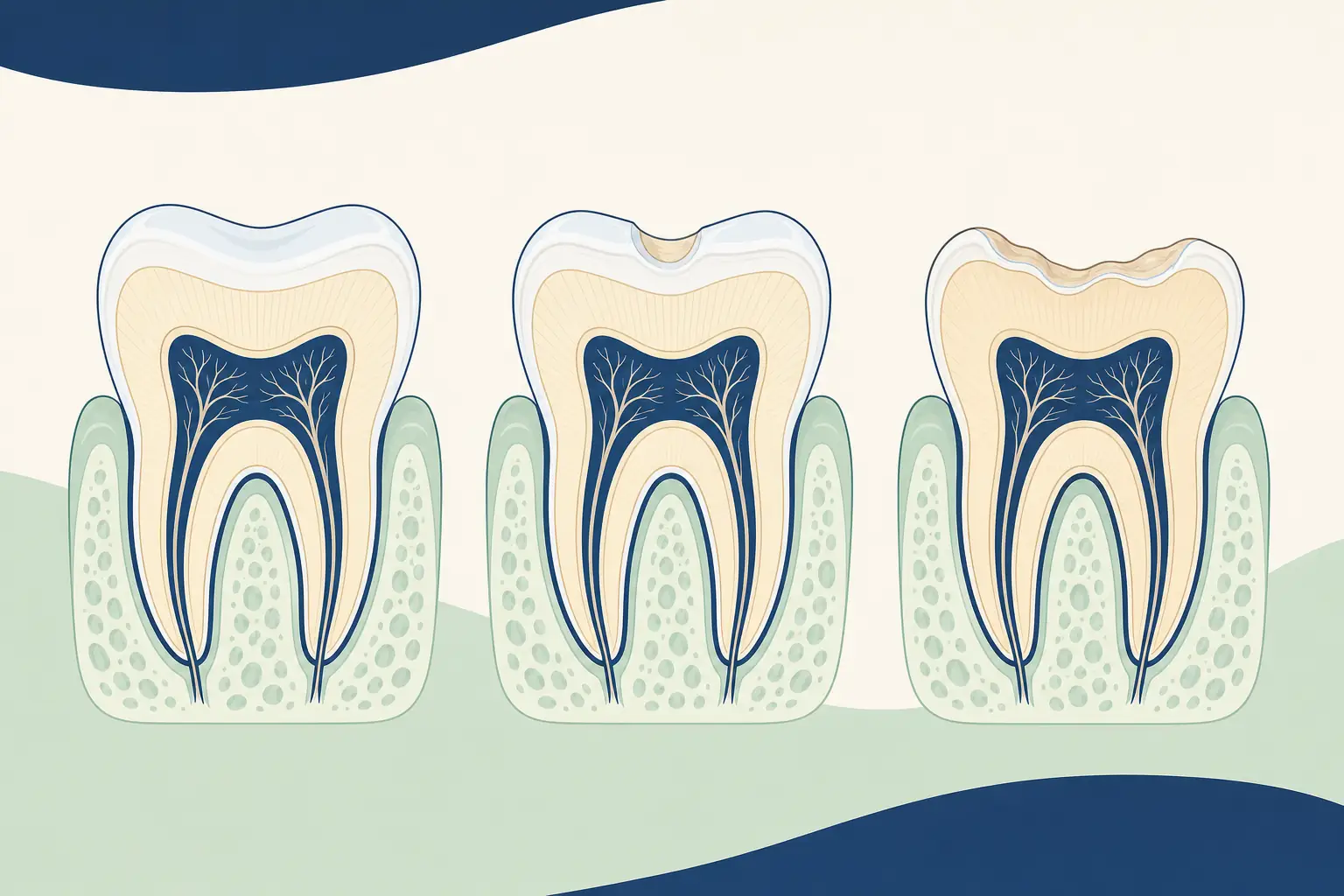
What the change looks like
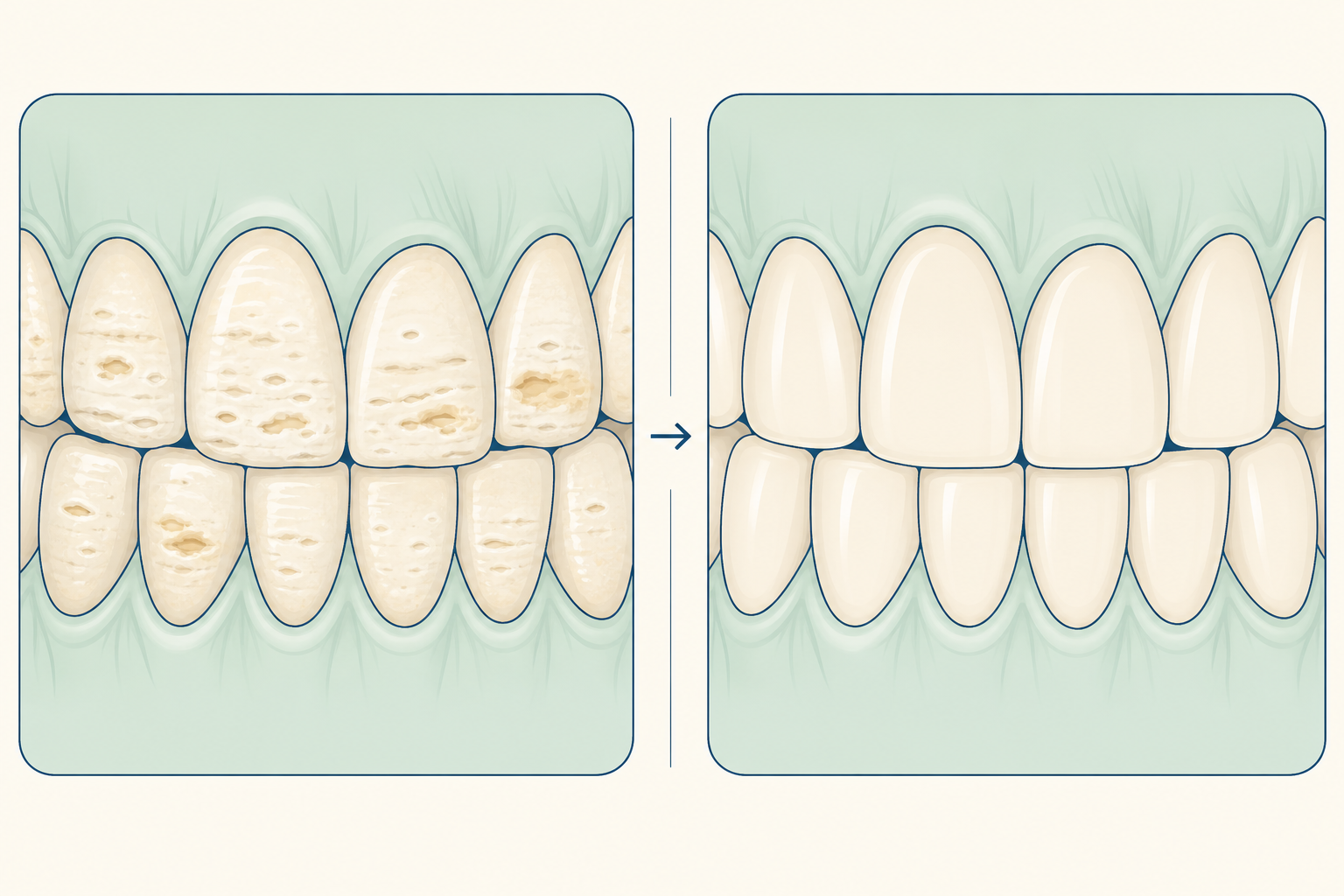
The DN First Look799 AED
Book The DN First LookWhat does enamel hypoplasia look like?
What causes enamel hypoplasia?
Which teeth can be affected?
Who may have enamel hypoplasia?
How is enamel hypoplasia identified?
How are affected teeth managed?
What can change the treatment needed?
Why does reduced enamel matter?
How can affected teeth be protected?
Frequently asked questions
Who wrote this page
This library is published by Dental Nation, a licensed dental group practising in the United Arab Emirates. Pages are written and overseen by the same clinical team that treats patients in our clinics, and are held to a fixed editorial standard for safety and accuracy.
This page is patient education, not medical advice, and cannot replace an examination. Anything urgent — facial swelling, trauma, uncontrolled bleeding or severe pain — needs a dentist or emergency care now.