
What It Feels Like
What can cause white patches?
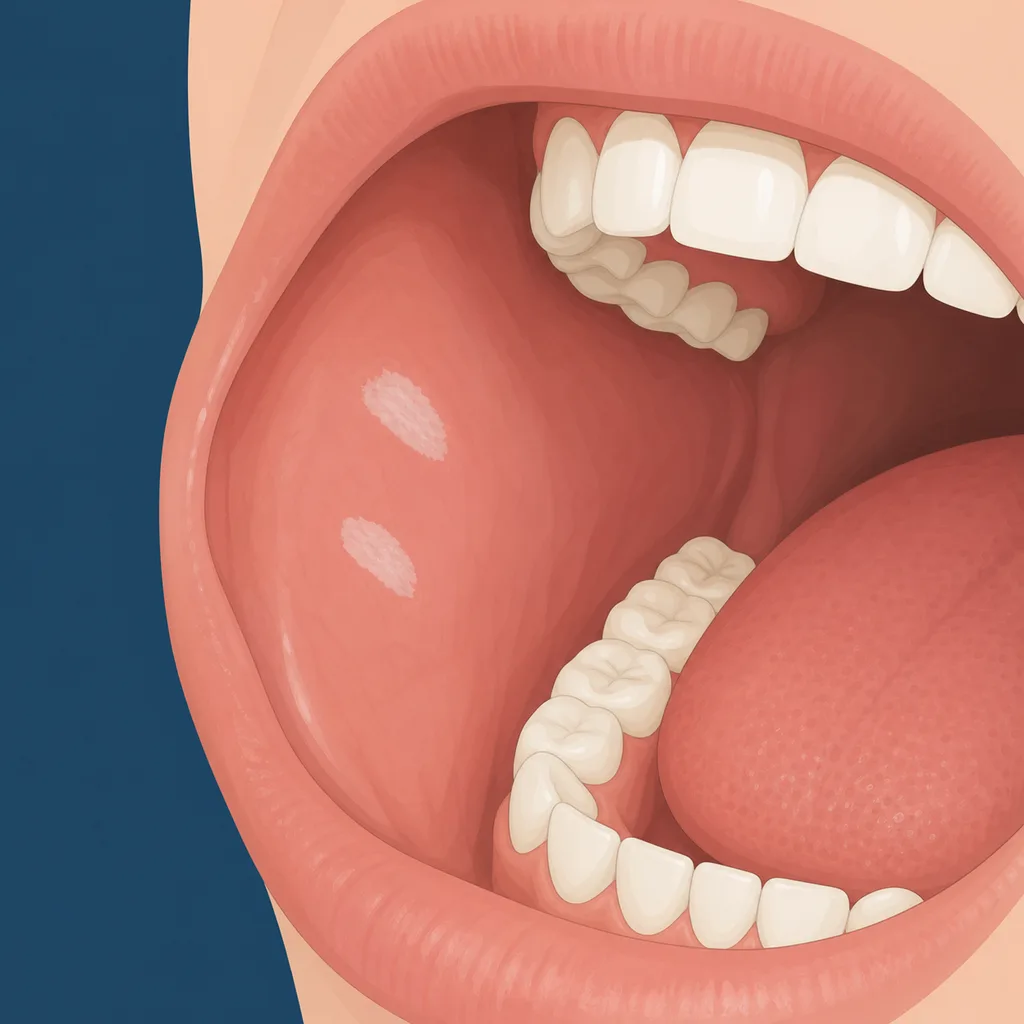
Leukoplakia is one possible explanation for a white mouth patch. Oral thrush is another condition that can produce white material in the mouth. A patch that wipes away differs from one that cannot be rubbed or scraped away.
[1]What relief is safe tonight?
Do not scrape, cut, or burn a white patch. Keep normal mouth care gentle and arrange an assessment if it persists or worries you. If the area is painful or swallowing becomes difficult, seek prompt clinical advice. The safe immediate step is observation and professional assessment, rather than trying to remove tissue yourself.
[1][3]How will a dentist check it?
A dentist examines the patch and the surrounding mouth tissue, asks how long it has been present, and considers its appearance and history. Further assessment may be needed when the cause is uncertain. The examination is what separates a visible symptom from a reliable diagnosis.
[1]How is treatment chosen?
Treatment depends on the cause found during assessment. A clinician may manage oral thrush differently from leukoplakia, while a persistent or concerning patch may need further investigation or removal. The treatment decision follows the examination rather than the colour of the patch alone.
[1]How can you reduce future mouth changes?
Regular mouth checks and attention to a patch that persists make changes easier to assess early. Avoiding tobacco and limiting alcohol are part of reducing risks associated with mouth disease. Keep routine dental care, and mention a new or changing patch instead of waiting for it to disappear.
[1]When should you arrange an appointment?
Frequently asked questions
Should every white patch be treated as thrush?
No. Oral thrush is one possible cause, while leukoplakia is another; an examination is needed when the cause is unclear or the patch persists.
[1]