
Recurring Mouth Ulcers
Recurring mouth ulcers are repeated sores that need their pattern, triggers, and associated symptoms considered together.
[1]The short answer
A canker sore is usually a painful ulcer inside the mouth, and some people experience episodes that return after an earlier sore heals. Record where each sore appears, how long it lasts, how painful it is, and whether the sites change. Canker sores and fever blisters are different conditions, so location and appearance matter. A repeated pattern deserves a clear history rather than a new guess at every episode.
[1]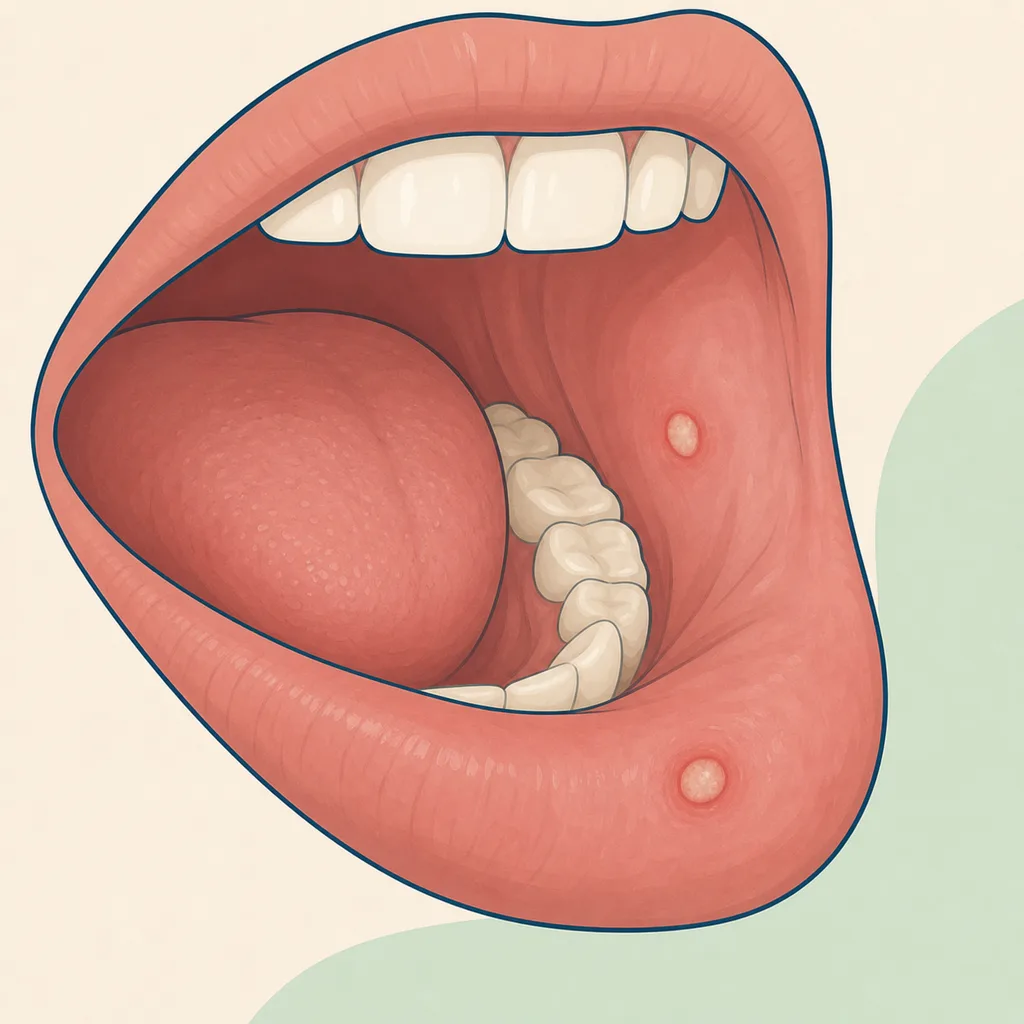
What do recurring mouth ulcers feel like?
What can make mouth ulcers recur?
Canker sores can have different triggers and associations, and a recurring episode does not prove one cause. Local injury, stress, illness, or other factors may be relevant for an individual. Fever blisters are caused by a different virus and commonly occur on or around the lips. Tell the clinician about triggers, medicines, health conditions, and whether sores occur inside the mouth or on the lip.
[2][1]What relief is safe tonight?
Choose foods that do not irritate the sore and keep the mouth comfortable. A pharmacist or clinician can advise about suitable symptom relief. Do not burst or pick at a sore. Seek advice when episodes are severe, frequent, slow to heal, or accompanied by a worrying new symptom instead of repeatedly treating the appearance without assessment.
[2][1]How will a dentist assess recurring ulcers?
Assessment focuses on the history and examination: where the sores occur, how often they return, how long they last, and whether other symptoms are present. The clinician can examine the mouth and distinguish a likely canker sore from another lesion that needs attention. Bring photographs only as supporting context; a current examination remains important when a sore is present.
[1]How are recurring ulcers treated?
Treatment depends on the type of sore, its severity, and the pattern of recurrence. Care may focus on pain and irritation, while frequent or unusually persistent episodes may need further assessment. Fever blisters follow a different clinical pattern from canker sores. Use the plan given for the lesion you have rather than applying one treatment to every sore.
[2][1]How can you reduce repeat ulcers?
Keep a record of foods, injury, illness, stress, medicines, and other changes before an episode. Protect the mouth from repeated irritation and discuss recurring patterns with a clinician. Prevention depends on the contributor, so a diary can reveal a useful connection without claiming that every episode has the same trigger. Arrange review when the pattern is becoming more frequent or severe.
[2][1]When should you arrange an assessment?
Arrange an assessment when ulcers are frequent, severe, slow to heal, or different from your usual pattern. Seek prompt advice when eating, drinking, or swallowing becomes difficult, or when another concerning symptom appears. A clinician can examine an active sore, review the recurrence history, and decide whether routine care or further investigation is appropriate.
[2][1]