
Composite, Lumineers, or porcelain veneers
Choose composite for easier repair and possible enamel savings; porcelain is stronger and resists staining and wear.
[1][2][3][4]The short answer
Composite veneers may preserve more enamel and are easier to repair, while porcelain veneers resist stains and wear better.
[1][3][2][4]
The two options, side by side
Which veneer type fits the trade-off?
| Option | Material or design | Useful distinction |
|---|---|---|
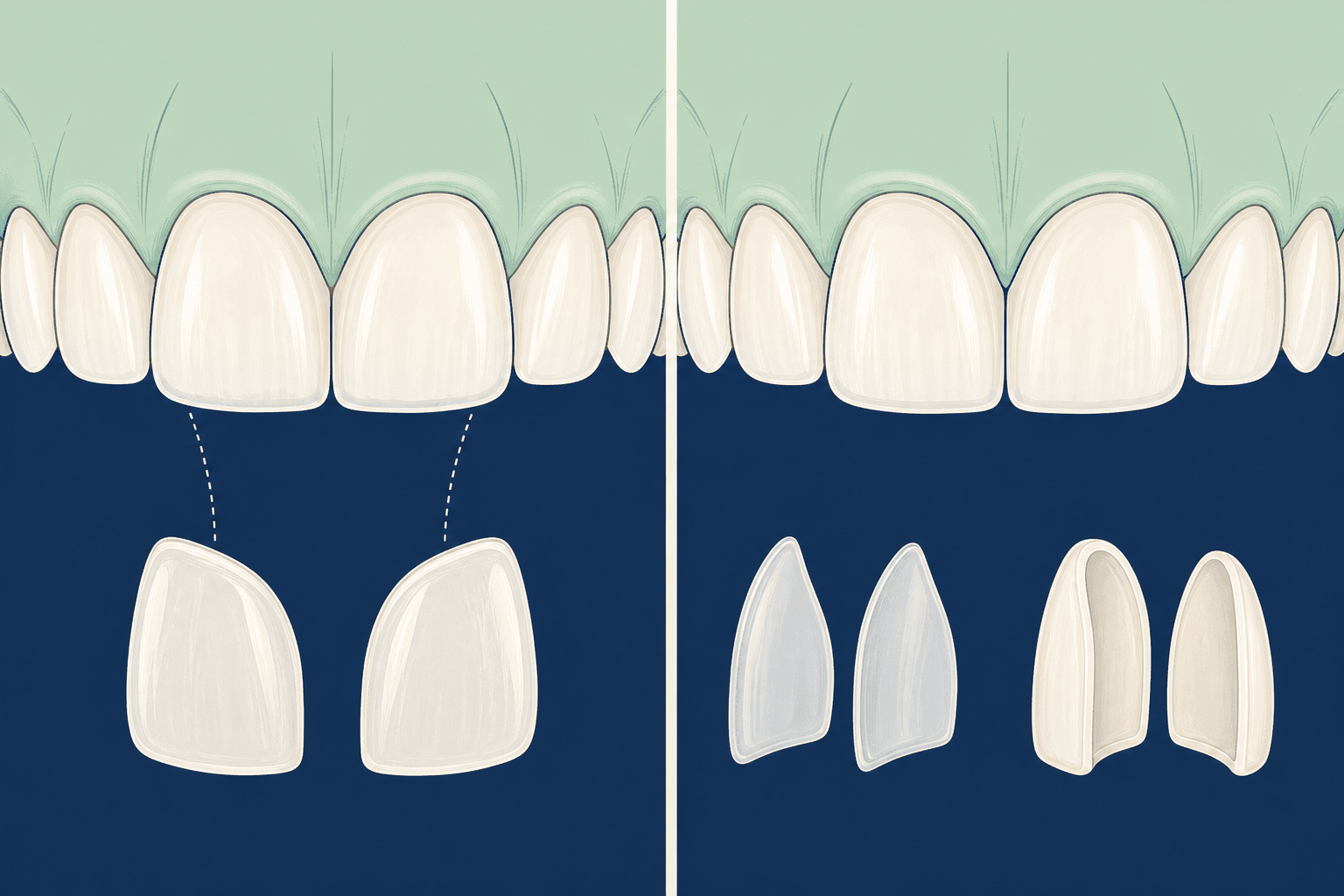
| Composite | Tooth-coloured filling material bonded to the tooth | May need less enamel removal and is easier to repair if damaged.[1][3][2][4] |
| Porcelain | Thin custom-made shell fitted to the front of the tooth | Strong, long-lasting and usually more expensive than composite.[1][3][2][4] |
| No-preparation ceramic | Conservative ceramic veneer technique | Requires careful case selection because long-term evidence is limited.[1][2][4] |
Choose composite if you value easier repair
Choose porcelain if strength matters most
Which option costs more?
Porcelain tends to be the higher-priced veneer material. Composite may reduce the number of visits, while a no-preparation ceramic approach has limited long-term clinical evidence.
[1][3][2][4]| Approach | What changes the decision |
|---|---|
| Composite | May need less enamel removal and fewer visits; it is easier to repair if damaged.[1][3][2][4] |
| Porcelain | It is stronger, long-lasting and usually more expensive than composite.[1][3][2][4] |
| No-preparation ceramic | It is conservative, but controlled clinical evidence has not established predictable long-term outcomes.[1][2][4] |
How do maintenance needs differ?
What are the main drawbacks?
When might veneers be the wrong starting point?
What should guide the choice?
Frequently asked questions
Who wrote this page
This library is published by Dental Nation, a licensed dental group practising in the United Arab Emirates. Pages are written and overseen by the same clinical team that treats patients in our clinics, and are held to a fixed editorial standard for safety and accuracy.
This page is patient education, not medical advice, and cannot replace an examination. Anything urgent — facial swelling, trauma, uncontrolled bleeding or severe pain — needs a dentist or emergency care now.