
Mouth Sores
Mouth sores are painful or irritated areas on the lips, cheeks, tongue, gums, or other mouth tissues.
[1]The short answer
A sore may feel tender, burning, raw, or painful when eating, drinking, brushing, or speaking. It can appear as an ulcer, blister, red area, or irritated patch. Location and appearance matter, because different mouth sores can look and behave differently.
[1]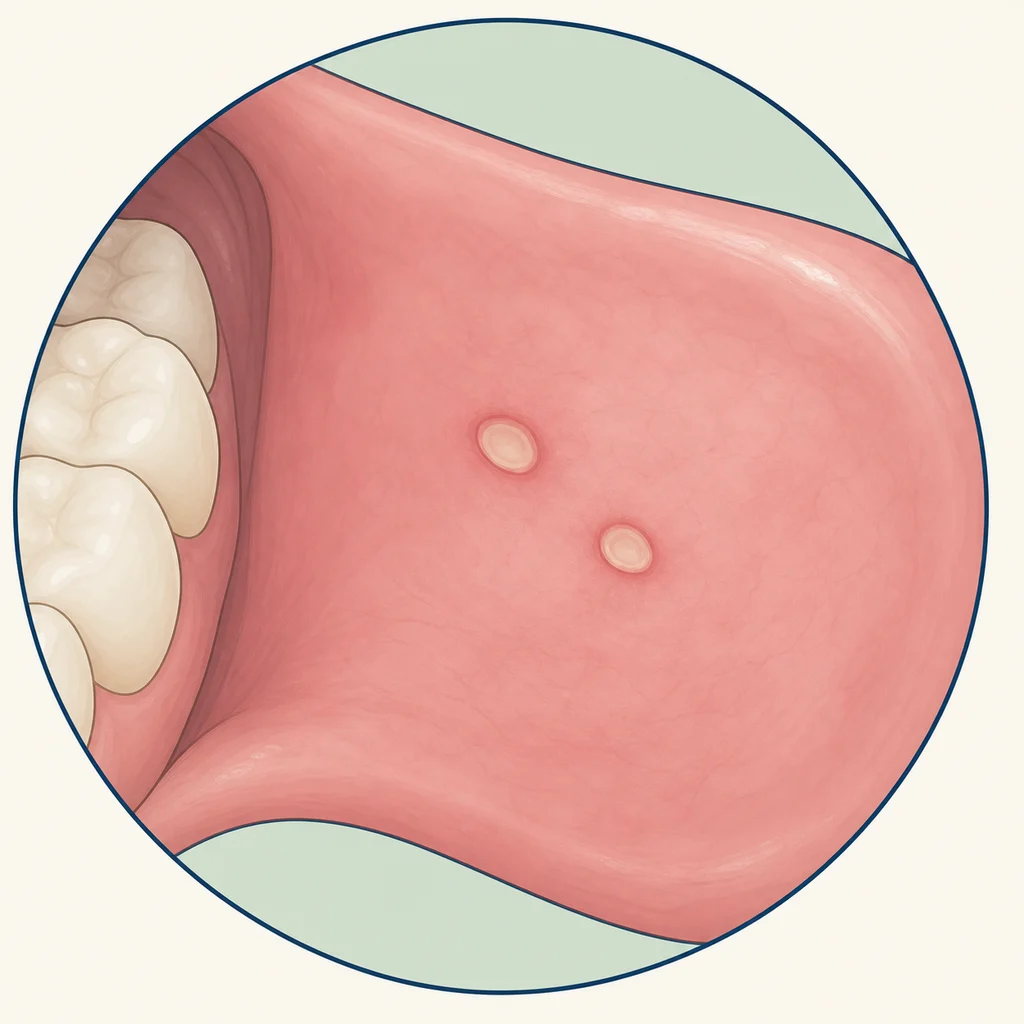
What does a mouth sore feel like?
What commonly causes mouth sores?
Possible causes include accidental injury, irritation, canker sores, fever blisters, infection, and other mouth conditions. A sore may follow biting, a sharp tooth, or local irritation, while some sores occur without an obvious injury. The appearance and course help separate these possibilities.
[1]What relief is safe tonight?
Choose soft foods, avoid foods that sting the area, keep the mouth clean gently, and drink enough fluid. Do not pick or burst a sore. A pharmacist or clinician can advise on suitable pain relief, especially for a child, pregnancy, or a person taking other medicines.
[1]How is a mouth sore checked?
A clinician asks when the sore appeared, whether it recurs, what it looks like, and whether there was injury or illness. They examine the mouth and nearby tissues. Persistent, unusual, or recurrent changes may need further assessment rather than repeated self-treatment.
[1]How are mouth sores treated?
Treatment depends on the cause and severity. Removing an irritant, protecting the area, and managing pain may be enough for some sores. Other causes may need targeted treatment or medical review. A clinician should guide care when the sore is persistent, severe, or unusual.
[1]How can you reduce irritation?
Use gentle mouth care, avoid biting the area, and pay attention to sharp teeth or appliances that repeatedly rub the tissues. Keep the mouth clean and follow advice for recurring sores. A record of triggers can help when the problem returns.
[1]When should you arrange an assessment?
Arrange dental or medical advice when a sore is severe, persistent, recurrent, or interfering with eating and drinking. Seek prompt care for concerning associated symptoms or a change that does not settle. An examination is the safest way to decide whether further testing is needed.
[1]Frequently asked questions
When should a mouth sore be checked?
Arrange an assessment when a sore is severe, persistent, recurrent, unusual, or interfering with eating and drinking.
[1]