
Dental Crown Fell Off
A crown that has fallen off is usually a reparative dental problem, but worsening swelling, infection or severe pain needs urgent attention.
[1][2]The short answer
The tooth can feel exposed, broken or sensitive once its crown has come away. A fallen crown belongs to the short, episodic repair group when there is no active disease or clear risk factor requiring wider management.
[1][2]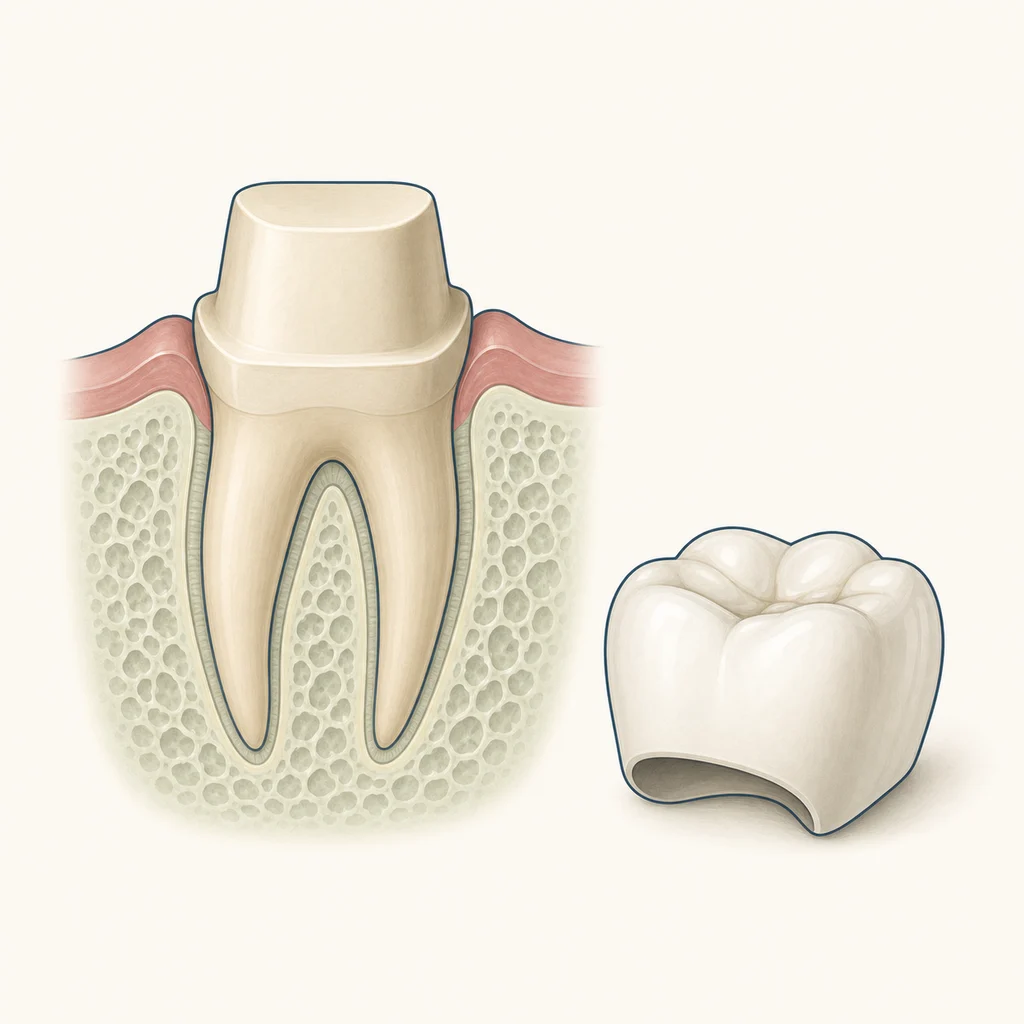
What does it feel like when a crown falls off?
What can lead to a crown falling off?
What relief is safe tonight?
How is the problem assessed?
Triage identifies the nature of the fallen-crown problem and directs it to an appropriate service within a clinically suitable timescale. The urgent visit focuses on the presenting complaint and is not expected to be a complete oral-health assessment.
[1]How is a fallen crown treated?
How can future urgent dental problems be reduced?
Preventive work may include fluoride varnish, removing plaque or calculus that interferes with cleaning, making cavities cleansable, and advice on brushing, interdental aids and modifiable risks. Progressive disease may then need separate treatment courses and monitoring.
[1]When should I seek emergency help?
Frequently asked questions
Who wrote this page
This library is published by Dental Nation, a licensed dental group practising in the United Arab Emirates. Pages are written and overseen by the same clinical team that treats patients in our clinics, and are held to a fixed editorial standard for safety and accuracy.
This page is patient education, not medical advice, and cannot replace an examination. Anything urgent — facial swelling, trauma, uncontrolled bleeding or severe pain — needs a dentist or emergency care now.