
Chipped Tooth
A chipped tooth may feel sharp or sensitive after a piece breaks away. Learn what to do immediately and how it may be repaired.
[1][2]The short answer
A chipped tooth has lost part of its enamel or tooth structure, leaving an edge that may feel sharp, catch the tongue, or become sensitive. The depth of the damage cannot be judged from the chip's appearance alone.
[1][2]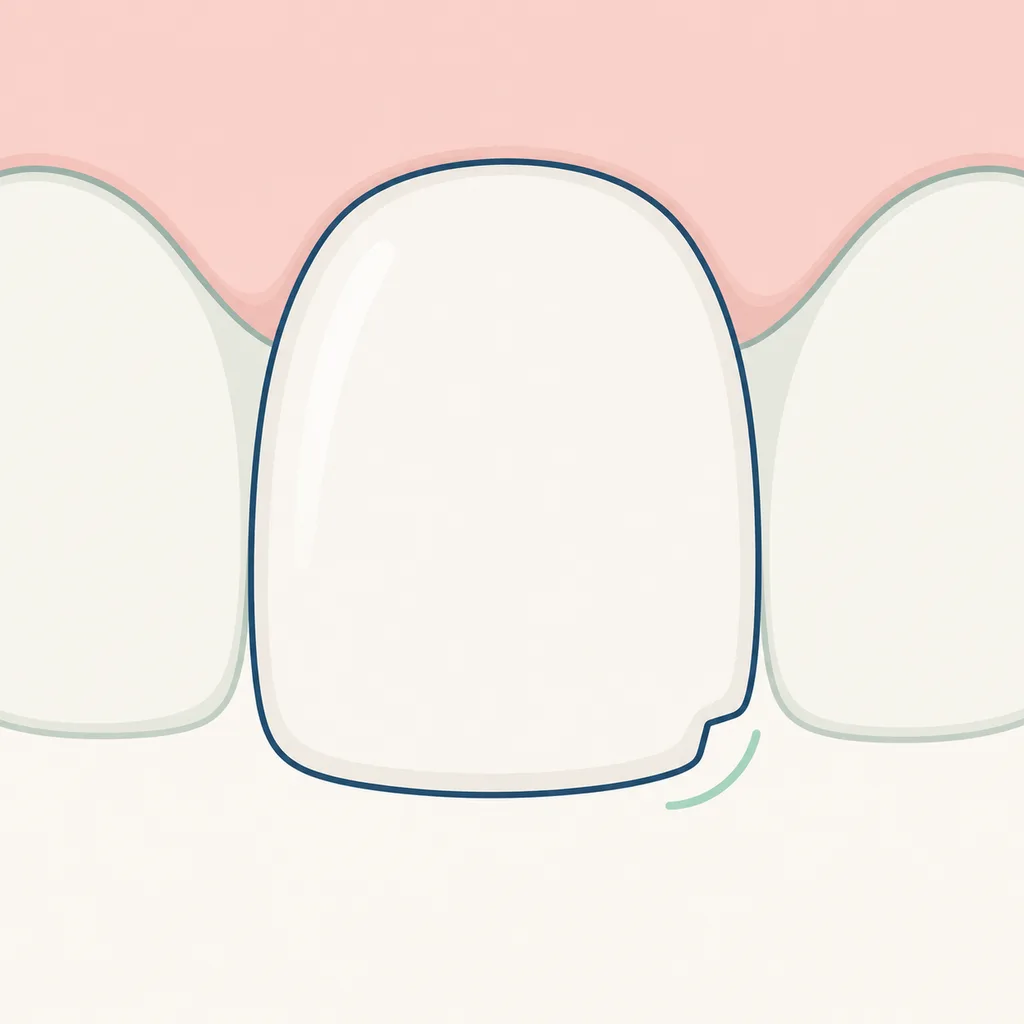
What it feels like
Common causes
A chip can follow an impact, biting something hard, tooth wear, or weakened tooth structure. A dentist will also consider whether an existing crack, decay, or an earlier restoration has changed the tooth’s strength.
[2]| Situation | What it may indicate | Useful next step |
|---|---|---|
| Surface or shape change | The outside of the tooth has changed | Ask for an examination before choosing a cosmetic fix[2] |
| Deeper tooth problem | The symptoms or appearance suggest damage below the surface | Seek dental advice and avoid chewing on it[2] |
What relief is safe tonight?
How a dentist checks it
The dentist examines the tooth, asks how the injury happened, and checks the damaged area and nearby tissues. The assessment helps distinguish a surface chip from a fracture that extends deeper into the tooth.
[2]What treatment depends on
How to lower the chance of another problem
Use care with hard foods and protect teeth during activities where an impact is possible. Regular dental care can identify decay or weakened structure before it contributes to another break.
[2]Where this can lead
Frequently asked questions
Can chipped tooth be judged from appearance alone?
A chipped tooth has lost a piece of its enamel or tooth structure. The change may be small, but the exposed edge can feel sharp, catch the tongue, or become sensitive. The visible chip does not show how deep the damage is, so an examination matters before choosing a repair.
[1][2]