
Can veneers stain?
Whether a veneer stains depends on the material: composite-resin veneers can change appearance over time.
[3]The short answer
Composite-resin veneers can change appearance over time, while porcelain veneers behave differently Natural teeth beside either material can also change colour, so material and surrounding teeth both matter when assessing staining
[3]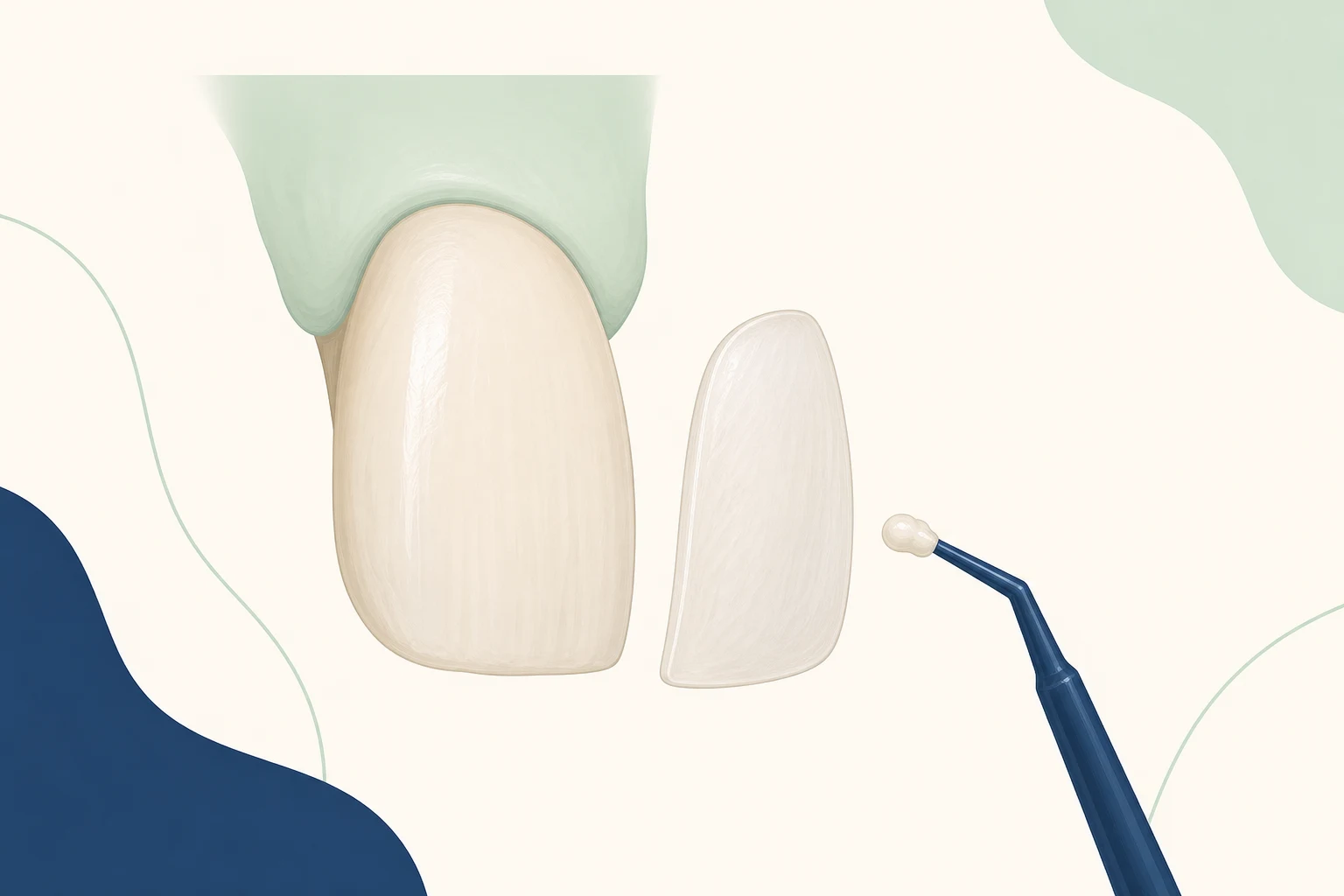
Composite and porcelain veneers respond to staining differently
| Answer part | What the research shows |
|---|---|
| Direct answer | Composite-resin veneers can change appearance over time, while porcelain veneers behave differently. Natural teeth beside either material can also change colour, so material and surrounding teeth both matter when assessing staining.[3] |
| What changes it | A veneer covers only the front surface of the treated tooth and holds the shade it was placed at.[3] |
Adjacent natural teeth and shade balance across the smile
A veneer covers only the front surface of the treated tooth and holds the shade it was placed at Natural teeth beside it can shift colour over time; through diet, age, or whitening applied to surrounding enamel; while the veneer itself stays the same The overall appearance of the smile therefore depends on both the restoration and the teeth around it Shade targets, contour preferences, and ongoing cleaning at the restoration margins are each addressed in planning, and the same considerations return at follow-up
[3]Pre-treatment assessment scope and the permanence of enamel reduction
Before any veneer work is agreed, the clinician examines gum health, existing restorations, bite, and the tooth surfaces that will be involved Photographs and scans are useful for explaining the intended approach, but they do not substitute for clinical diagnosis or for obtaining consent to remove enamel Traditional veneer preparation reduces enamel permanently; once that step is taken it cannot be reversed Shade expectations, long-term maintenance requirements, and the permanent nature of enamel removal all need to be understood before treatment begins
[3]| Stage | Source-backed step |
|---|---|
| When to get help | Before any veneer work is agreed, the clinician examines gum health, existing restorations, bite, and the tooth surfaces that will be involved.[3] |
| Decision step | Over time a veneer may develop chips, cracks or looseness and eventually need replacing.[3][5][6] |
Physical wear, disease beneath a veneer, and when to seek earlier care
Over time a veneer may develop chips, cracks or looseness and eventually need replacing Disease can progress beneath or around a placed restoration regardless of how the surface appears, which is part of why routine follow-up matters A bite that has shifted, a veneer that has loosened, or the onset of pain or swelling each warrant a dental assessment When a problem is getting worse, limiting function, or accompanied by a warning sign, the clinic's urgent contact route should be used rather than waiting for the next scheduled appointment
[3][5][6]Frequently asked questions
Does the type of veneer material affect staining risk,?
Material matters here Composite-resin veneers can change appearance over time, while porcelain veneers respond differently Colour changes in natural teeth beside the veneer add a second variable, because surrounding enamel shifts independently of the restoration
[3]Can the teeth beside a veneer change colour while the veneer itself stays the same shade,?
Natural teeth beside both composite-resin and porcelain veneers can change colour over time A veneer retains its placed shade while adjacent enamel may lighten or darken, so both the restoration material and the surrounding dentition factor into how long-term appearance is assessed
[3]Once a veneer is placed, can its shade be changed if surrounding teeth shift colour,?
The veneer itself cannot be whitened; traditional preparation removes enamel and that step is not reversible Shade targets and the permanent nature of enamel removal should be discussed in detail before the procedure is agreed A veneer that chips, cracks, loosens, or causes new pain warrants prompt contact with the dental team
[3][5]Who wrote this page
This library is published by Dental Nation, a licensed dental group practising in the United Arab Emirates. Pages are written and overseen by the same clinical team that treats patients in our clinics, and are held to a fixed editorial standard for safety and accuracy.
This page is patient education, not medical advice, and cannot replace an examination. Anything urgent — facial swelling, trauma, uncontrolled bleeding or severe pain — needs a dentist or emergency care now.