
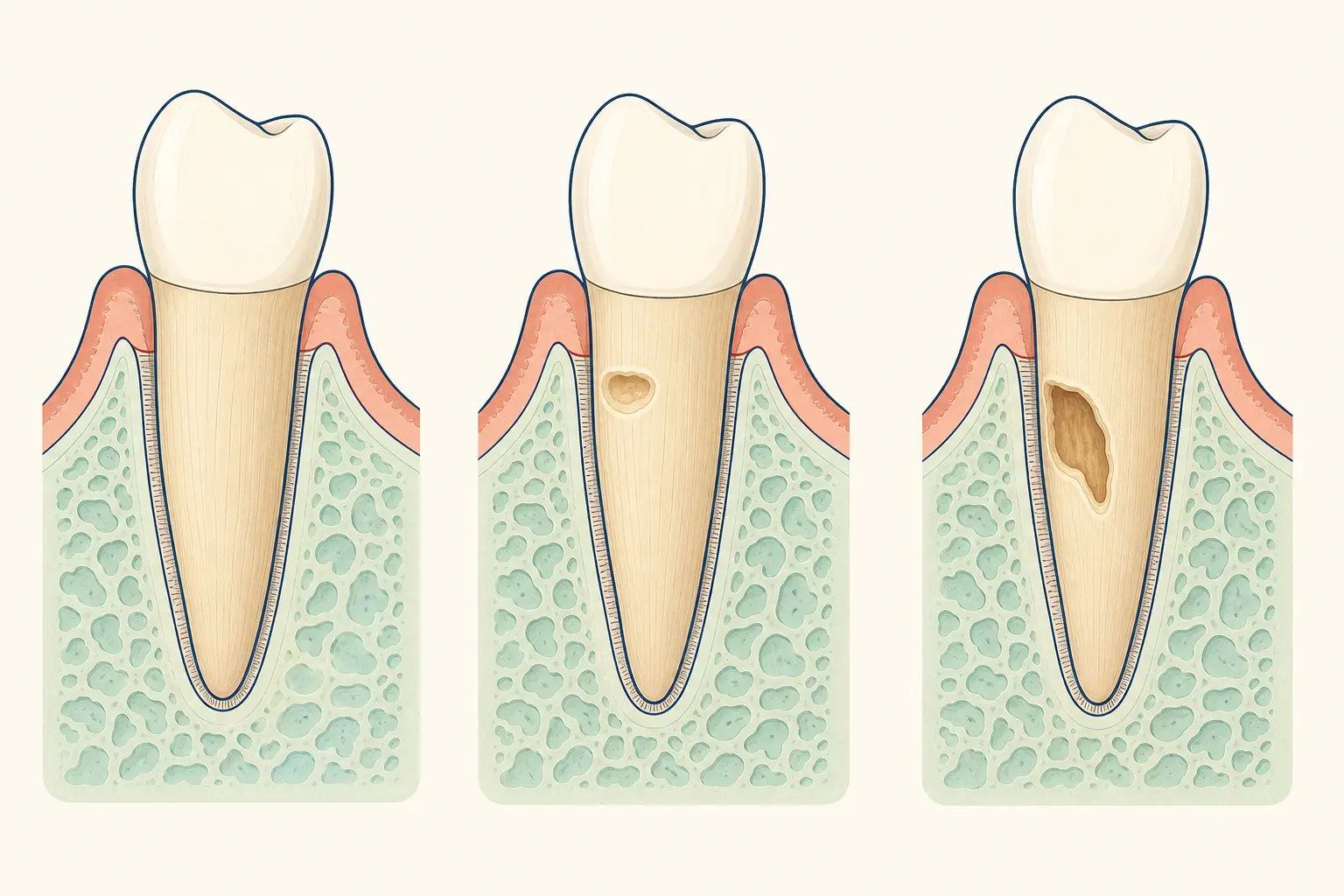
What the change looks like
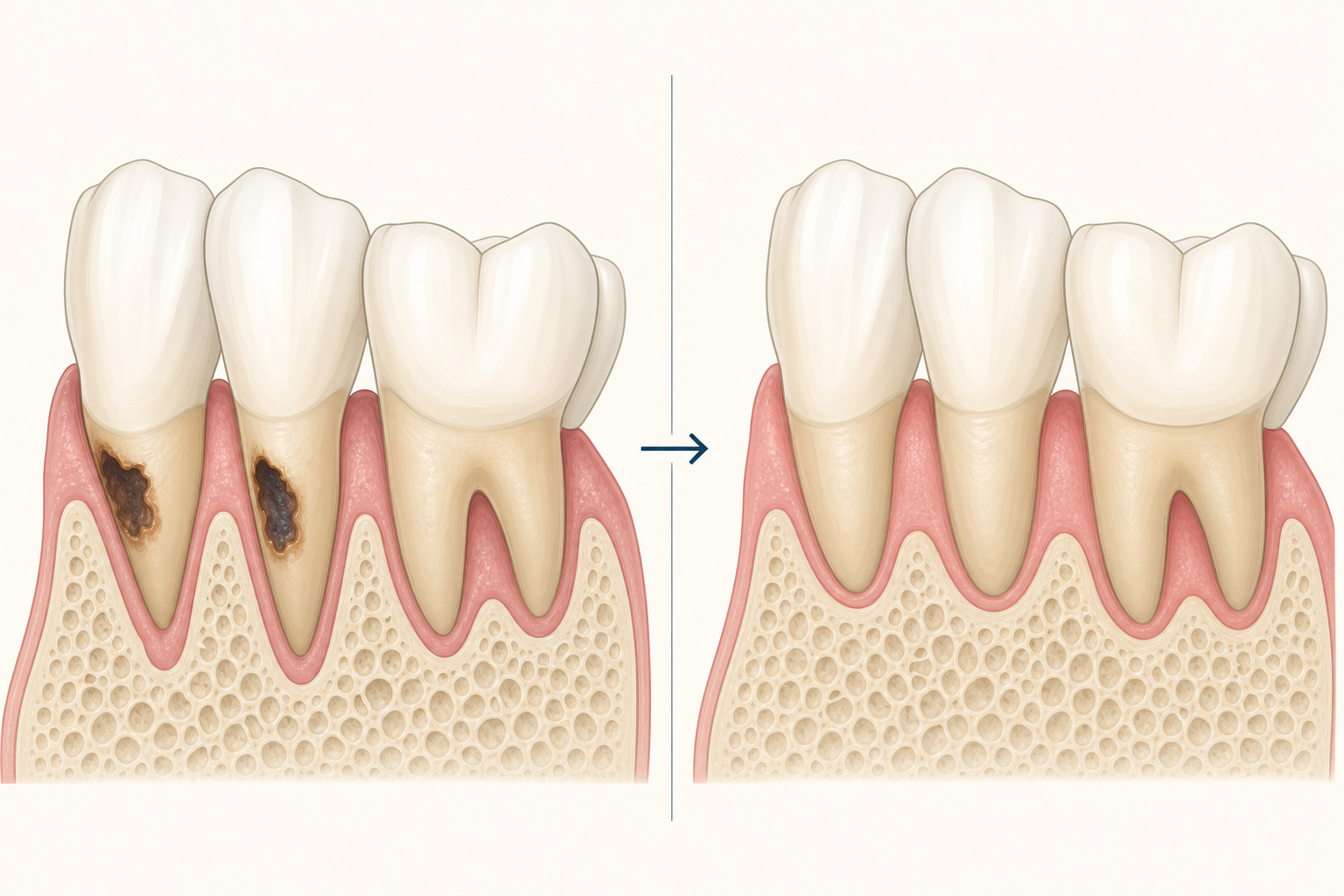
What does root caries look and feel like?
A root lesion may appear as a white, brown or black area. As decay advances, the tooth can become soft and sticky, painful or sensitive, particularly when the lesion approaches the nerve.
[1]Why does decay start on a tooth root?
Plaque bacteria convert sugars into acids. Those acids remove minerals from the tooth, while frequent sugar exposure and inadequate fluoride allow the process to continue. When root surfaces are exposed, the lesion develops in root dentine rather than only in enamel.
[1]How does root caries progress?
The process can begin with mineral loss and then move to softened, cavitated tooth structure. The extent of the lesion, oral hygiene and the person's health all affect its outlook.
[1]Who is at risk of root caries?
How is root caries found?
A dental examination can reveal staining, a cavity or soft and sticky areas. An X-ray may show decay that cannot be seen directly on the surface.
[1]How is root caries treated?
Early lesions can be managed with fluoride, plaque removal and measures that support remineralisation. When tooth structure has been lost, the lesion may need to be arrested or restored using a minimally invasive approach.
[1]What affects root-caries treatment cost?
The amount of lost root structure changes whether care focuses on arresting the lesion or restoring it. A non-cavitated lesion and a cavitated lesion therefore require different levels of care.
[1]What can happen if root caries progresses?
How can root caries be prevented?
Frequently asked questions
Can root caries be stopped before a filling is needed?
Early root lesions may be managed with fluoride and plaque control; lost tooth structure may need arresting or restoration.
[1]