
Tooth-Related Sinusitis
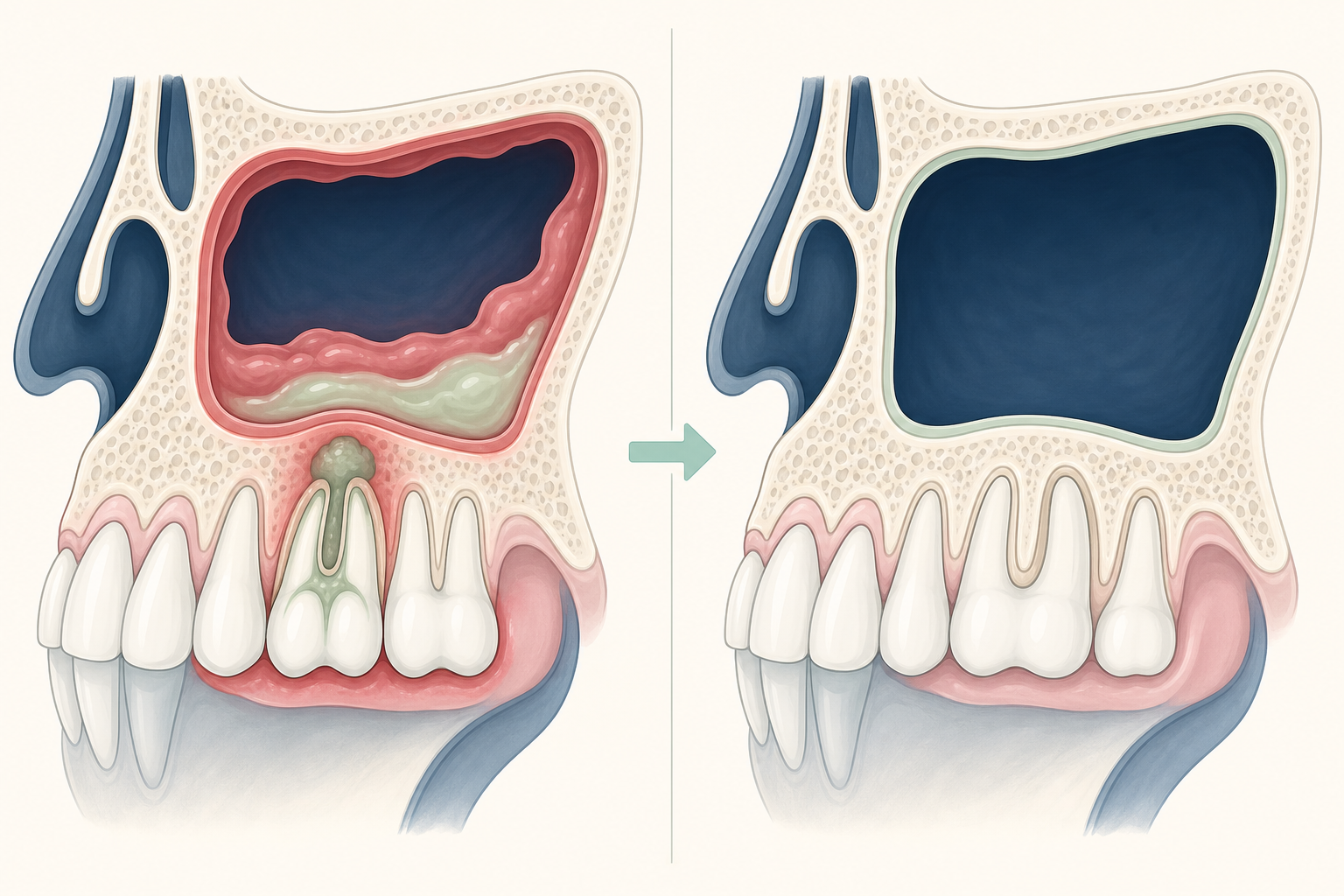
Tooth-related sinusitis links a maxillary sinus infection with an infected upper tooth, dental procedure, or nearby treatment site.
[3][4][5]The short answer
Tooth-related sinusitis is a maxillary sinus infection or inflammation connected with an infected upper tooth or nearby dental procedure.
[3][4][5]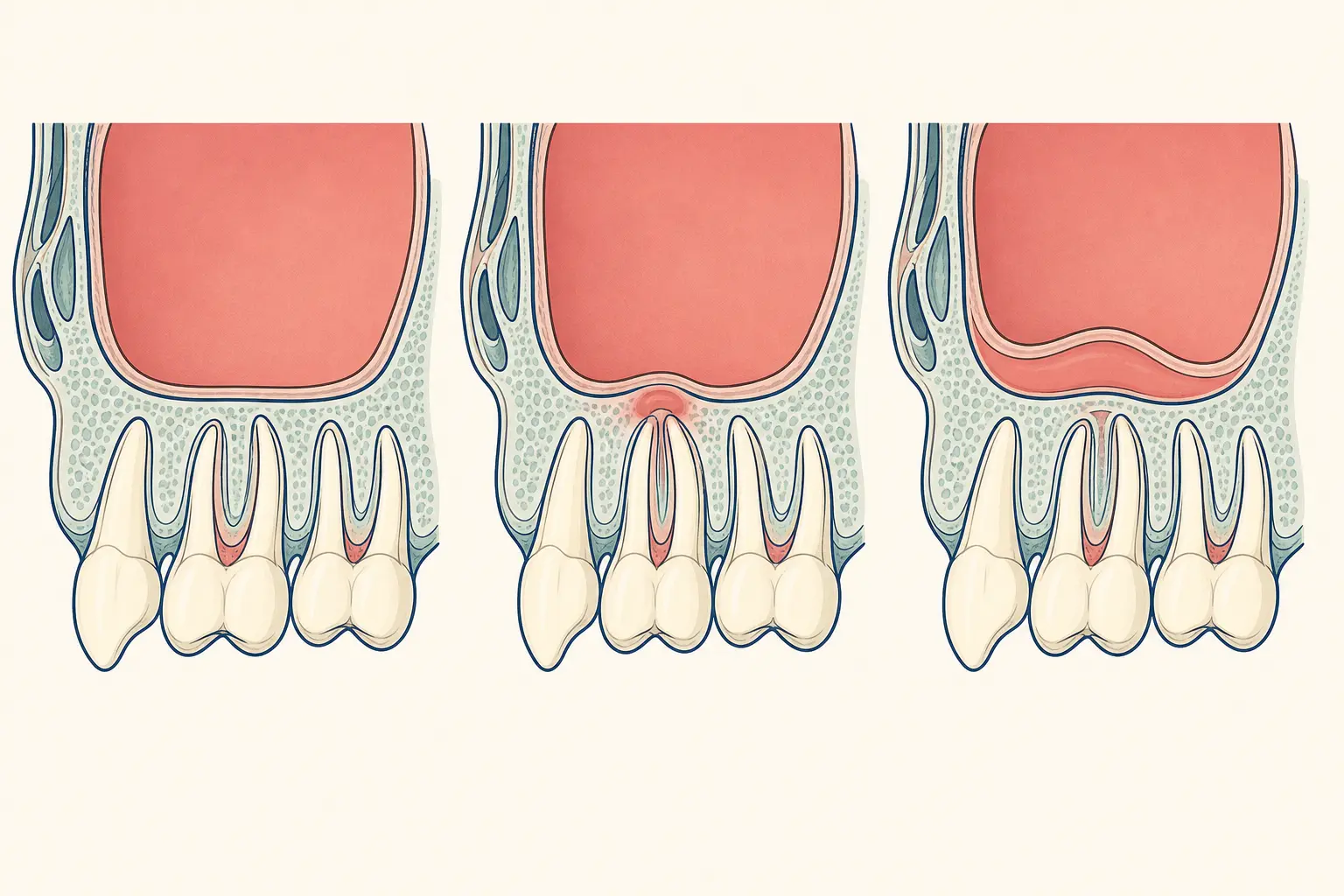
What the change looks like
What symptoms can appear?
| Clinical question | What the assessment considers | Patient-facing next step |
|---|---|---|
| A change noticed by the patient | The timing, trigger, location, and effect on function | Record what changed and arrange a dental assessment[3][4][5] |
| A finding after treatment or injury | The tooth, implant, sinus, nerve, or developing teeth may need separate checks | Take the treatment or injury history to the appointment[3][4][5] |
What can cause it?
A dental infection, treatment complication, extraction-related communication, or an implant or graft near the upper jaw can allow oral bacteria or inflammation to affect the maxillary sinus. The dental source may be an upper tooth or a procedure in that area. These causes need different treatment from sinus symptoms with no dental origin.
[4][5][1]How is it classified over time?
The practical stages are source identification, control of the dental cause, and recovery monitoring. Symptoms may be acute or persistent, but duration alone does not prove the source. A continuing sinus problem after dental treatment should prompt review of both the tooth or treatment site and the sinus.
[3][4][5]| Clinical question | What the assessment considers | Patient-facing next step |
|---|---|---|
| Earlier or developing finding | The history and examination may show a problem at a different point in its course | Ask what finding supports the classification[3][4][5] |
| Established or persistent finding | The next step depends on tissue status, function, and the suspected source | Ask what needs monitoring or treatment[3][4][5] |
What raises concern?
Risk assessment includes upper-jaw dental disease, recent extraction or endodontic treatment, implants or grafting near the sinus, and the anatomy of the tooth roots and sinus floor. Nasal symptoms alone do not establish a dental cause. The important question is whether the dental finding and sinus finding fit together.
[4][5][1]How is it diagnosed?
Diagnosis uses the symptom pattern, oral examination, dental history, nasal or sinus assessment when needed, and imaging suited to the suspected source. Cone-beam or other cross-sectional imaging may help show the relationship between an upper tooth or treatment site and the maxillary sinus. The clinician also considers non-dental sinus disease.
[3][5]How is treatment planned?
Treatment addresses the dental source and the sinus inflammation. Depending on the finding, care may involve treating or removing an infected tooth, managing a treatment-related opening, or coordinating dental and medical care. Antibiotics alone may not resolve a continuing dental source. The plan follows the cause shown by examination and imaging.
[3][4][5]| Clinical question | What the assessment considers | Patient-facing next step |
|---|---|---|
| A local, repairable finding | Care may focus on the affected tooth, tissue, restoration, or source | Ask which part of the problem the proposed treatment addresses[3][4][5] |
| A finding needing coordinated care | More than one assessment or a staged plan may be needed | Request the sequence, follow-up, and decision points in writing[3][4][5] |
What should I ask about cost in Dubai?
What can happen if it continues?
Persistent disease can cause continuing facial or nasal symptoms and may allow inflammation to remain while the dental source is untreated. A communication between the mouth and sinus may need specific management. The risks depend on the cause, so worsening swelling, fever, severe pain, or visual symptoms need prompt medical attention.
[4][1]How can future problems be reduced?
Prevention depends on diagnosing upper-tooth disease accurately, planning procedures near the sinus with appropriate imaging, and following post-treatment instructions. Report persistent one-sided sinus symptoms after dental work. Early review can identify a dental source before repeated treatment aimed only at the nose and sinuses.
[1][2][4]Frequently asked questions
Who wrote this page
This library is published by Dental Nation, a licensed dental group practising in the United Arab Emirates. Pages are written and overseen by the same clinical team that treats patients in our clinics, and are held to a fixed editorial standard for safety and accuracy.
This page is patient education, not medical advice, and cannot replace an examination. Anything urgent — facial swelling, trauma, uncontrolled bleeding or severe pain — needs a dentist or emergency care now.