Dental Nation
Condition guide

Mouth Ulcers (Canker Sores)

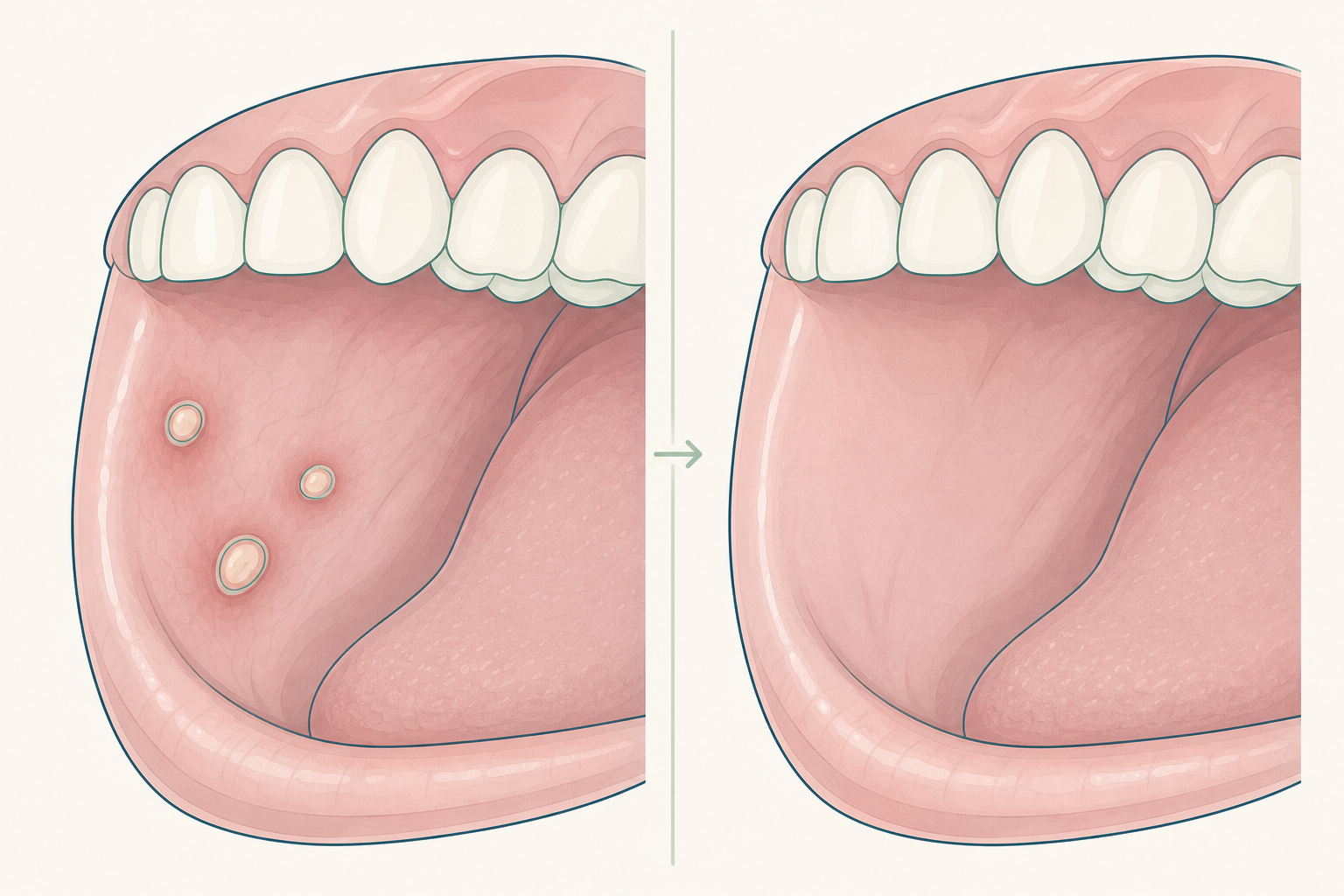
Canker sores are non-contagious pale or yellow mouth ulcers with a red edge; sharp teeth, braces or biting can trigger single ulcers.

[1][2]

The short answer

Mouth ulcers are sore areas inside the mouth that can arise after irritation, injury, braces, poorly fitting dentures or other health conditions.

[1][2]
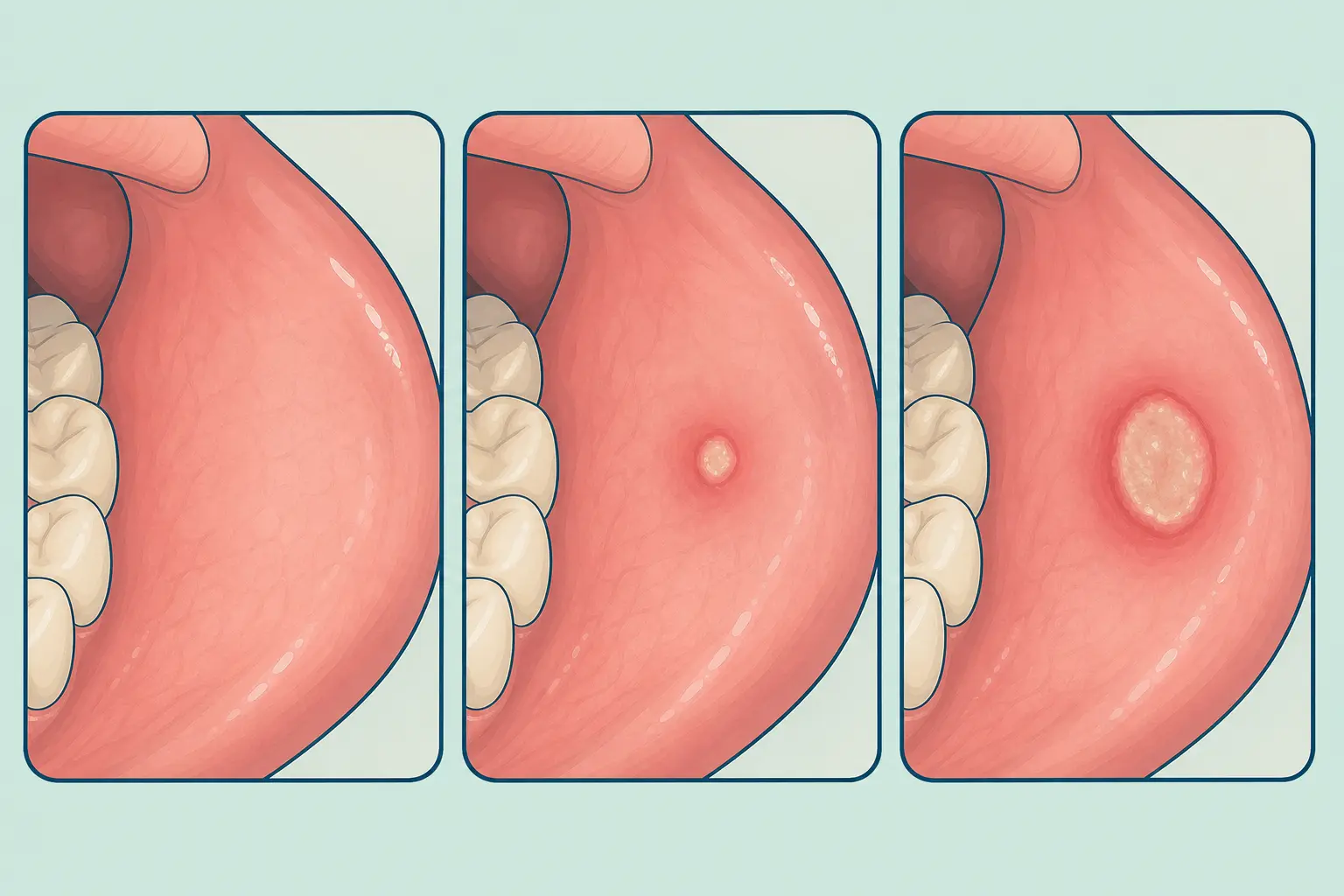
Mouth Ulcers (Canker Sores) dental educational illustration

What the change looks like

Illustrative diagram: Mouth Ulcers
Illustration — a representative diagram, not a patient photo.
The DN First Look799 AED
Book The DN First Look

Where do mouth ulcers appear?

Places mouth sores can occur
SitePossible sore
Inner mouthSores can occur on the floor of the mouth, inner cheeks, gums, lips or tongue.[1][2]
Canker sore appearanceCanker sores may be pale or yellow with a red outer ring, alone or in a group.[1][2]

[1][2]

What causes mouth ulcers?

A single ulcer can follow cheek biting, a sharp tooth, rough filling, braces, poorly fitting dentures, a burn from food or drink, or a toothbrush injury. Stress, hormonal change, vitamin deficiency and some medicines can also be triggers.

[1][2]

How long do mouth sores usually last?

Many mouth sores settle in 10 to 14 days without treatment, though some last as long as six weeks. Cold sores may start with tingling, burning or tenderness, then form blisters and crust.

[1][2]
Different sore patterns
TypeTypical course
Mouth soreMany go away in 10 to 14 days, although some last up to six weeks.[1][2]
Cold soreTingling, itch or burning can come before blisters that crust over.[1][2]

[1][2]

When can several mouth ulcers point to another condition?

Several ulcers can occur with hand, foot and mouth disease, oral lichen planus, Crohn's disease, coeliac disease or a weakened immune system. Less commonly, mouth sores can signal illness, a tumour or a medicine reaction.

[1][2]

How are mouth ulcers assessed?

Assessment includes a close check of the mouth and tongue alongside questions about symptoms and medical history. Location, appearance and possible irritants help distinguish canker sores, cold sores and other mouth lesions.

[1][2]

What can ease a painful mouth ulcer?

Pain relief can include a numbing medicine, a steroid gel, a paste that reduces swelling or a chlorhexidine mouthwash. Severe, persistent or infected ulcers may be treated with stronger prescribed medicine.

[1][2]
Options used for painful sores
OptionPurpose
Numbing medicineLidocaine can ease pain, but it is not used in children.[1][2]
Steroid gel or anti-inflammatory pasteThese can be applied to reduce swelling or inflammation.[1][2]

[1][2]

What practical care can make a sore more comfortable?

Avoid hot drinks, spicy or salty foods and citrus when a sore is painful. Cool water, salt-water gargles and ice pops can make a mouth sore more comfortable.

[1][2]

When does a mouth ulcer need attention?

An ulcer lasting longer than three weeks, becoming bigger, bleeding, growing more painful and red, or occurring with skin or genital ulcers or painful swollen joints needs assessment. A long-lasting ulcer can sometimes be a sign of mouth cancer.

[1][2]

How can common mouth sores be prevented?

Chew slowly, use a soft-bristle toothbrush and avoid very hot food or drink. Address sharp or broken teeth and poorly fitting dentures, since they can repeatedly irritate the mouth.

[1][2]

Frequently asked questions

Are canker sores the same as cold sores?

No. Canker sores are not contagious, while cold sores are caused by herpes simplex virus and are very contagious.

[1][2]
Can braces cause mouth ulcers?

Yes. Braces can irritate the mouth and cause sores.

[1][2]