
Molar-Incisor Hypomineralisation (MIH)
Weakly mineralised enamel can make newly erupted molars sensitive, prone to decay, and likely to break down after eruption.
[3][2]The short answer
MIH is a developmental enamel defect that can make permanent molars and incisors sensitive and prone to breakdown.
[3][2]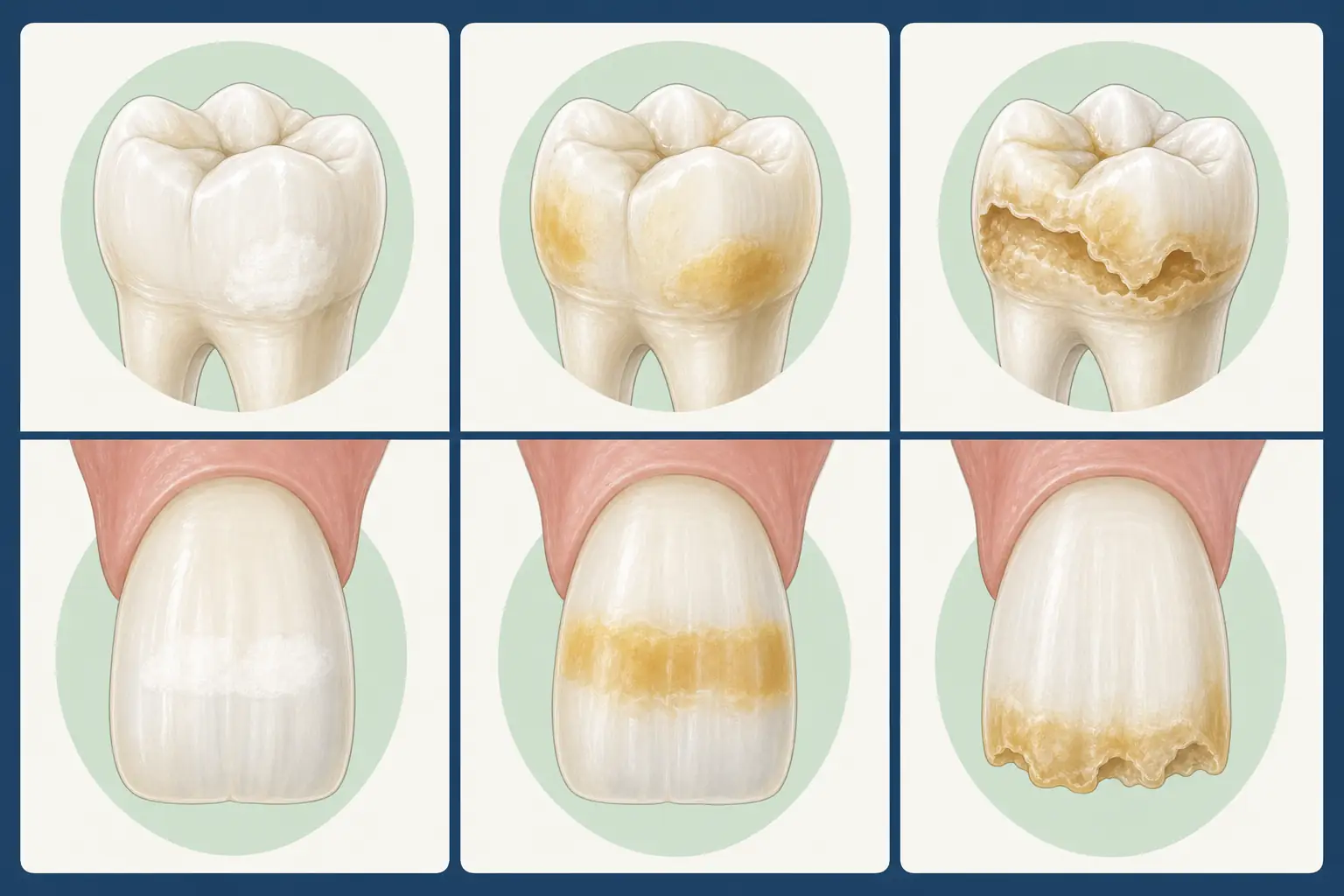
What the change looks like
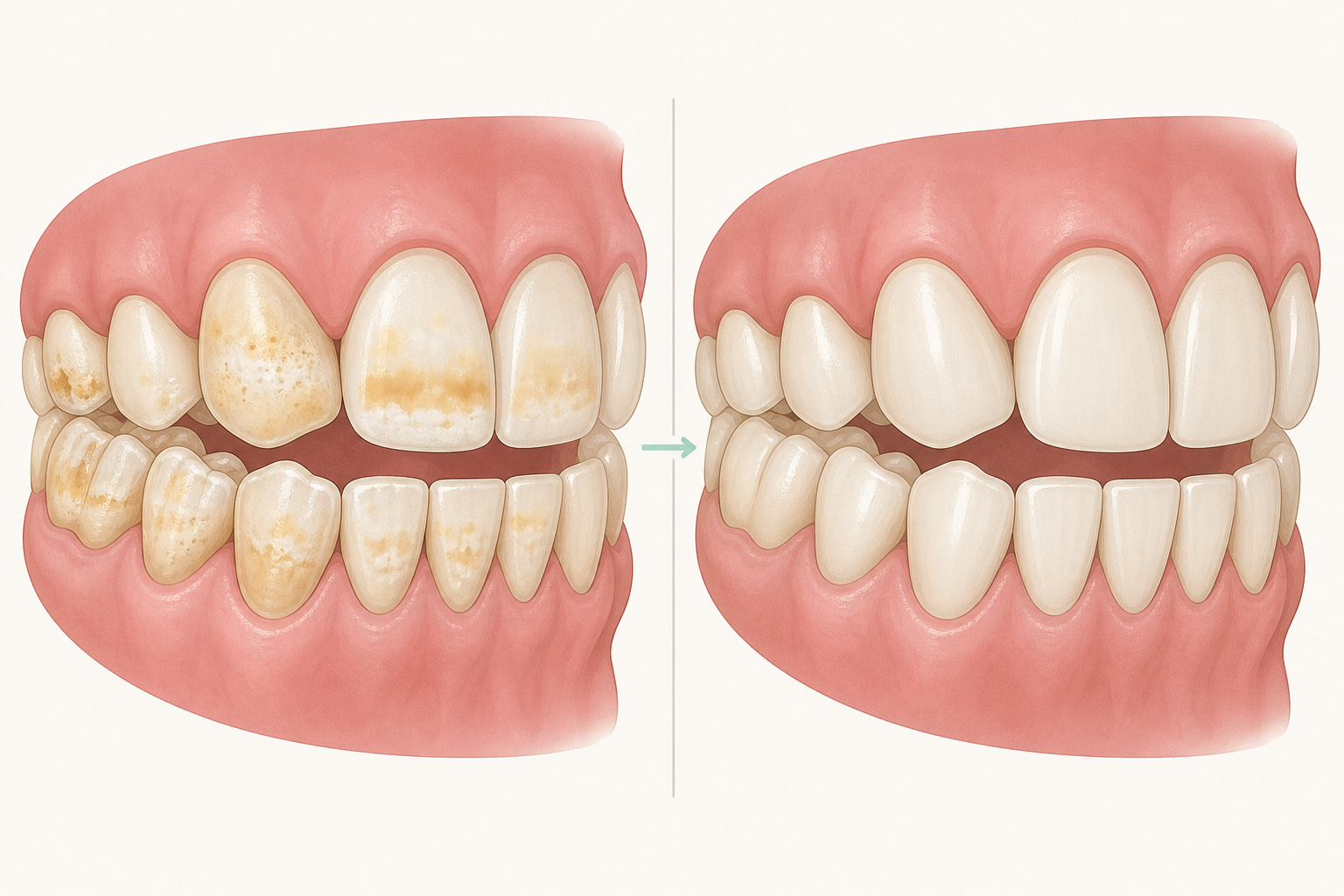
What does MIH look and feel like?
Affected teeth can show clearly different enamel colour or quality, sensitivity and difficulty tolerating routine dental care. The molars may break down after eruption, while incisors may show visible demarcated changes.
[2]| Clinical question | What this can mean |
|---|---|
| What is assessed? | Affected teeth can show clearly different enamel colour or quality, sensitivity and difficulty tolerating routine dental care. The molars may break down after eruption, while incisors may show visible demarcated changes.[2] |
| What guides the next step? | Affected enamel can be sensitive, visibly different in colour, and difficult to tolerate during routine dental care; molars may break down after eruption.[2] |
Why does MIH develop?
How severe is the enamel damage?
The condition may be recognised when affected permanent molars or incisors erupt. Enamel changes can range from visible demarcation to post-eruptive breakdown. The extent and sensitivity guide the clinical plan.
[3][2]| Clinical question | What this can mean |
|---|---|
| What is assessed? | The condition may be recognised when affected permanent molars or incisors erupt. Enamel changes can range from visible demarcation to post-eruptive breakdown. The extent and sensitivity guide the clinical plan.[3][2] |
| What guides the next step? | MIH can range from visible enamel changes to post-eruptive breakdown, with sensitivity and tooth integrity determining the severity.[3][2] |
Which MIH changes raise the risk of breakdown?
How is MIH diagnosed?
A dentist diagnoses MIH by examining the enamel changes on the molars and incisors and considering sensitivity and breakdown. Other causes of enamel change may need to be distinguished clinically.
[2]How are MIH-affected teeth protected and restored?
Management is tailored to the tooth’s sensitivity, enamel condition and ability to remain functional and clean. The AAPD guidance supports preventive and restorative planning according to the affected teeth.
[2]| Clinical question | What this can mean |
|---|---|
| What is assessed? | Management is tailored to the tooth’s sensitivity, enamel condition and ability to remain functional and clean. The AAPD guidance supports preventive and restorative planning according to the affected teeth.[2] |
| What guides the next step? | Prevention can include sealants and fluoride, while sensitivity management and restorations are used when enamel is painful or has broken down.[2] |
What shapes the cost of MIH care?
What can MIH do to a newly erupted tooth?
How can vulnerable MIH enamel be protected?
After MIH is identified, prevention focuses on protecting vulnerable enamel with preventive care, sensitivity management, and measures that reduce breakdown and caries.
[2]Frequently asked questions
What should I do first?
A dentist diagnoses MIH by examining the enamel changes on the molars and incisors and considering sensitivity and breakdown. Other causes of enamel change may need to be distinguished clinically.
[2]Who wrote this page
This library is published by Dental Nation, a licensed dental group practising in the United Arab Emirates. Pages are written and overseen by the same clinical team that treats patients in our clinics, and are held to a fixed editorial standard for safety and accuracy.
This page is patient education, not medical advice, and cannot replace an examination. Anything urgent — facial swelling, trauma, uncontrolled bleeding or severe pain — needs a dentist or emergency care now.