
Missing multiple teeth: signs, diagnosis and treatment
Missing multiple teeth: signs, diagnosis and treatment
[2]The short answer
Missing multiple teeth can produce several symptoms, and their absence does not always exclude disease A crown covers a tooth to restore its shape, size, strength or appearance The ADA lists several reasons a dentist may recommend one: strengthening a tooth that has a large filling and too little structure to hold another filling, protecting a weak tooth from breaking, restoring a tooth that is already broken, attaching a bridge, covering a dental implant or changing the appearance of a badly shaped or discoloured tooth The reason should be tied to the examined tooth A crown is not automatically the right restoration for every crack, filling or root-treated tooth
[2]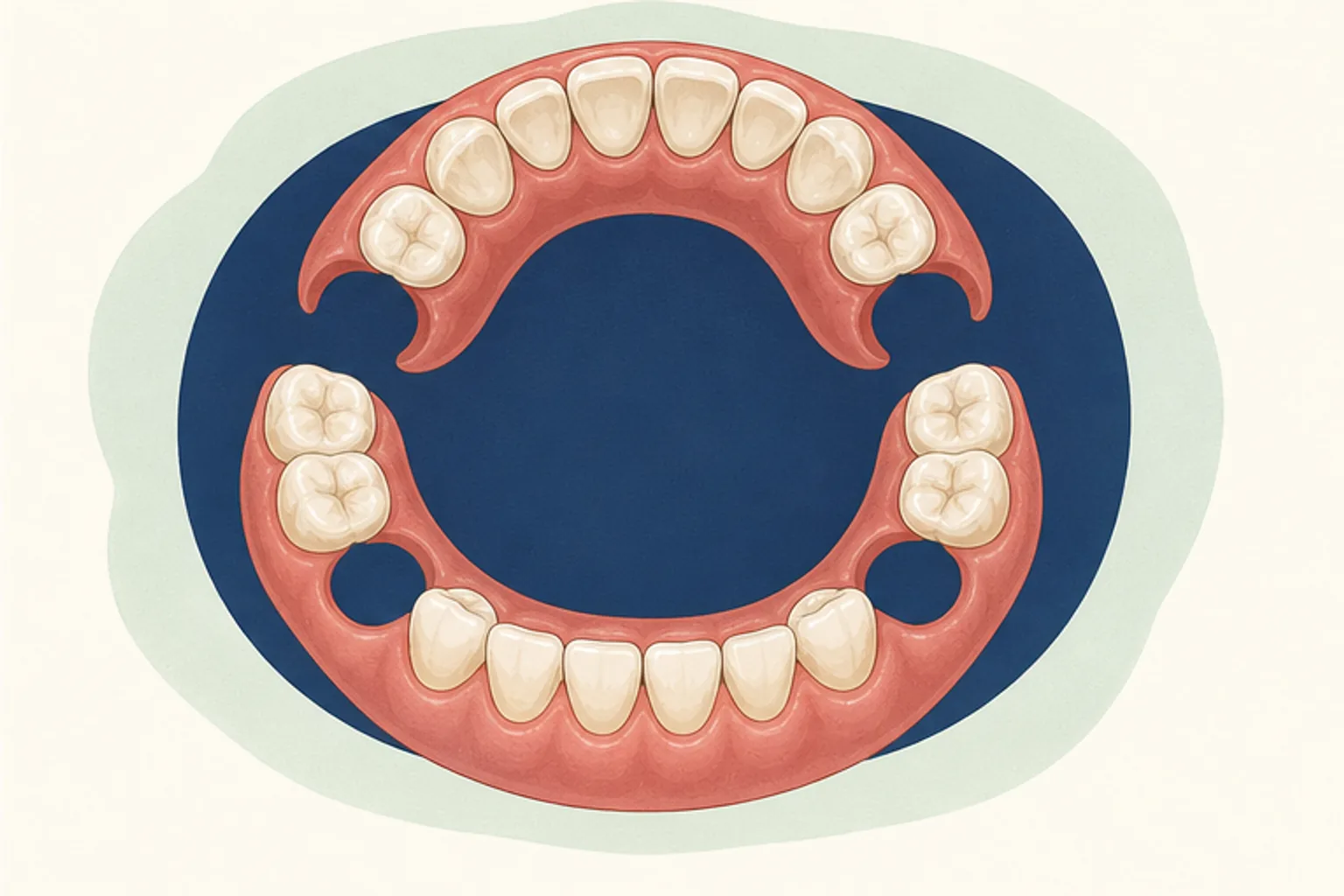
What are the symptoms?
Crown planning starts by confirming why the tooth needs payer review and whether it can support the proposed restoration Indirect restorations are made outside the mouth from records of the prepared tooth; the ADA notes that fabrication may take place in a laboratory or, with some digital systems, in the dental office The number of visits therefore depends on the technique, the condition of the tooth and whether a temporary stage is needed Before treatment, ask what preparation is planned, how the fit and bite will be checked, what protects the tooth between stages and when the crown is considered complete
[2][6]What causes it?
The causes considered for missing multiple teeth depend on the tissue involved, prior treatment, injury and infection A missing tooth can affect chewing or speech, and remaining teeth may shift; bone loss may also occur around the space ADA patient guidance sets out bridges, dentures and implants among the replacement options These choices differ in whether they are fixed or removable, what supports them, how they are cleaned and what procedures are required The right discussion starts with the number and position of missing teeth and the condition of the rest of the mouth Ask what happens if the space is monitored, what each replacement requires and how future repair or additional tooth loss would be handled
[7][1][8]Inlays and onlays are indirect restorations made outside the mouth to replace lost tooth tissue NHS guidance explains an inlay as a custom restoration for moderate to large tissue loss when a direct restoration is unsuitable An onlay also extends across weakened biting surfaces to protect them Tooth preparation is required, and the restoration may be made from metal alloy, porcelain, composite resin or another ceramic The decision should compare a direct filling, inlay, onlay and crown against the same examined defect, including how much tooth needs preparation and which cusps need payer review
[12][6]How does it progress?
Pulp disease may progress from inflammation to loss of vitality and infection, but the stage cannot be inferred from pain intensity alone Indirect restorative materials include noble and base-metal alloys, ceramics, resin-based composites and metal-ceramic systems They differ in composition, strength, appearance, processing, clinical indications and how they are cemented or bonded The ADA notes that no material class can be selected without considering the clinical case Ask for the full material name, where it is used in the restoration, why it suits the tooth or span, and what trade-offs apply to appearance, fracture, wear, repair and cost A marketing label alone does not establish suitability or expected service life
[6]| Decision point | What the research shows |
|---|---|
| How does it progress? | Missing multiple teeth can produce several symptoms, and their absence does not always exclude disease. A crown covers a tooth to restore its shape, size, strength or appearance. The ADA lists several reasons a dentist may recommend one: strengthening a tooth that has a large filling and too little structure to hold another filling, protecting a weak tooth from breaking, restoring a tooth that is already broken, attaching a bridge, covering a dental implant or changing the appearance of a badly shaped or discoloured tooth. The reason should be tied to the examined tooth. A crown is not automatically the right restoration for every crack, filling or root-treated tooth.[2] |
| How does treatment change by stage? | Crown planning starts by confirming why the tooth needs coverage and whether it can support the proposed restoration. Indirect restorations are made outside the mouth from records of the prepared tooth; the ADA notes that fabrication may take place in a laboratory or, with some digital systems, in the dental office. The number of visits therefore depends on the technique, the condition of the tooth and whether a temporary stage is needed. Before treatment, ask what preparation is planned, how the fit and bite will be checked, what protects the tooth between stages and when the crown is considered complete.[2][6] |
What raises the risk?
Risk factors modify the likelihood or course of missing multiple teeth; they do not diagnose it A loose or broken crown, bridge or denture needs dental advice, particularly when it causes pain, a sharp edge, oral injury or loss of function NHS urgent-care guidance includes displaced crowns and bridges and fractured or ill-fitting dentures among problems that may need unscheduled care The ADA advises calling a dentist if a partial denture breaks, cracks, chips or becomes loose and warns against home adjustment, repair kits and household glue Keep any detached piece safely, avoid forcing a damaged appliance into place and ask the dental team how quickly it should be assessed
[8][11]How is it diagnosed?
Diagnosis of missing multiple teeth combines the history, examination and only the tests that answer a specific question The ADA describes several materials for restoring a cavity, including tooth-coloured composite resin, amalgam and gold inlays or onlays Selection is individual The dentist considers the size and location of the cavity, chewing load, appearance, cost and the amount of sound tooth available A material name does not show whether a direct filling, indirect inlay or onlay, or crown is the more conservative restoration for that tooth
[4]A loose crown, broken bridge or damaged denture should be checked rather than repaired with household glue or an online kit Contact a dentist promptly if the problem comes with pain, a sharp edge, swelling, fever, a bad taste or difficulty eating Call UAE ambulance services on 998 if mouth or neck swelling affects breathing, swallowing or speaking, reaches the eye or neck, follows major facial injury or comes with uncontrolled bleeding
[11][9][13]A dental bridge replaces one or more missing teeth with artificial teeth supported by surrounding teeth or, in some designs, implants A fixed bridge stays in the mouth and can be removed only by a dentist; removable tooth-replacement appliances are cleaned outside the mouth The health and strength of the supporting foundation matter to the result Assessment therefore covers the number and position of missing teeth, the condition of the potential supports, cleaning access and reasonable alternatives Ask which teeth or implants support the design and how every surface around the bridge will be maintained
[1][7][10]How does treatment change by stage?
Missing teeth may be replaced with a bridge, removable denture or implant-supported restoration The useful comparison covers support teeth, removability, cleaning access, surgery, repair and the effect on chewing, rather than treating every gap as the same problem
[7][1][3]| Topic | Source-backed detail |
|---|---|
| How does it progress? | Prevention focuses on modifiable causes of missing multiple teeth and on finding recurrent problems early. New dentures feel bulky and foreign at first. Sore spots develop where the denture presses harder on specific areas of gum tissue, and this is a normal part of the adjustment period. The ADA recommends scheduling a follow-up appointment so the dentist can pinpoint the pressure areas and make precise adjustments. Do not try to trim or modify the denture yourself. For eating, start with soft foods cut into small pieces and place food on both sides of the mouth simultaneously so the denture stays balanced and does not tip to one side. Speech often sounds different initially because the tongue and lips are working around a changed shape inside the mouth. Reading aloud for a few minutes each day helps speed up that adaptation.[3][8] |
| How does treatment change by stage? | Before accepting a plan for missing multiple teeth, ask which finding supports it and what alternatives remain. Dental ceramics are used in crowns, bridges, inlays, onlays and other indirect restorations. Different ceramic classes are intended for different clinical uses and restoration spans. The visible label porcelain does not state the complete composition, supporting structure or strength requirement. Ask the dentist to name the material, explain where it is used in the restoration, describe why it suits the tooth or bridge, and state what happens if the ceramic chips or the underlying support needs attention.[6] |
What affects cost in Dubai?
Treatment options for missing multiple teeth address the cause, restorability and the person's wider health Dentures are custom-made from measurements and models of the mouth A conventional full denture is placed after the remaining teeth are removed and tissues have healed; an immediate denture is prepared in advance and inserted on the extraction day New dentures often need follow-up appointments so fit and pressure areas can be checked and adjusted The plan should state which design is being made, when it is inserted, how it is cleaned and when fit will be checked
[3][10]An immediate denture is inserted on the day the remaining teeth are removed, so measurements and models are taken beforehand The ADA explains that the jaw changes during healing and the appliance may later need relining or remaking That planned change is part of the treatment, not proof that the first denture was made incorrectly A written plan should state the extraction stage, the immediate appliance, early adjustments, cleaning instructions and how the fit will be reassessed after the tissues have healed
[3]Implant support does not remove the need for daily mouth and appliance care Removable dentures should be brushed with a non-abrasive cleanser and kept as directed when outside the mouth; the gums, tongue and palate also need cleaning The dental team must show how to reach around each support and which tools suit the finished design Regular examinations check the mouth, fit, attachments and any remaining teeth A change in movement, comfort or cleaning access deserves assessment rather than extra adhesive or a home repair
[3][5]What complications matter?
Complications of missing multiple teeth are discussed separately from common symptoms so that warning signs are clear A fixed bridge cannot be removed at home, so the supporting teeth and the space beneath the artificial tooth need deliberate daily cleaning ADA guidance recommends cleaning between teeth every day and lists floss, pre-threaded flossers, small interdental brushes, dental picks and water flossers as possible tools People with bridges may find a water flosser useful for hard-to-reach areas The best tool depends on the bridge design and the available space Ask the dentist or hygienist to demonstrate the route around every support rather than forcing a device that does not fit
[1][5]Full dentures replace all teeth in an upper or lower arch A conventional full denture is made and placed after the remaining teeth are removed and the tissues have healed, a process that may take several months An immediate denture is prepared before extraction and inserted on the same day the teeth are removed, but it may need relining or remaking after the jaw has healed An overdenture fits over prepared remaining teeth, and implants can also provide support Every design needs daily cleaning, attention to the tissues underneath and regular dental checks for fit and oral health
[3]Can it be prevented?
Imaging or clinical tests for missing multiple teeth are used to confirm findings that cannot be established from symptoms alone An overdenture replaces missing teeth while using retained teeth or dental implants for added support and stability The ADA notes that implants can serve the same supporting role as prepared remaining teeth That makes an implant-supported denture a different design decision from a conventional full denture, even though both replace an arch of teeth Assessment still needs to define the number and position of supports, the removable or fixed design, the condition of the mouth and how the appliance will be cleaned and checked
[3][7]A partial denture is used when some natural teeth remain in the arch It consists of replacement teeth attached to a gum-colored base, usually supported by a metal framework that clasps onto existing teeth for stability One benefit worth knowing is drift prevention: when a tooth is lost, neighboring teeth begin shifting toward the gap and the opposing tooth can move into the space over time A partial slows or stops that movement Clasps may be visible at the gumline depending on where the missing teeth are located, so discuss design options with your dentist Because partials are removable, cleaning is straightforward, but the partial itself and your remaining natural teeth both need cleaning every day
[8][7]A fixed bridge is custom-made to replace one or more missing teeth and uses surrounding teeth or implants for support NHS guidance explains taking an impression of the surrounding teeth so the replacement can be made to fit the mouth Laboratory-made replacement parts may not be available at the first visit The written sequence should identify the supporting foundation, preparation and records, any temporary stage, fit and bite checks, cementation or connection, cleaning instruction and follow-up
[10][1]Frequently asked questions
What is the first useful question about missing multiple teeth,?
Ask which diagnosis or treatment goal missing multiple teeth addresses in this case, then ask which finding supports the recommendation The answer should identify the next step, reasonable alternatives and the final restoration or appliance when one is required
[7][1][3]What information should I take to a dental appointment about missing multiple teeth,?
Note when the issue began, what changes it, previous treatment, relevant health conditions, allergies and medicines Existing crowns, placed to restore a tooth's shape, size, strength or appearance, are Relevant here to the clinician Bring any records you have and ask what the examination still needs to establish
[2]When should I seek faster care for missing multiple teeth,?
Any loose or broken crown, bridge, or denture associated with missing teeth warrants prompt dental advice, especially when it causes pain, a sharp edge, oral injury, or loss of function Seek unscheduled care sooner for problems such as a displaced crown or bridge, or a fractured or poorly fitting denture, as included in NHS urgent-care guidance Contact a dental team sooner when pain, swelling, fever, trauma or bleeding is severe, worsening or disrupting normal function
[8][11]Who wrote this page
This library is published by Dental Nation, a licensed dental group practising in the United Arab Emirates. Pages are written and overseen by the same clinical team that treats patients in our clinics, and are held to a fixed editorial standard for safety and accuracy.
This page is patient education, not medical advice, and cannot replace an examination. Anything urgent — facial swelling, trauma, uncontrolled bleeding or severe pain — needs a dentist or emergency care now.