
Tooth infection: signs, diagnosis and treatment
Tooth infection: signs, diagnosis and treatment
[2][3]The short answer
Recurring or persistent tooth infection needs a dental assessment because decay, a crack, a loose restoration, gum disease, sensitivity, trauma and infection can produce overlapping symptoms The timing and triggers help triage the visit, but they cannot confirm the cause without an examination
[2][3]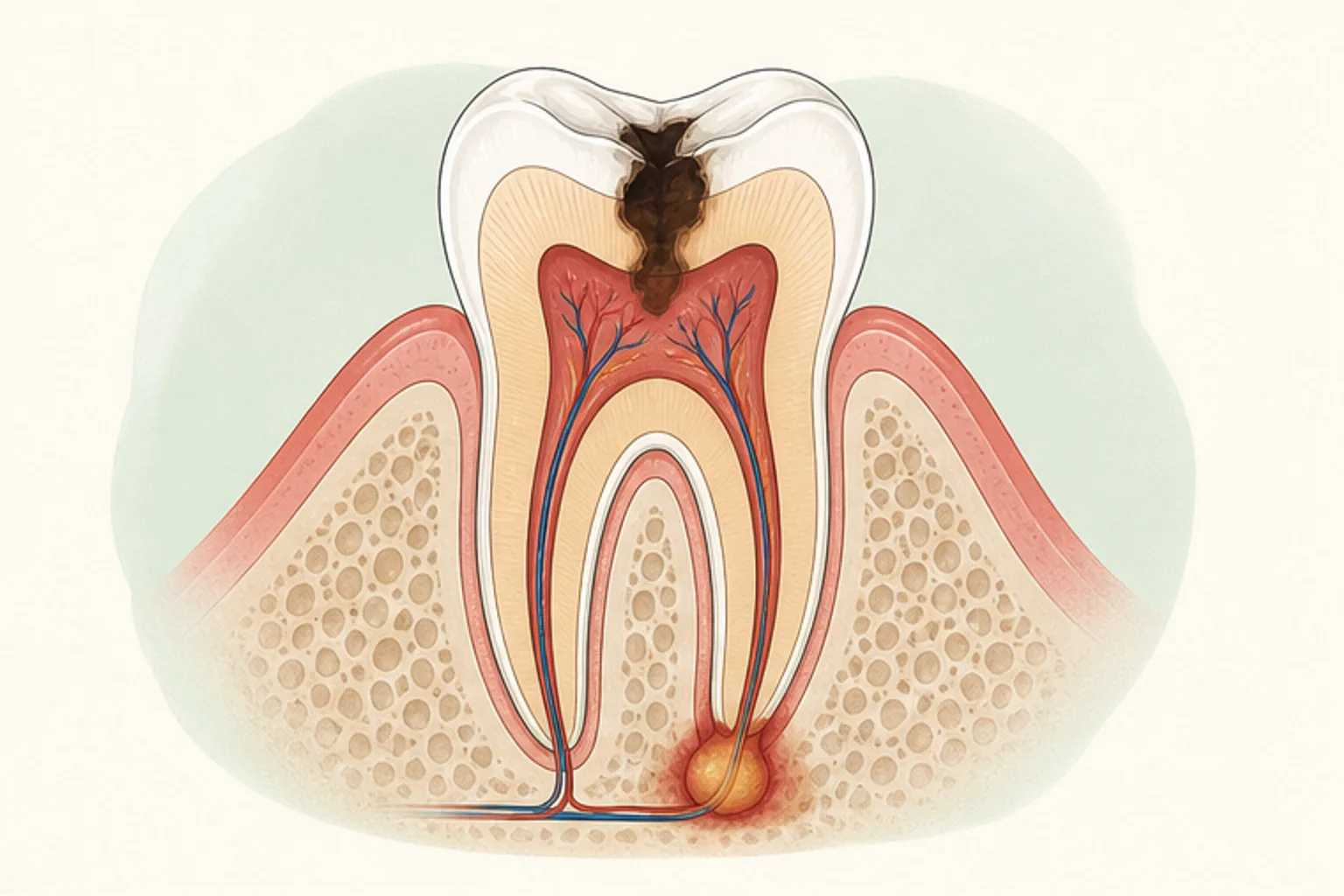
What causes it?
The causes considered for tooth infection depend on the tissue involved, prior treatment, injury and infection Tooth pain can come from decay, an abscess, a cracked tooth, a loose or broken filling, gum disease, tooth grinding, sensitivity or an infection around a partly erupted wisdom tooth The location and intensity of pain alone cannot confirm the cause A dentist needs to examine the tooth and may need an X-ray before recommending treatment
[2]Decay is one possible source, particularly when a cavity has progressed beyond the outer enamel A damaged tooth, cracked restoration or loose filling can also leave a tooth sore when you bite or sensitive to temperature Gum disease may produce tenderness around a tooth rather than pain from inside it Grinding can leave several teeth or the jaw muscles uncomfortable Braces can create their own problems A wisdom tooth that has partly emerged may be painful when the surrounding tissue becomes inflamed or infected
[2]How does it progress?
Tooth infection can produce several symptoms, and their absence does not always exclude disease A useful pain description covers more than a number from one to ten Identify the tooth or area if you can, when the pain began, whether it started suddenly or gradually, and whether it is present all day or arrives in short bursts Describe the feeling in ordinary words such as sharp, dull, throbbing, tender or sensitive Note whether it spreads towards the ear, temple, jaw or neck This pattern helps a dental team decide how urgently you need an appointment and what they may need to examine first
[3]Triggers are useful too Tell the team if cold water, hot drinks, sweet food, biting, lying down or touching the gum changes the pain Record what you tried and whether it helped Pain that responds to a permitted pain medicine still needs assessment when it persists or returns Pain that remains severe despite appropriate self-care is treated more urgently in unscheduled dental guidance Do not take extra doses to make pain medicine work faster; follow the label and ask a pharmacist when you are unsure what is safe for you
[2][1][3]Note when the pain began, whether it is constant or triggered, what makes it worse, and whether you have swelling, fever, a bad taste or trouble opening your mouth Mention recent dental treatment, injury, pregnancy, medical conditions, allergies and every medicine you take This information helps the dental team triage you safely; it does not replace an examination
[2][1]| Decision point | What the research shows |
|---|---|
| How does it progress? | Recurring or persistent tooth infection needs a dental assessment because decay, a crack, a loose restoration, gum disease, sensitivity, trauma and infection can produce overlapping symptoms. The timing and triggers help triage the visit, but they cannot confirm the cause without an examination.[2][3] |
| How does treatment change by stage? | The causes considered for tooth infection depend on the tissue involved, prior treatment, injury and infection. Tooth pain can come from decay, an abscess, a cracked tooth, a loose or broken filling, gum disease, tooth grinding, sensitivity or an infection around a partly erupted wisdom tooth. The location and intensity of pain alone cannot confirm the cause. A dentist needs to examine the tooth and may need an X-ray before recommending treatment.[2] |
What raises the risk?
Risk factors modify the likelihood or course of tooth infection; they do not diagnose it Urgent dental problems are serious without being immediately life-threatening Examples in NHS England guidance include severe pain that remains uncontrolled after appropriate self-help, spreading or continuing infection without airway compromise, significant dental injuries, severe gum bleeding, and painful acute conditions around the gums or oral tissues A suspected abscess belongs in urgent dental care Contact a dentist as soon as practical and explain every associated symptom so the practice can triage the call
[1][3]Mild or moderate pain that responds to permitted pain relief may fall into a less urgent category, but it still needs professional care when it lasts, returns, or is connected to a broken tooth, loose restoration, sensitivity or localised swelling NHS toothache guidance recommends a dental visit when pain lasts more than two days, does not settle with pain medicine, hurts on biting, or comes with fever, red gums, a bad taste, or cheek or jaw swelling If the symptoms worsen, move to the more urgent pathway rather than waiting for the original appointment
[2][3]How is it diagnosed?
Pulp disease may progress from inflammation to loss of vitality and infection, but the stage cannot be inferred from pain intensity alone An abscess is a build-up of pus caused by infection in a tooth or the gum Report intense tooth or gum pain, redness, a bad taste, difficulty chewing or opening your mouth, swollen glands, fever, or swelling of the face or jaw An abscess needs urgent dental treatment and does not clear by itself Some people have several of these features; others notice only a few The symptom list cannot tell you where an infection began or which treatment is suitable
[1]Sensitivity is another possible explanation for pain triggered by hot, cold or sweet food, but the same triggers may occur with decay, a crack, an old restoration or infection A brief response and a long-lasting ache are useful details for the dentist, yet neither should be used as a home diagnosis Pain may also be referred from another area NHS England's triage guidance tells clinicians to identify the source and rule out non-dental causes rather than assume that every facial pain begins in a tooth
[2][3]How does treatment change by stage?
Diagnosis of tooth infection combines the history, examination and only the tests that answer a specific question The appointment begins with the history of the pain and your medical information The dentist then examines the painful area, nearby teeth, gums, existing fillings or crowns, and the way the teeth meet They may check whether biting, pressure, temperature or another test reproduces the symptom An X-ray may be needed when the dentist must look for decay, infection, bone changes, an impacted tooth, or another problem that is not visible in the mouth The assessment determines the next step; an online symptom description cannot replace it
[2][1][3]A tooth-pain assessment considers the painful tooth, nearby teeth, gums, restorations and bite The dentist may reproduce a trigger, check tenderness or movement and use imaging when it answers a question not settled in the mouth Decay, cracks, a loose restoration, gum inflammation, trauma and infection can overlap, so the finding that supports the diagnosis matters more than the search phrase used to book the visit
[2][3]For tooth pain, record when it starts, whether it is spontaneous or triggered, how long it lasts and whether biting, heat, cold or sweets change it Also note swelling, fever, a bad taste, recent treatment or injury These details help a dental team triage and choose an examination path, but they cannot identify the affected tissue or confirm a diagnosis without examining the mouth
[2][3]| Topic | Source-backed detail |
|---|---|
| How does it progress? | Preventing tooth infection involves addressing modifiable causes and identifying recurring problems early. After urgent treatment, ask about the cause and any further care needed to prevent another episode. Any temporary repair, drainage, or pain-relieving procedure requires definitive follow-up to prevent recurrence. Check how to clean the area, when to return, and which symptoms mean you need an earlier appointment. Prevention should be tailored when grinding, braces, a wisdom tooth, gum disease or an old restoration contributed to the pain. For prevention, the meaningful aim is a plan addressing the specific cause found on examination, rather than a general assurance that tooth infection can always be avoided.[2][3] |
| How does treatment change by stage? | Before accepting a plan for tooth infection, ask which finding supports it and what alternatives remain. Pain description matters beyond a numerical rating when asking the dentist about a tooth infection. Ask about the tooth or area involved, when the pain began, whether it developed suddenly or gradually, and whether it lasts all day or comes in short bursts. Tell your dentist how the tooth-infection pain feels, using plain words such as sharp, dull, throbbing, tender or sensitive to describe its character. Ask whether the infection has spread toward the ear, temple, jaw or neck. Ask how this symptom pattern affects appointment urgency and what the dental team may need to examine first.[3] |
What complications matter?
Complications of tooth infection are discussed separately from common symptoms so that warning signs are clear Arrange a dental assessment when pain lasts longer than two days, does not settle with non-prescription pain relief, hurts when you bite, or comes with red gums, a bad taste, fever, or swelling of the cheek or jaw These features can point to a problem that will not be fixed by masking the pain
[2][1]Pain medicine can make the wait for care more manageable, but it does not repair decay, seal a crack, replace a filling or drain an abscess Use only a medicine you can normally take, stay within the labelled dose, and ask a pharmacist when you have medical conditions, allergies, pregnancy, other medicines or uncertainty Children under sixteen should not take aspirin Never place aspirin or another tablet against a tooth or gum Seek urgent help instead of repeating doses when severe pain remains uncontrolled
[2][1][3]Can it be prevented?
Tooth infection needs faster care when pain, infection, swelling, trauma or bleeding is severe or progressing Breathing, swallowing or speaking difficulty changes the situation from a dental appointment problem to an emergency So does swelling that is spreading towards the eye or neck, major facial injury, or bleeding inside the mouth that cannot be controlled with local measures In the UAE, ambulance services are reached on 998 Do not wait for an online reply or a routine booking when an airway may be affected Bring a list of medicines and allergies if you attend an emergency department
[2][1][3][4]Frequently asked questions
What is the first useful question about tooth infection,?
Ask which diagnosis or treatment goal tooth infection addresses in this case, then ask which finding supports the recommendation The answer should identify the next step, reasonable alternatives and the final restoration or appliance when one is required
[2][3]What information should I take to a dental appointment about tooth infection,?
Note when the issue began, what changes it, previous treatment, relevant health conditions, allergies and medicines Your pain history and medical information are what the dentist needs first at the appointment Bring any records you have and ask what the examination still needs to establish
[2][1][3]When should I seek faster care for tooth infection,?
Treat breathing, swallowing or speaking difficulty as an emergency, rather than waiting for a routine dental appointment Seek faster care for swelling spreading towards the eye or neck, a major facial injury, or bleeding inside the mouth that cannot be controlled with local measures Contact a dental team sooner when pain, swelling, fever, trauma or bleeding is severe, worsening or disrupting normal function
[2][1][3][4]Who wrote this page
This library is published by Dental Nation, a licensed dental group practising in the United Arab Emirates. Pages are written and overseen by the same clinical team that treats patients in our clinics, and are held to a fixed editorial standard for safety and accuracy.
This page is patient education, not medical advice, and cannot replace an examination. Anything urgent — facial swelling, trauma, uncontrolled bleeding or severe pain — needs a dentist or emergency care now.