Dental Nation
Condition guide

Median Rhomboid Glossitis

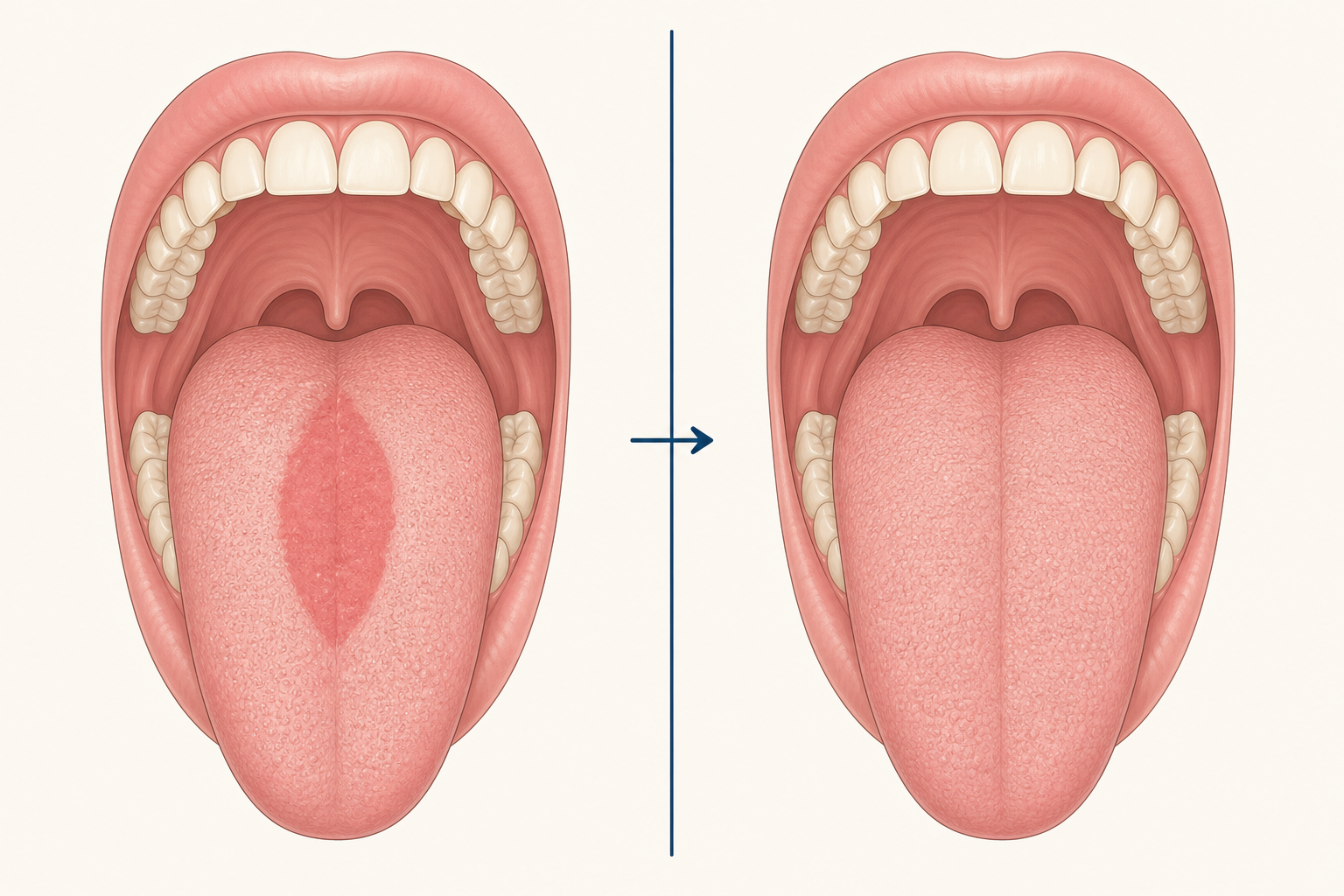
Median rhomboid glossitis is a smooth or raised red area in the middle of the tongue that may be linked with Candida.

[1][2]

The short answer

Median rhomboid glossitis is a central tongue patch, often smooth or raised and red, that can occur with Candida infection.

[1][2]
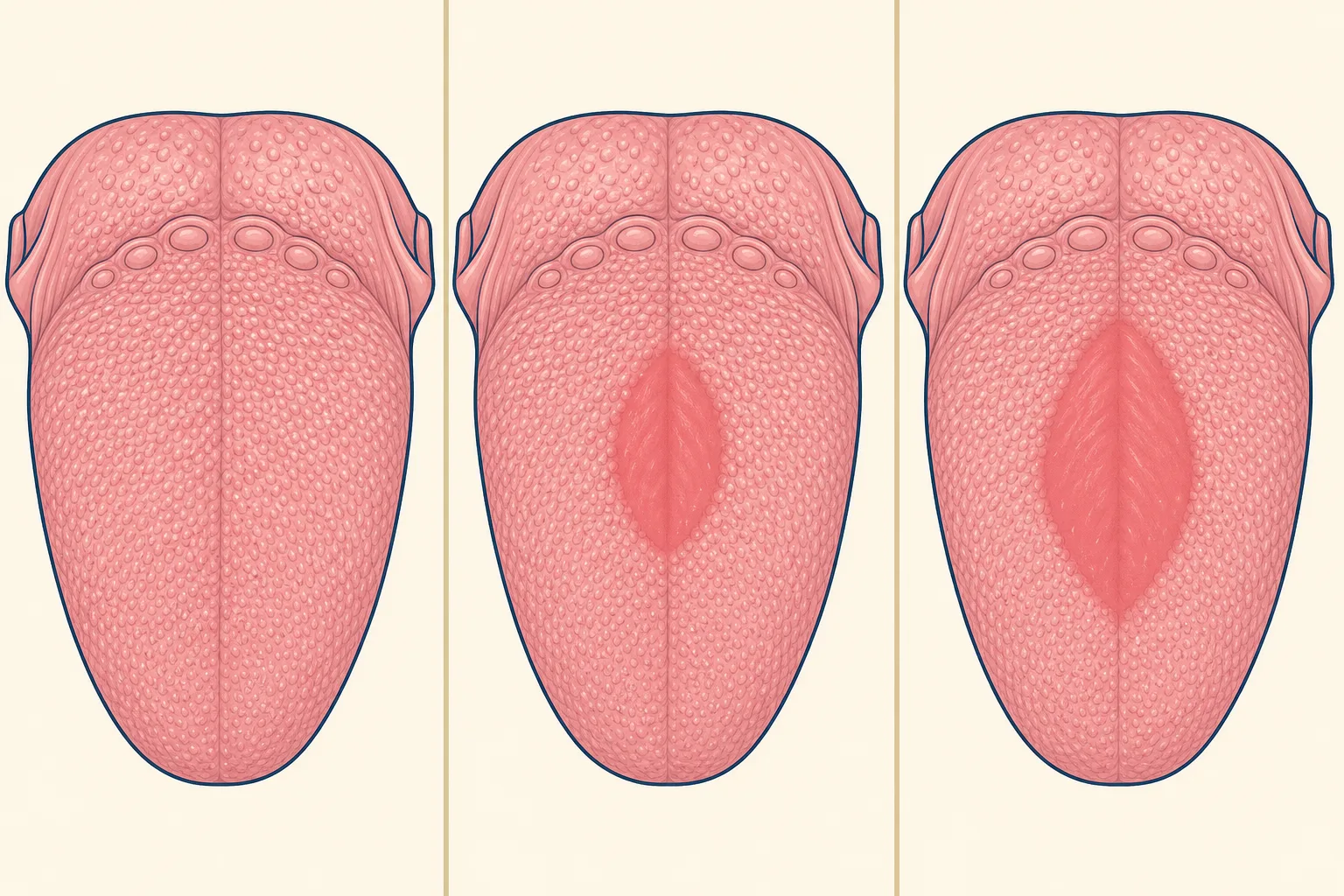
Median Rhomboid Glossitis dental educational illustration

What the change looks like

Illustrative diagram: Median Rhomboid Glossitis
Illustration — a representative diagram, not a patient photo.
The DN First Look799 AED
Book The DN First Look

What might you notice on the tongue?

Changes to mention during assessment
ChangeWhy it helps
A central change in the tongue surfaceLocation is part of the clinical examination.[1][2]
Soreness or discomfortSymptoms help determine whether treatment is needed.[1][2]

[1][2]

Why should similar tongue changes be separated?

The appearance of a tongue lesion can overlap with other tongue conditions. The history, symptoms, and examination help the clinician decide whether the finding fits median rhomboid glossitis or another cause.

[1][2]

How is a central tongue change followed?

A clinical record can describe location, surface, symptoms, and whether the area is new or changing. These sources do not give a patient staging system for median rhomboid glossitis.

[1][2]
Details used to follow the finding
DetailPurpose
Location and surface appearanceHelps document the tongue finding.[1][2]
Change in symptomsHelps guide the treatment discussion.[1][2]

[1][2]

When should you arrange a review?

Arrange an assessment if the tongue area is painful, changes, persists, or is accompanied by another mouth symptom. A focused examination is safer than trying to name a lesion from an image.

[1][2]

How is the diagnosis made?

The clinician examines the tongue's location, surface, symptoms, and history. Common tongue conditions can have similar appearances, so the diagnosis should use the complete clinical finding.

[1][2]

What treatment might be discussed?

Treatment is based on the diagnosis, symptoms, and any associated cause found on assessment. The clinician can explain whether treatment is needed and what change should prompt follow-up.

[1][2]
How assessment informs care
FindingCare question
A symptomatic tongue areaWhich treatment addresses the identified cause and discomfort?[1][2]
An uncertain diagnosisIs further assessment needed before treatment?[1][2]

[1][2]

What should your appointment plan include?

The plan should set out the examination, any tests, treatment advice, and follow-up relevant to the tongue finding. Care is chosen after assessment rather than from a label alone.

[1][2]

Why should a persistent tongue change be checked?

An unexplained or changing tongue area can remain uncomfortable while its cause is unclear. Examination helps distinguish tongue conditions and select the appropriate next step.

[1][2]

Can recurrence or irritation be reduced?

Prevention advice depends on the cause identified during assessment. Gentle mouth care and avoiding a known irritant may be advised, while a persistent tongue change still needs review.

[1][3]

Frequently asked questions

Does a central tongue patch always mean median rhomboid glossitis?

No single visual feature establishes the diagnosis; the clinician uses location, symptoms, history, and examination to distinguish tongue conditions.

[1][2]