
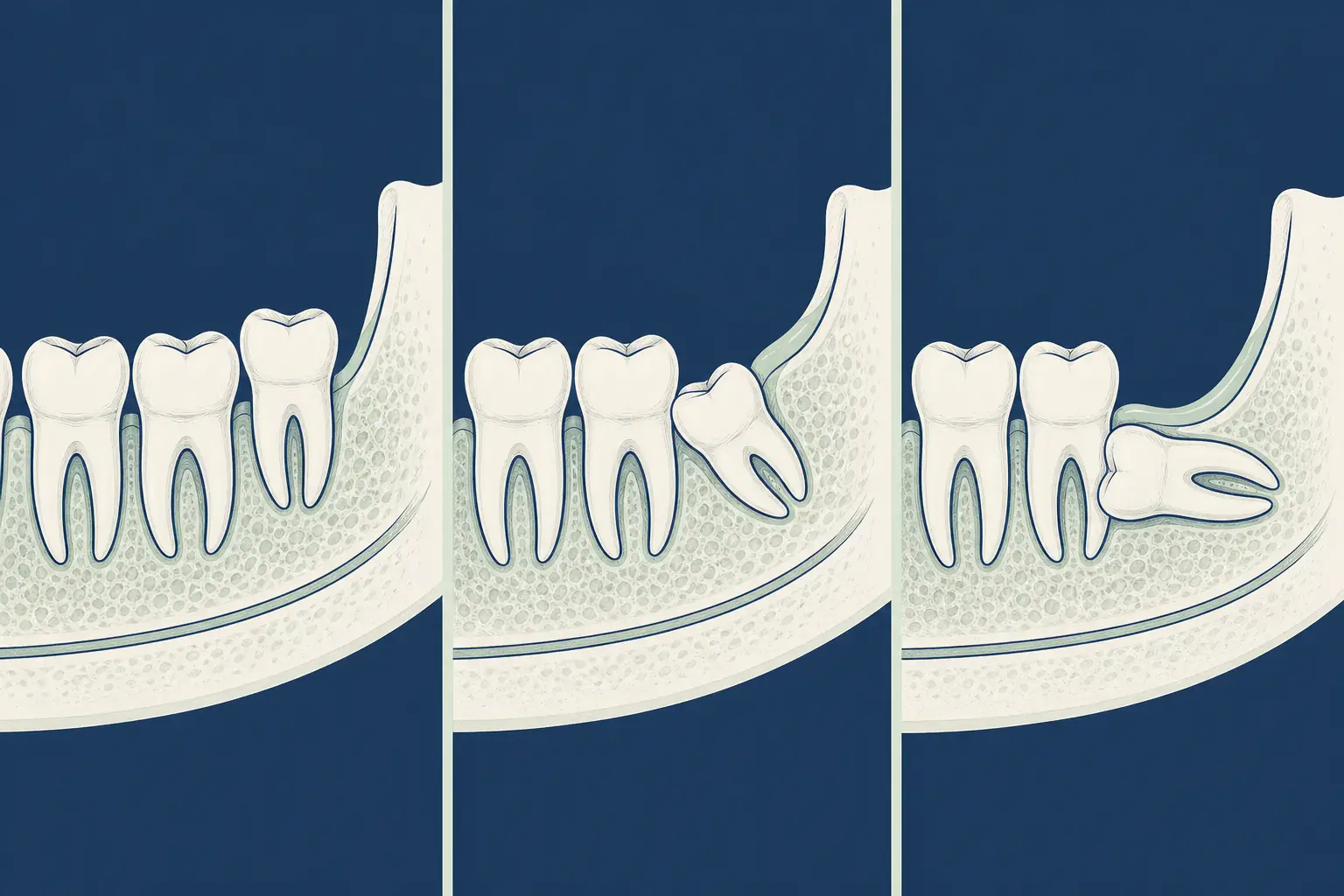
What the change looks like
The DN First Look799 AED
Book The DN First LookWhat are the signs of an impacted wisdom tooth?
An impacted wisdom tooth may cause no symptoms. When it does cause trouble, a person may notice pain at the back of the mouth, swelling or tenderness around the gum, difficulty opening the mouth, bad taste or breath, or pressure near nearby teeth.
[1][2]| Clinical question | What this can mean |
|---|---|
| What is assessed? | An impacted wisdom tooth may cause no symptoms. When it does cause trouble, a person may notice pain at the back of the mouth, swelling or tenderness around the gum, difficulty opening the mouth, bad taste or breath, or pressure near nearby teeth.[1][2] |
| What guides the next step? | Bad breath, a bad taste, swollen gums, jaw pain, difficulty opening the mouth, or a visible gap can occur when the tooth is partly erupted.[1][2] |
Why does a wisdom tooth become impacted?
Is the wisdom tooth partly or fully impacted?
A wisdom tooth may be partly visible, fully covered by gum, or held within bone. The important distinction is whether it is cleanable and symptom-free, or whether its position is linked with pain, infection or damage around it.
[1][2]| Clinical question | What this can mean |
|---|---|
| What is assessed? | A wisdom tooth may be partly visible, fully covered by gum, or held within bone. The important distinction is whether it is cleanable and symptom-free, or whether its position is linked with pain, infection or damage around it.[1][2] |
| What guides the next step? | A tooth can be partly erupted, completely covered by gum, or held in bone; food and plaque can collect around a partly erupted tooth.[1][2] |
Which wisdom-tooth problems need attention?
How is an impacted wisdom tooth found?
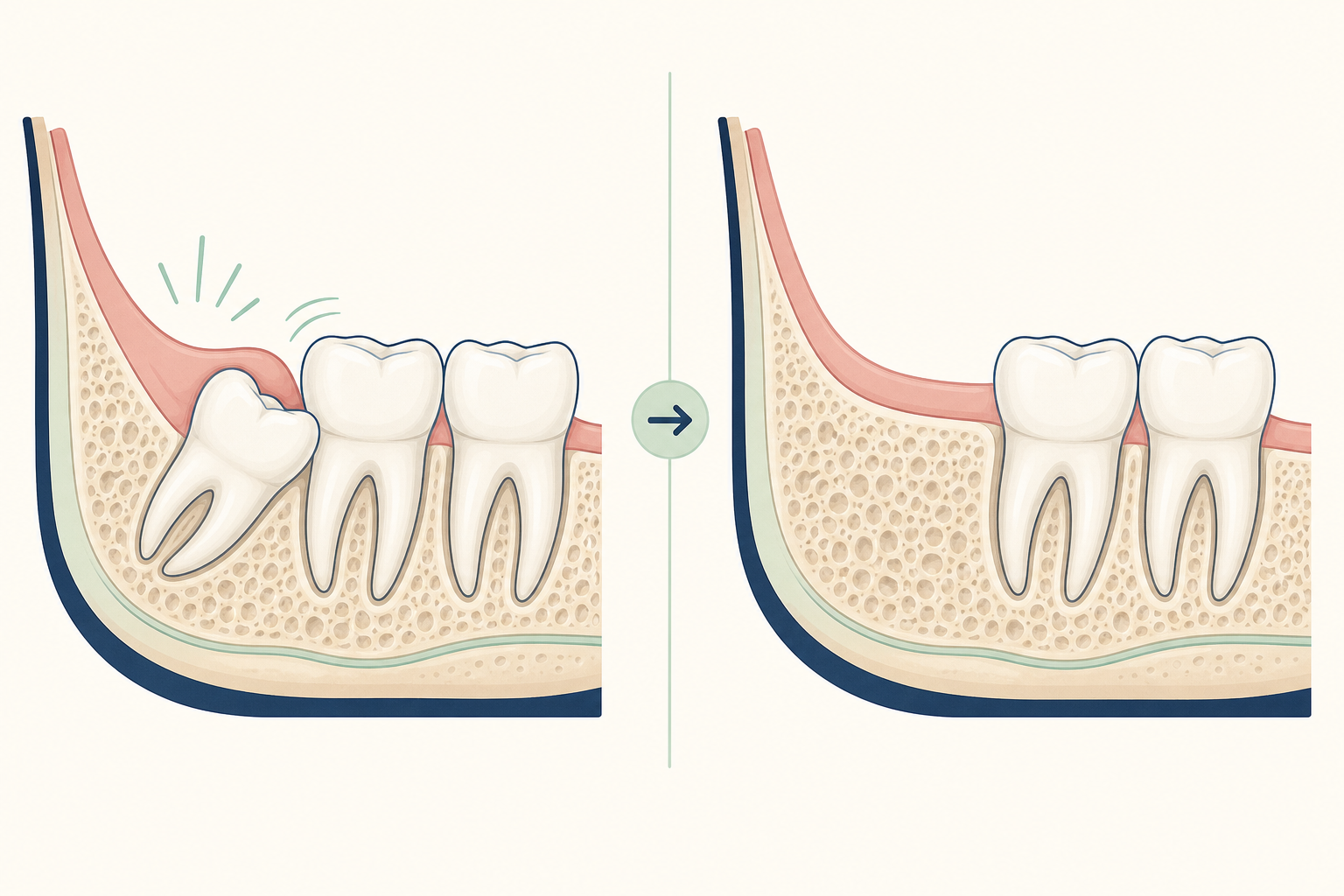
When is an impacted wisdom tooth removed?
A symptom-free tooth may be monitored when examination supports that approach. A tooth causing repeated symptoms or local problems may need removal. The choice depends on the clinical and imaging findings.
[1][2]| Clinical question | What this can mean |
|---|---|
| What is assessed? | A symptom-free tooth may be monitored when examination supports that approach. A tooth causing repeated symptoms or local problems may need removal. The choice depends on the clinical and imaging findings.[1][2] |
| What guides the next step? | Removal is the usual treatment for an impacted wisdom tooth, while a tooth causing no problems may need no treatment.[1][2] |