
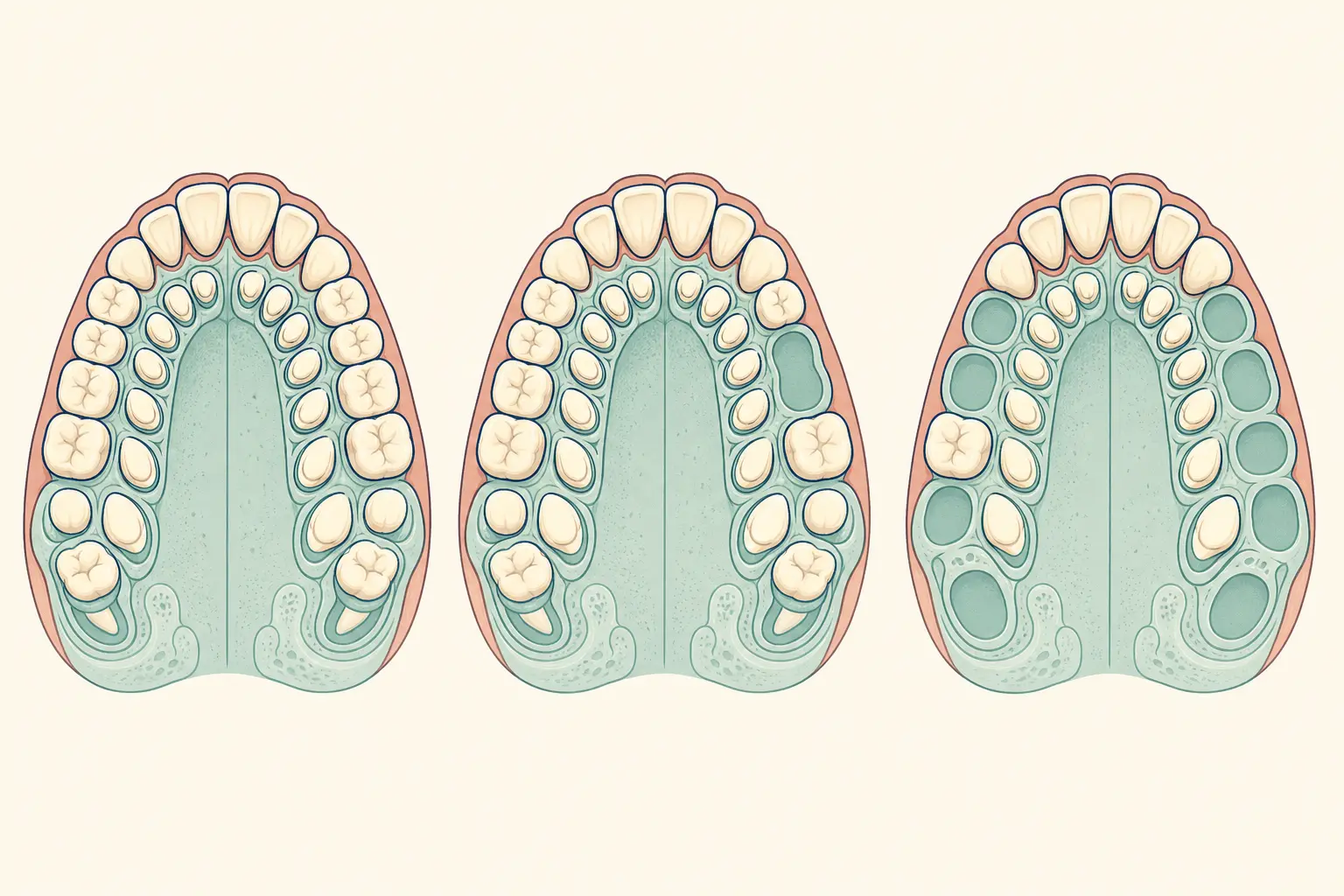
What the change looks like
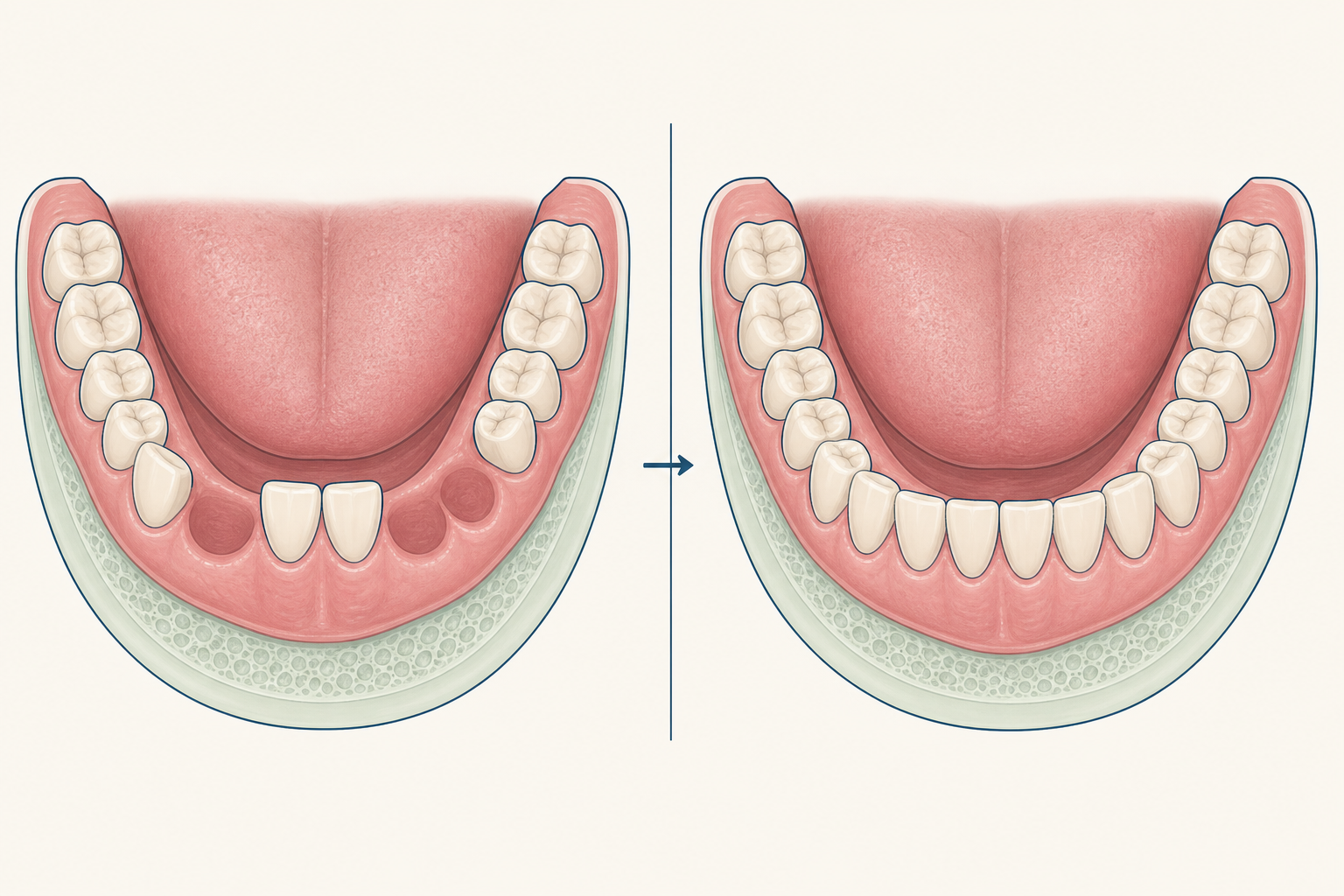
What does hypodontia mean?
Why do some permanent teeth not form?
Tooth agenesis is a developmental anomaly: a tooth fails to develop during the early stages of tooth formation. It may occur on its own or with a syndrome. For nonsyndromic tooth agenesis, changes in genes involved in craniofacial and tooth development account for about 80% of affected people in the cited overview.
[1][2]When can hypodontia be identified?
How serious can missing teeth from birth be?
How is hypodontia confirmed?
How is care planned for missing permanent teeth?
Care can range from relatively simple measures to complex treatment delivered in several phases, depending on severity. Identifying a developmental tooth-number problem early can allow planning during early stages and may reduce the complexity of later care.
[1][2]| Period | Planning consideration |
|---|---|
| Age 6 to adulthood | Maintain arch length until orthodontic treatment is complete or implants can be placed after growth is complete.[1][2] |
| Ages 6 to 18 | An adjustable appliance may accommodate normal facial growth and development.[1][2] |
| Ages 12 to 18 | Prosthetic replacement may follow orthodontic treatment.[1][2] |
What can make care more involved?
Why is early identification useful?
How are the teeth that are present protected?
Frequently asked questions
Who wrote this page
This library is published by Dental Nation, a licensed dental group practising in the United Arab Emirates. Pages are written and overseen by the same clinical team that treats patients in our clinics, and are held to a fixed editorial standard for safety and accuracy.
This page is patient education, not medical advice, and cannot replace an examination. Anything urgent — facial swelling, trauma, uncontrolled bleeding or severe pain — needs a dentist or emergency care now.