
Hypercementosis
Cementum is the calcified layer over a tooth root. A root finding needs assessment alongside its ligament and surrounding bone.
[1][2]The short answer
Hypercementosis concerns the cementum covering a tooth root, alongside the periodontal ligament and surrounding alveolar bone.
[1][2]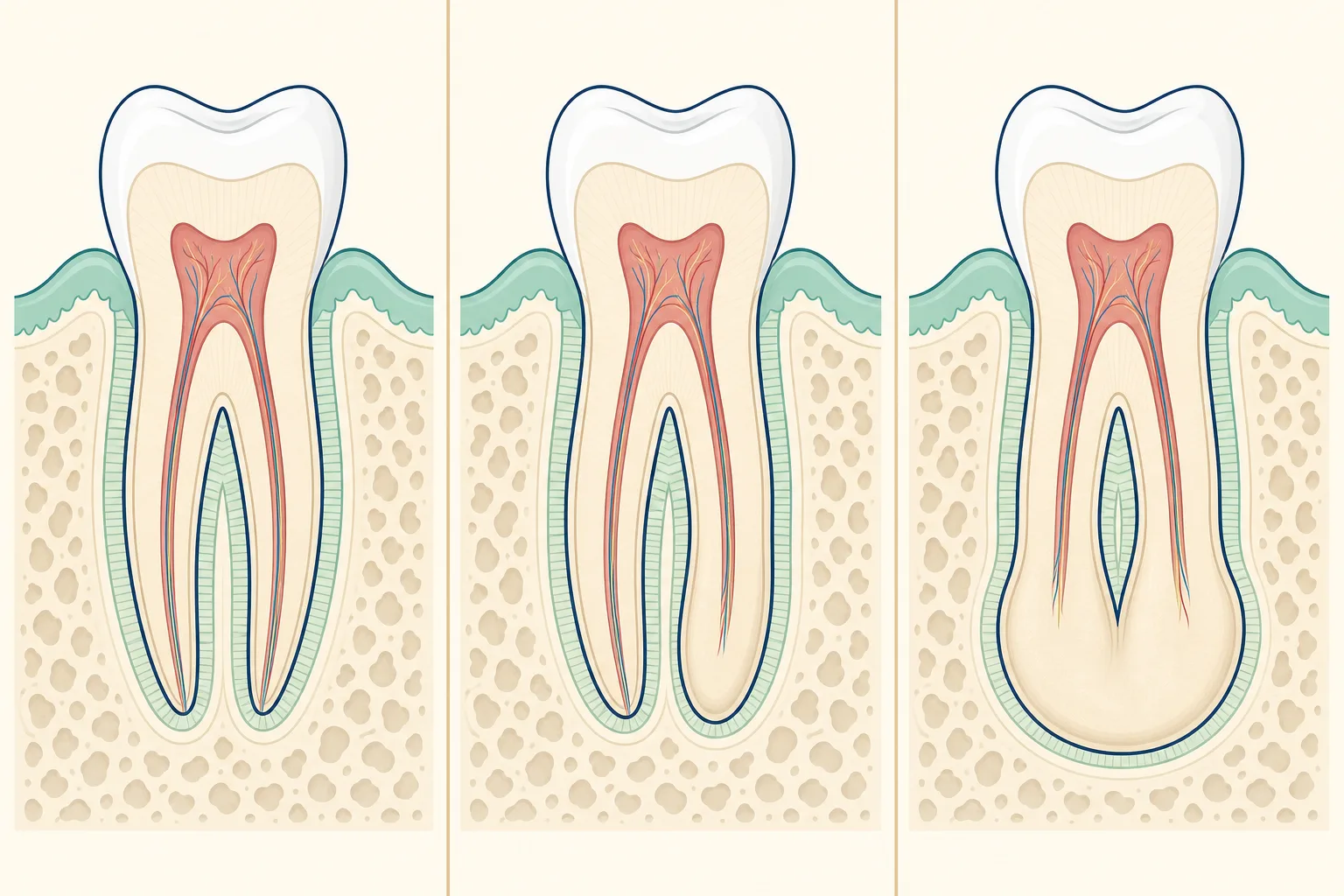
What the change looks like
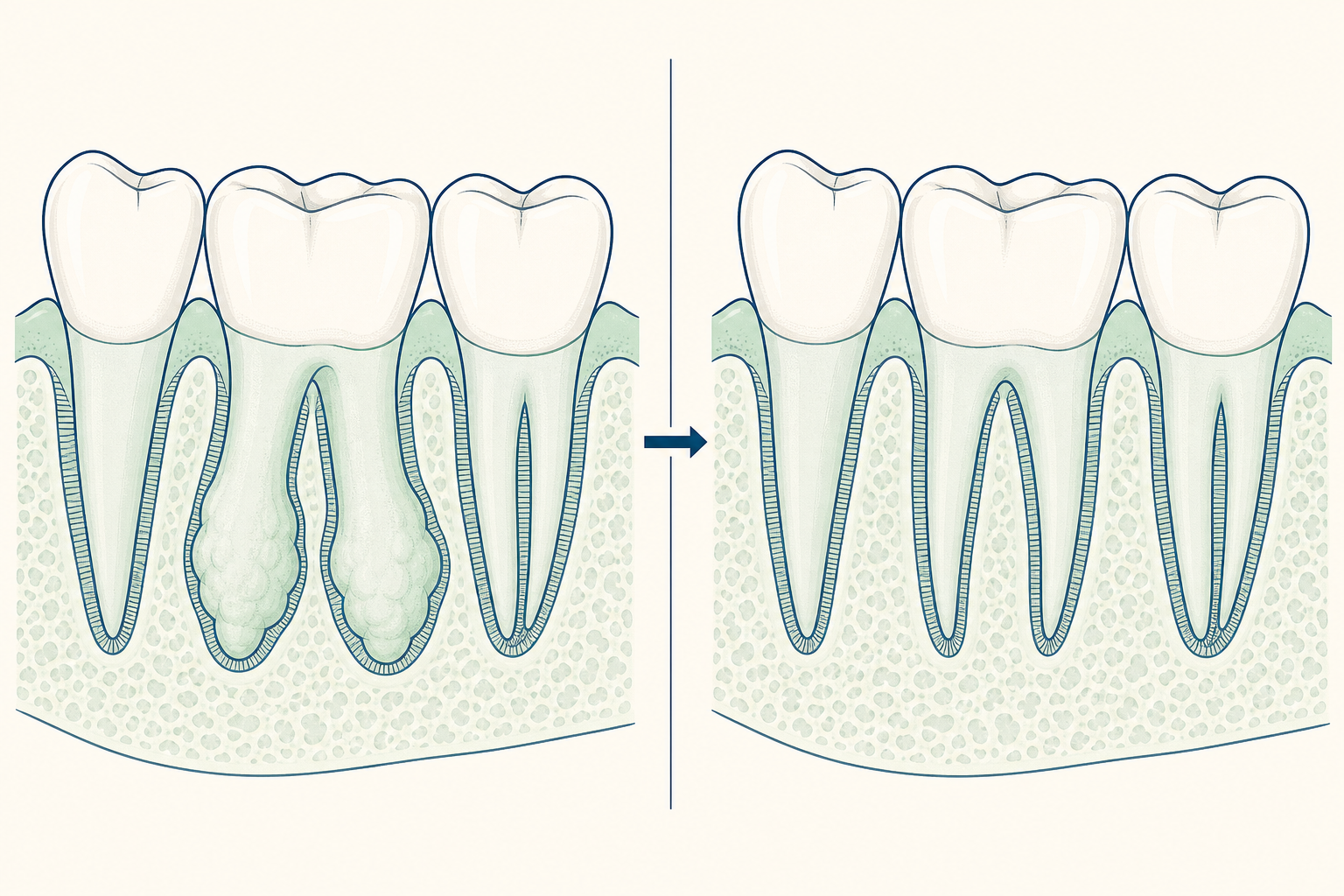
What symptoms might I notice?
| Finding | Patient-facing next step |
|---|---|
| Pain, sensitivity, swelling, or a visible change | Arrange a dental assessment so the tooth and nearby tissues can be examined[1][2] |
| Fever, spreading facial swelling, or difficulty swallowing or breathing | Seek urgent dental or medical care[1][2] |
| No obvious symptom | Keep routine dental review because some findings are discovered during examination or imaging[1][2] |
What can cause it?
How is it described or staged?
Root and surrounding-tissue findings are assessed in relation to cementum, the periodontal ligament and alveolar bone. The record needs to distinguish the visible root finding from an eruption disorder such as ankylosis.
[1][2]| Assessment point | What the dentist is checking |
|---|---|
| Limited finding | Whether the change is confined to the tooth or a small area[1][2] |
| Nearby tissue involvement | Whether gums, supporting tissues, or adjacent structures are affected[1][2] |
| Function and progression | Whether the tooth works normally and whether the change is developing[1][2] |
What increases the risk?
How is it diagnosed?
How is it treated at each stage?
Care begins by identifying whether the root, periodontal ligament or surrounding bone is affected. A treatment decision follows the anatomical finding and the tooth's function.
[1][2]| Clinical situation | Possible direction of care |
|---|---|
| Limited or stable finding | Observation or a tooth-preserving procedure may be considered after examination[1][2] |
| Active disease or symptoms | Treatment is selected for the diagnosed cause and affected tissues[1][2] |
| Loss of function, spreading infection, or severe damage | Prompt assessment is needed to choose the appropriate procedure[1][2] |
What should I ask about the Dubai cost?
What can happen if it is untreated?
How can I reduce future problems?
Frequently asked questions
Who wrote this page
This library is published by Dental Nation, a licensed dental group practising in the United Arab Emirates. Pages are written and overseen by the same clinical team that treats patients in our clinics, and are held to a fixed editorial standard for safety and accuracy.
This page is patient education, not medical advice, and cannot replace an examination. Anything urgent — facial swelling, trauma, uncontrolled bleeding or severe pain — needs a dentist or emergency care now.