
Self-ligating marketing claims
Both brace systems use brackets and wires to move teeth; this guide explains fixed-treatment care, force, and practical risks.
[1][2]The short answer
Traditional braces use brackets and wires fixed to the teeth to apply pressure that gradually moves teeth.
[1][2]
The two options, side by side
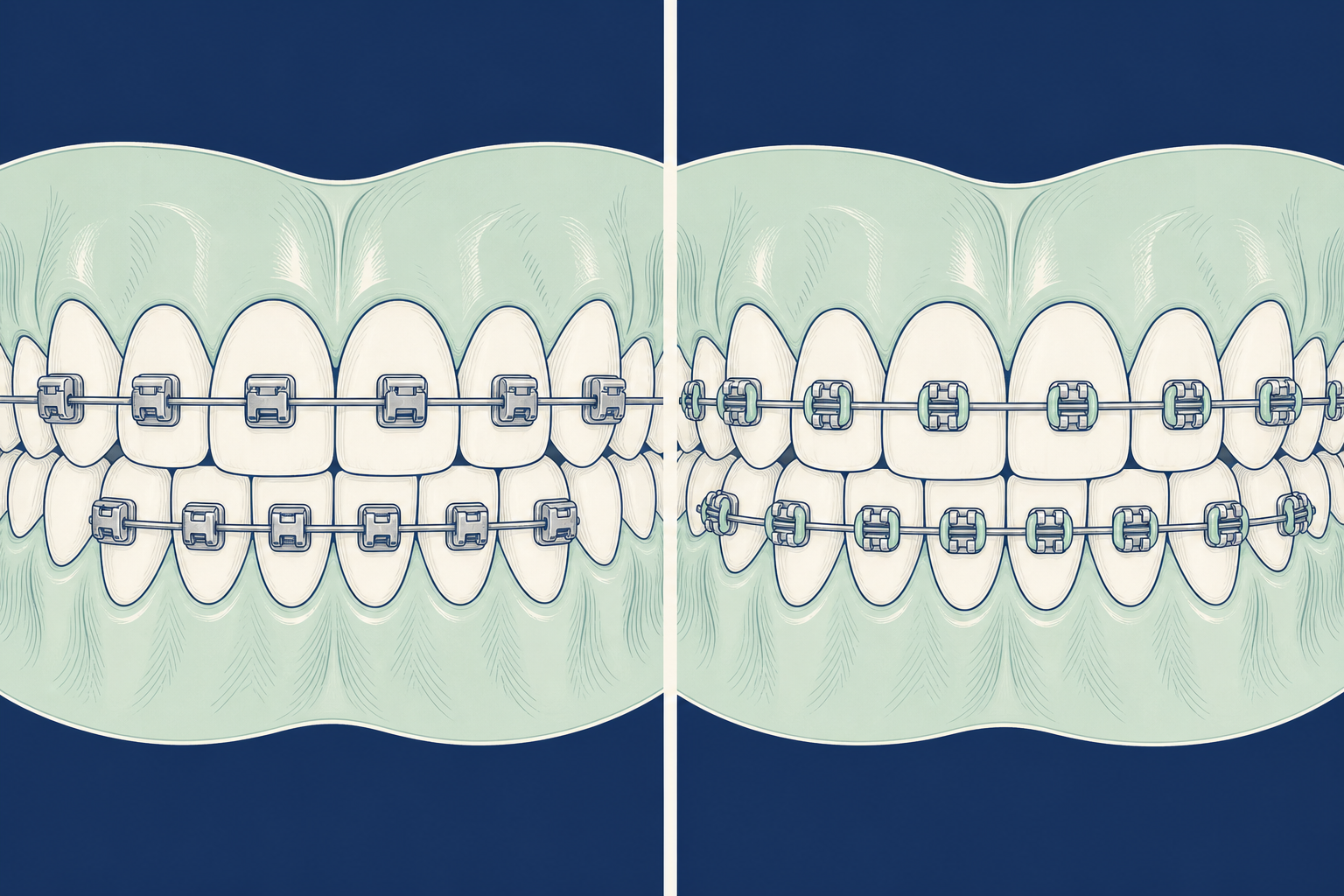
How do fixed braces move teeth?
When is a fixed-brace approach useful?
What distinguishes a different brace design?
Which brace features can change the treatment route?
What daily care do fixed braces need?
What can damage braces?
When might another orthodontic option be considered?
Clear aligners are removable for eating and brushing and are typically used for light to moderate alignment issues, whereas fixed braces can handle a wider range of problems.
[2]What should determine the brace choice?
The relevant comparison is the tooth movement and bite correction needed, because elastic bands, headgear, or palatal expanders may also be used when extra force or expansion is required.
[2]Frequently asked questions
Who wrote this page
This library is published by Dental Nation, a licensed dental group practising in the United Arab Emirates. Pages are written and overseen by the same clinical team that treats patients in our clinics, and are held to a fixed editorial standard for safety and accuracy.
This page is patient education, not medical advice, and cannot replace an examination. Anything urgent — facial swelling, trauma, uncontrolled bleeding or severe pain — needs a dentist or emergency care now.