
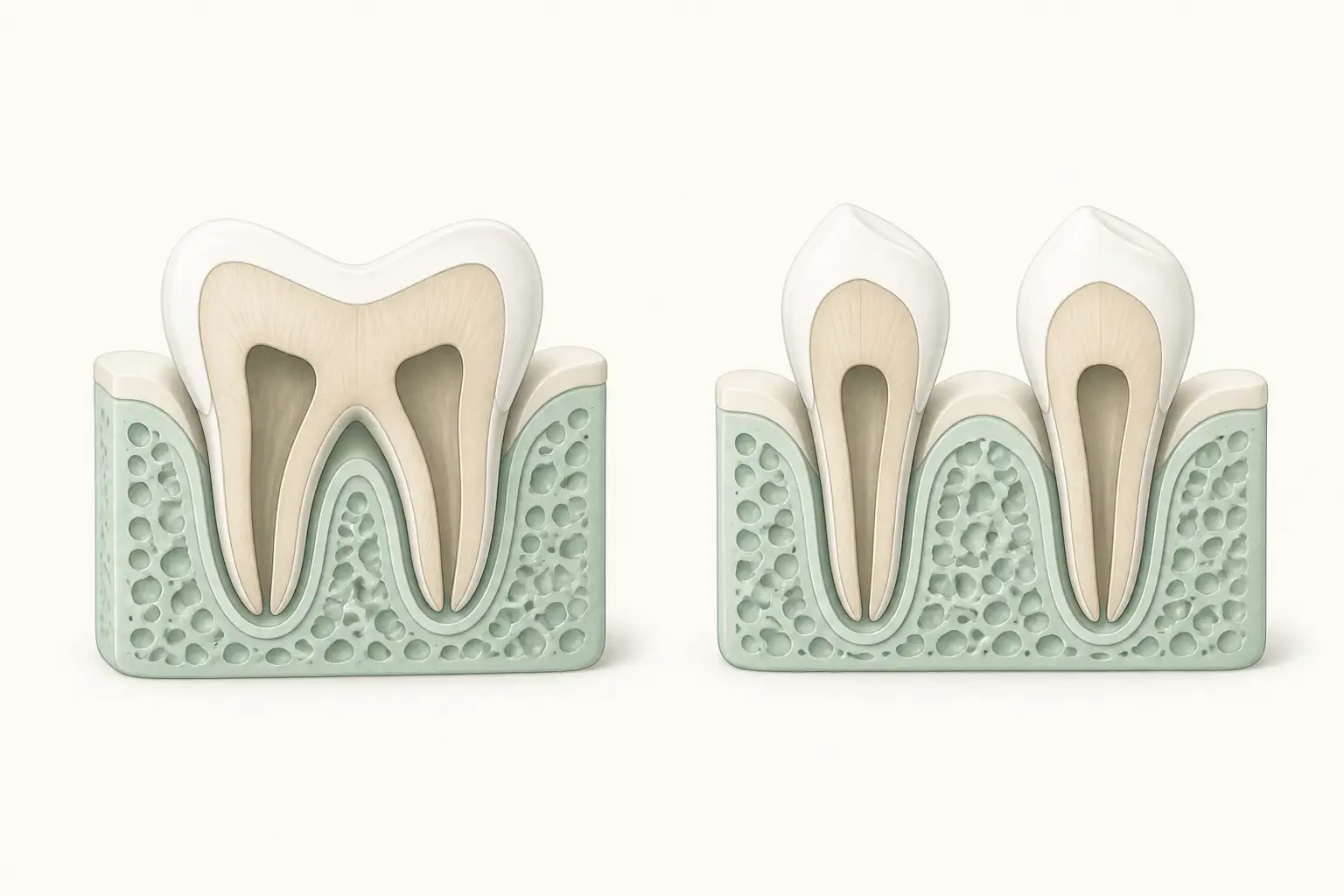
What the change looks like
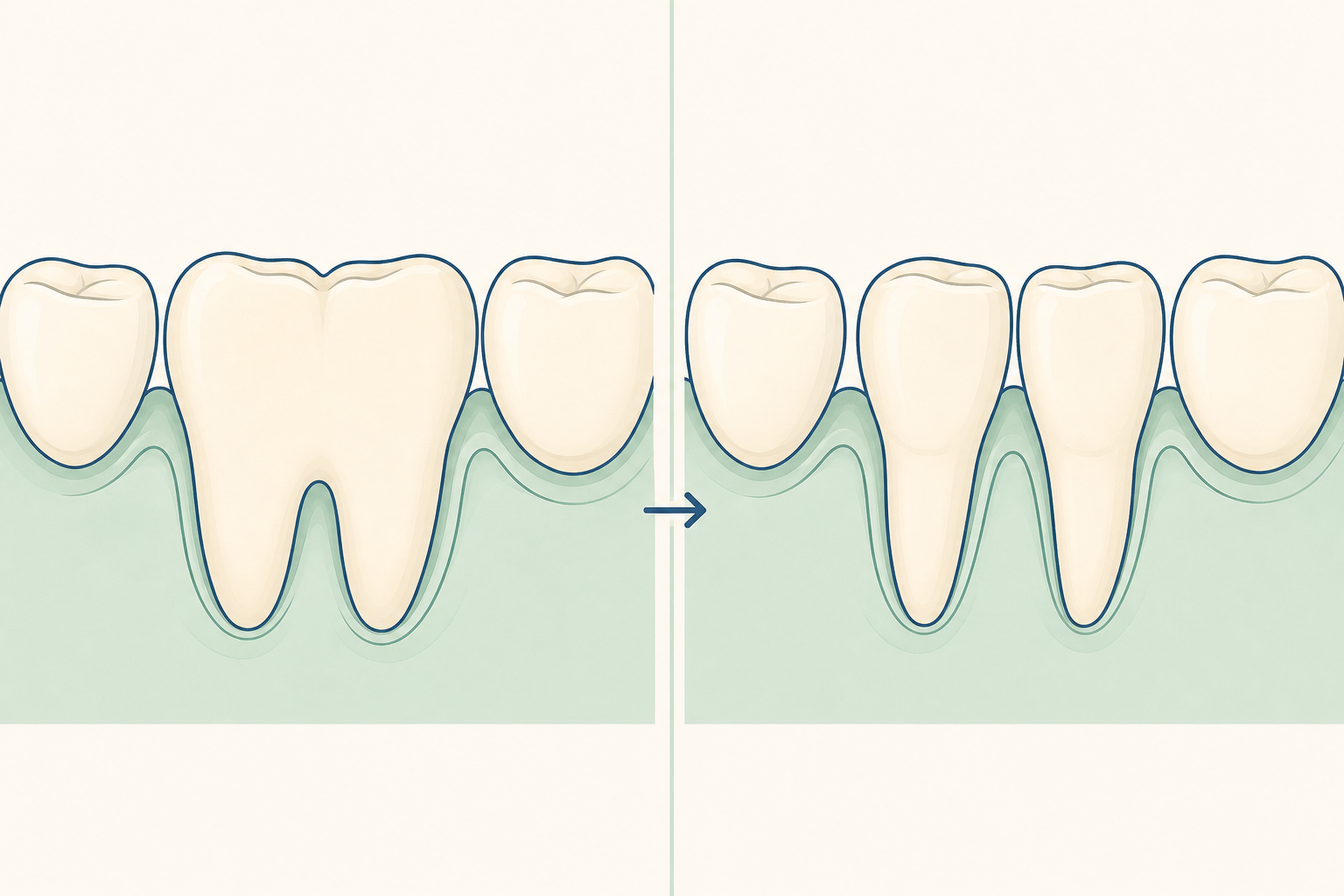
What do fused teeth look like?
The altered shape or size can be an appearance concern. Developmental tooth disturbances can also leave teeth more prone to decay and make later care more complex.
[1]Why do teeth fuse?
Fusion happens during tooth formation when two teeth developing from different follicles unite. The union may involve the crown, the root, or both.
[2]Does the timing of fusion change the tooth?
Yes. Fusion that begins before calcification can produce a complete union, while a later union can be incomplete. The stage of development determines how much of the tooth is joined.
[2]What problems can fused teeth cause?
A fused tooth can cause crowding, change the bite, or affect appearance. Its larger surface area and root mass can delay resorption and contribute to delayed or ectopic eruption of the permanent tooth that follows it.
[2]How are fused teeth identified?
A fused tooth can appear as an enlarged clinical crown created by the union of two normally separate tooth germs. Its size and shape may bring the finding to attention during a dental examination.
[1]What treatment can fused teeth need?
When fusion affects function or appearance, care may be restorative, surgical, or orthodontic. Root-canal treatment can be more difficult because the internal anatomy may be joined.
[1]What can make treatment more involved?
The work can range across restorative, surgical, and orthodontic care. A fused tooth with decay or periodontal disease may also need more complex treatment because fusion can complicate endodontic care.
[1]What are the main risks?
Fused teeth have a higher risk of decay and periodontal disease. Their altered structure may also make endodontic treatment harder to carry out.
[1]Can tooth fusion be prevented?
Fusion is a developmental condition and cannot be prevented. Meticulous oral hygiene helps reduce the decay and periodontal-disease risk around teeth with developmental disturbances.
[1]Frequently asked questions
Can a fused tooth affect an adult tooth coming through?
Yes. The greater surface area and root mass can delay resorption and contribute to delayed or ectopic eruption of the permanent successor.
[2]