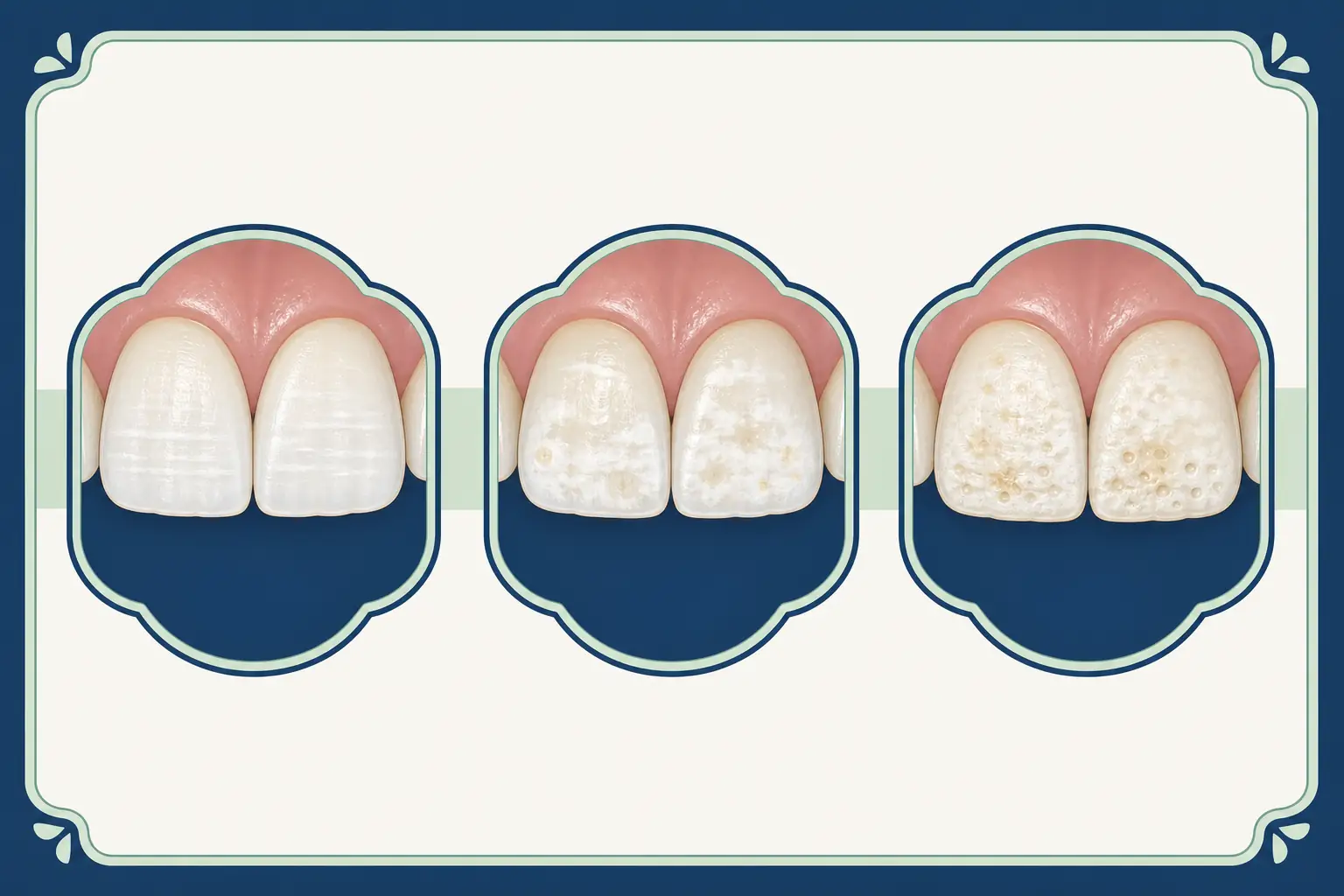
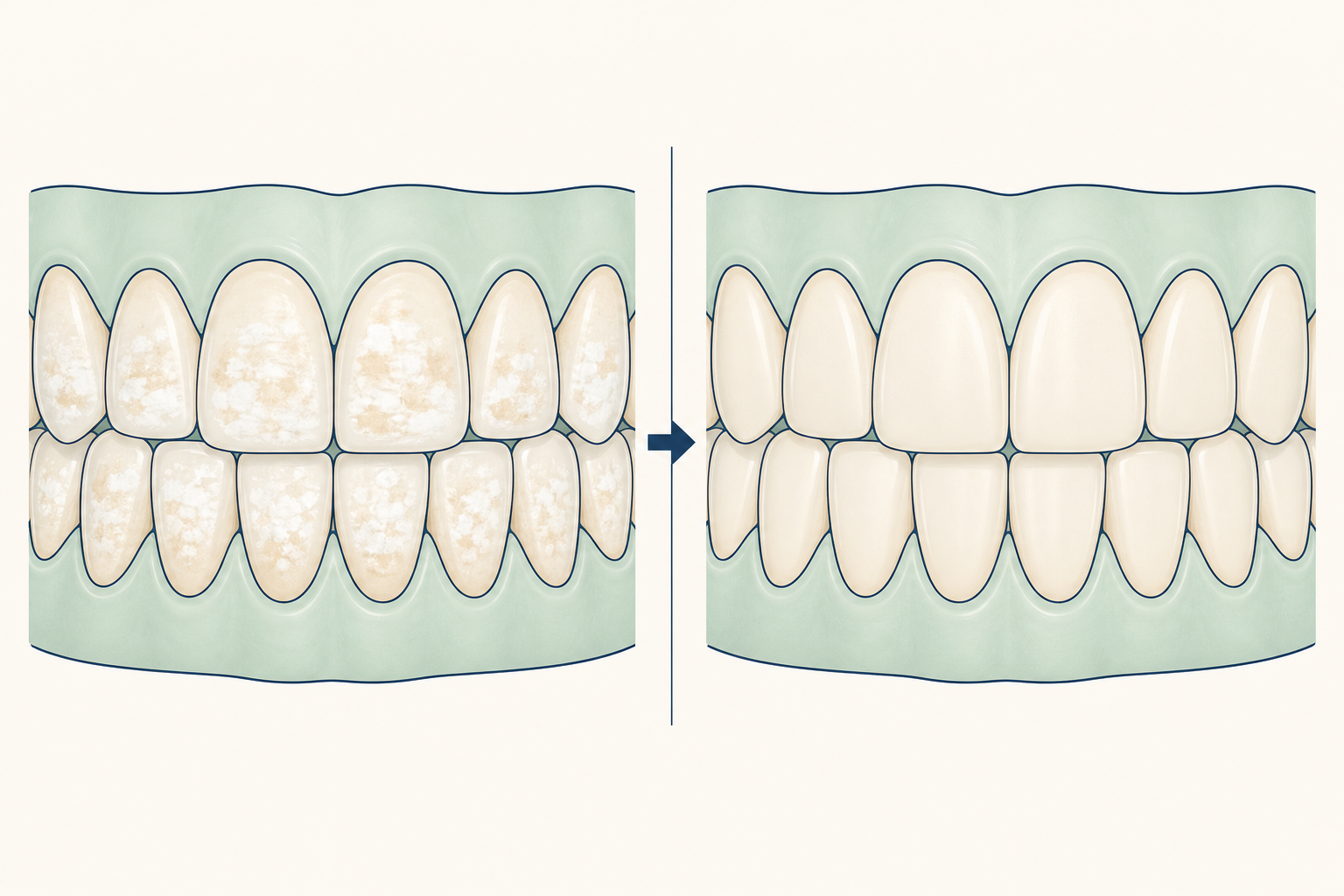
The usual mild form is a change in appearance rather than a painful condition or a loss of tooth function. Moderate and severe forms cause more extensive enamel changes and are rare.
It develops when a young child consumes too much fluoride over a period of time while teeth are forming below the gums. How noticeable it becomes relates to both the amount and duration of that exposure.
Fluorosis occurs during the period when permanent-tooth enamel is forming. By about age eight, that enamel is fully formed, so older children, teenagers and adults cannot develop new dental fluorosis.
Young children can swallow toothpaste while brushing. Fluoride exposure can also come from mouth rinses, supplements and water, and bottled, tap and well water do not contain the same amount of fluoride.
Faint white lines or streaks, together with the history of exposure while teeth were forming, distinguish fluorosis. In many cases the change is subtle enough to be noticed during a routine dental examination.
Mild fluorosis does not affect tooth health or function. Visible changes should be distinguished from other sources of tooth discoloration, such as childhood illness, medicines, infection in baby teeth, facial trauma or genetics.
Mild fluorosis is mainly cosmetic and does not impair tooth function. Any cost follows the care chosen for a visible enamel change rather than treatment for a painful or failing tooth.
In its usual mild form, fluorosis is not painful and does not harm tooth function. More extensive enamel changes can occur in moderate or severe fluorosis, but these forms are uncommon.
Use no more than a pea-sized amount of fluoride toothpaste for children aged three to six, and no more than a grain-of-rice amount before age three. Supervise brushing and teach children to spit out toothpaste rather than swallow it.
Children under six should not use fluoride mouth rinses unless advised by a health professional, because many have not fully developed the swallowing reflex and may swallow more than they spit out.