
Dental Nation
Condition guide

Gapped Teeth (Diastema)

A gap between adjacent teeth often closes as children’s teeth develop, though some gaps persist into adulthood.

[3][5]

The short answer

A diastema is a space between adjacent teeth, usually between the two upper front teeth.

[3][5]
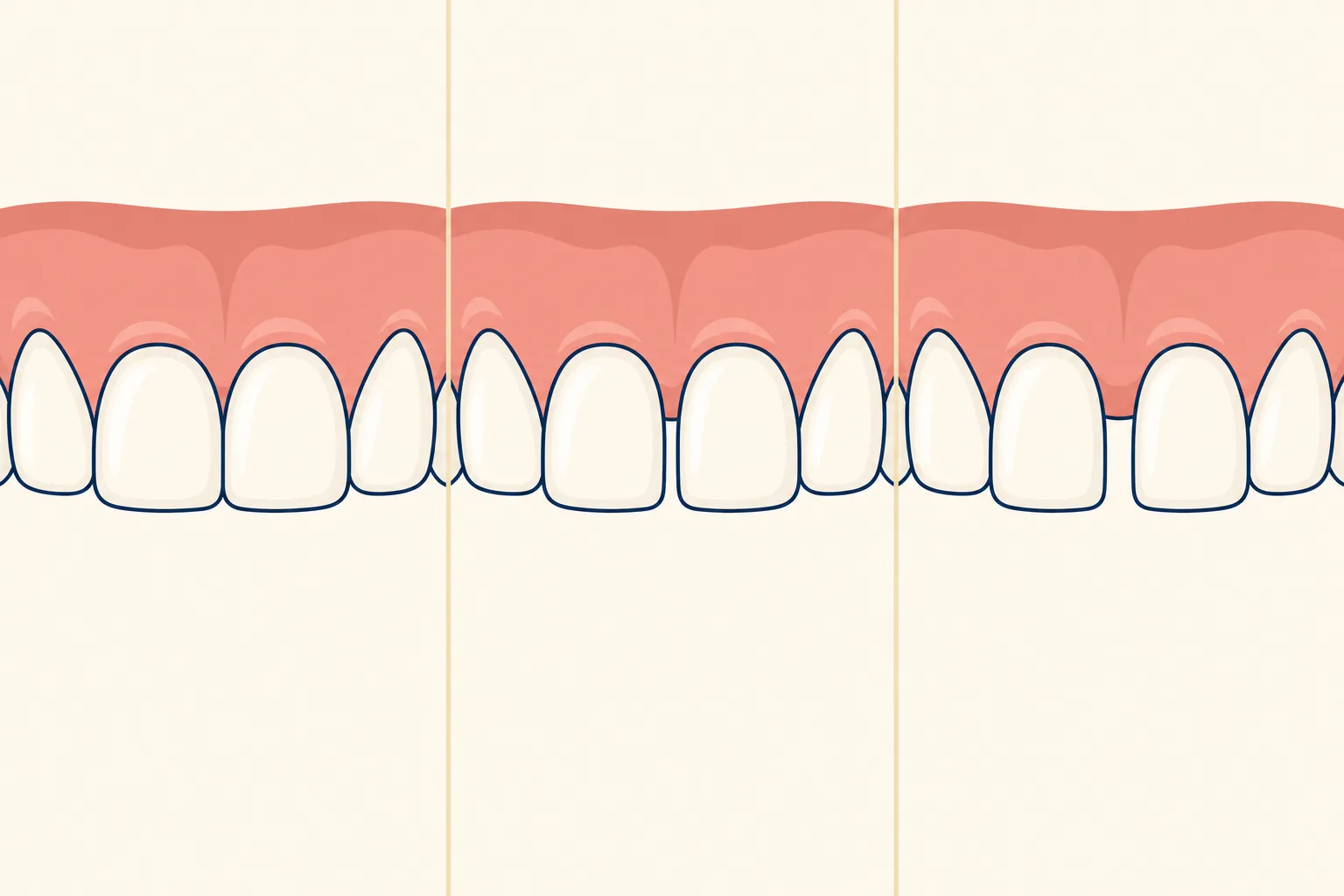
Gapped Teeth (Diastema) dental educational illustration

What the change looks like
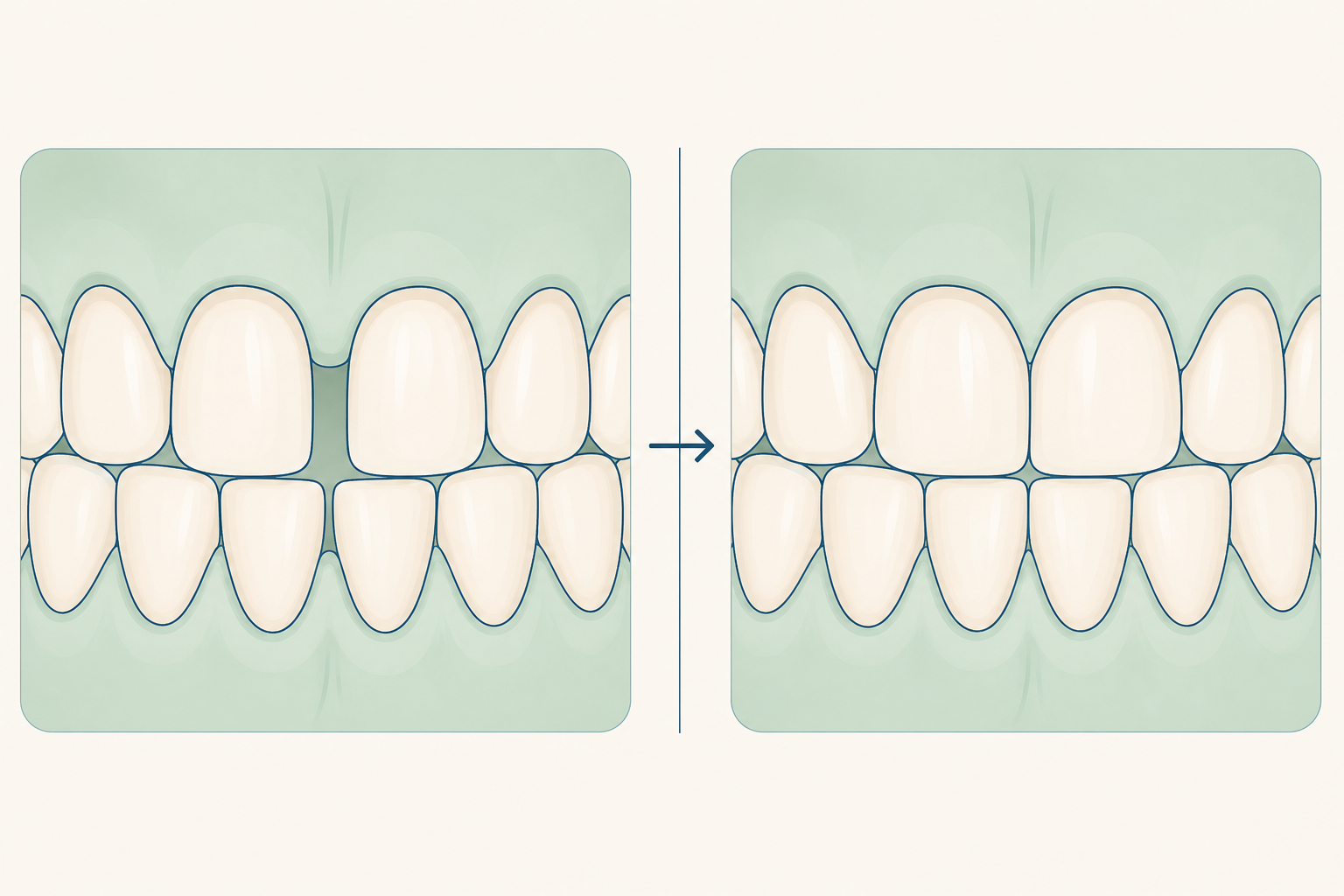
Illustrative diagram: Gapped Teeth
Illustration — a representative diagram, not a patient photo.
The DN First Look799 AED
Book The DN First Look

What do gapped teeth look like?

In children, the width of a midline gap can change with eruption. It commonly reduces as the dentition develops, although a gap may remain when its width or another associated feature keeps it open.

[3][5]
How midline gap size is described in children
DescriptionWidth
Mild0.5 to 1.5 mm[3][5]
Moderate1.6 to 2.5 mm[3][5]
SevereMore than 2.5 mm[3][5]

[3][5]

Why can a gap form between the front teeth?

In children below 12, commonly reported causes include the shape of the upper lip frenum, an extra tooth in front of the upper jaw, and the pattern of nasal airflow condensation. A gap can also be part of normal mixed-dentition development.

[3][5]

Does a childhood gap always need closing?

No. A midline gap is often seen during mixed dentition and disappears naturally in most children as their teeth develop. Timing is considered alongside the stage of primary, mixed, adolescent, or adult dentition.

[5][1]
Why stage of dentition matters
StageWhat is considered
Mixed dentitionA gap may close as dental development proceeds.[5][1]
Persistent gapWidth and associated factors are considered before planning an intervention.[5][1]

[5][1]

What raises the chance that a closed gap will reopen?

In a follow-up of treated patients, a larger gap before treatment and having a family member with a similar gap were significant predictors of relapse. A reopened space, repeat treatment, or continued retainer use were counted as relapse in that study.

[4][5]

How is a diastema assessed?

Assessment can use a clinical examination and dental records. Studies of childhood midline diastema have also used panoramic radiographs or CBCT images when looking for an impacted extra tooth, while visual examination and a dental aesthetic index have also been used.

[3][5]

How is treatment timed?

Treatment timing follows the diagnostic summary and the stage of dentition. Early identification of an abnormality can help establish priorities and timing, while concerns such as extra teeth, eruption problems, and bite discrepancies have different management needs.

[5][1]
Treatment planning by finding
FindingPlanning focus
Developing dentitionRecord the stage of dentition and diagnostic findings before setting timing.[5][1]
Extra or unerupted toothInclude the finding in the diagnostic record and treatment priorities.[5][1]

[5][1]

What shapes the scope of care for a diastema?

The scope of care starts with the diagnostic records, the stage of dentition, and the reason the gap has persisted. An extra tooth, an eruption concern, or a simple developing gap do not call for the same clinical plan.

[5][1]

Can a gap come back after it is closed?

Yes. In one follow-up study 4 to 9 years after active orthodontic treatment, 49% of patients met the study definition of relapse, which included a measurable reopened space, further treatment, or continued retainer use.

[4][5]

How can the teeth be protected during follow-up?

Keep existing teeth clean and protected while the dentition is developing. Prevention plans for tooth-development concerns include oral hygiene, diet advice, fluoride varnish twice a year, fissure sealants, and a mouth guard to reduce dental trauma where appropriate.

[2][4][5]

Frequently asked questions

Will a gap between my child’s front teeth close by itself?

Many midline gaps are part of mixed-dentition development and disappear naturally as dental development proceeds, although some persist because of their width or associated factors.

[3][5]