
Dentofacial Functional Disorder
When the lower teeth or jaw sit in front of the upper teeth, the bite can affect comfort, speech, and daily oral function.
[2]The short answer
Dentofacial functional disorders include bite and jaw relationships, such as an underbite, that can interfere with how the teeth and jaws work together.
[2]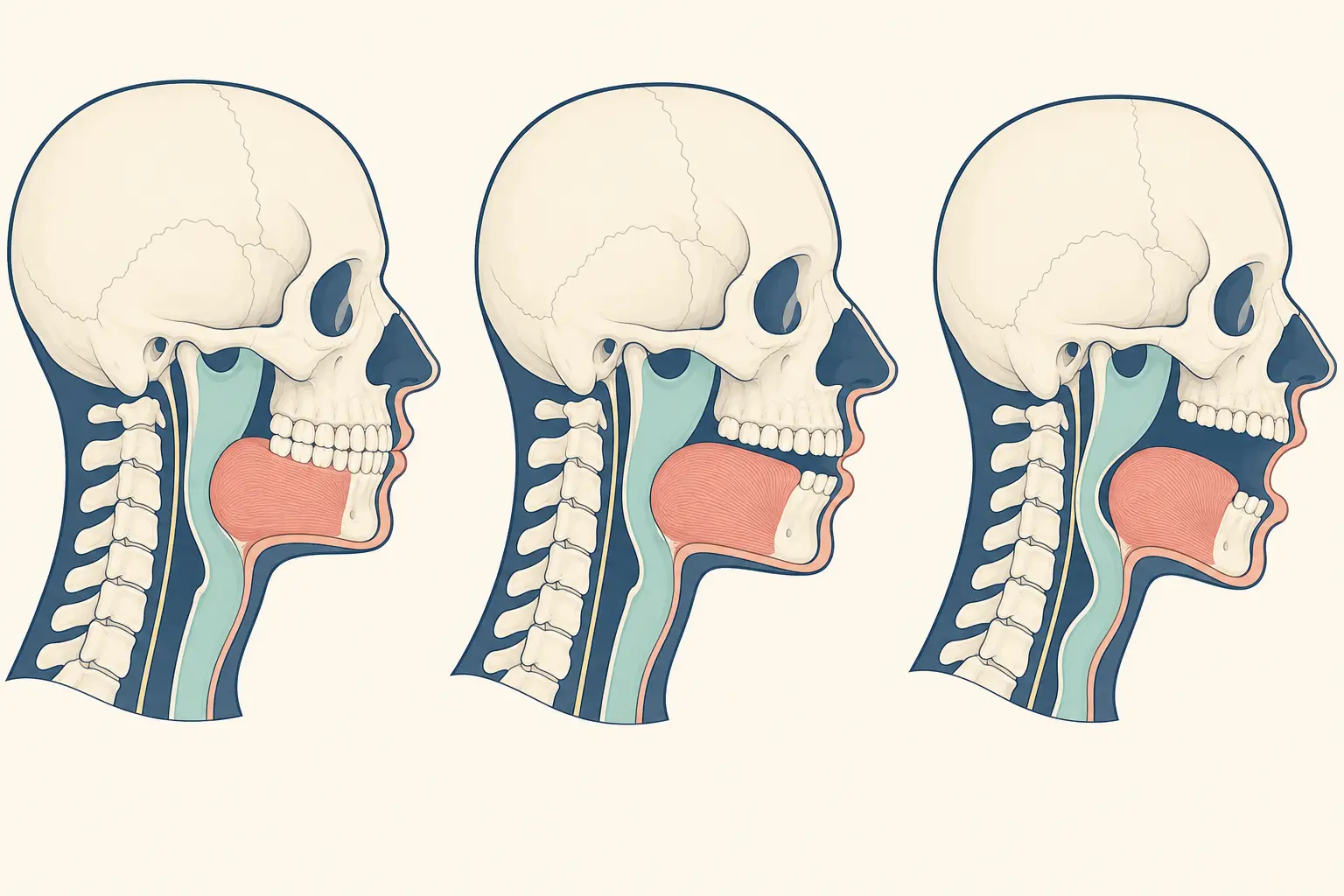
What the change looks like
What symptoms can appear?
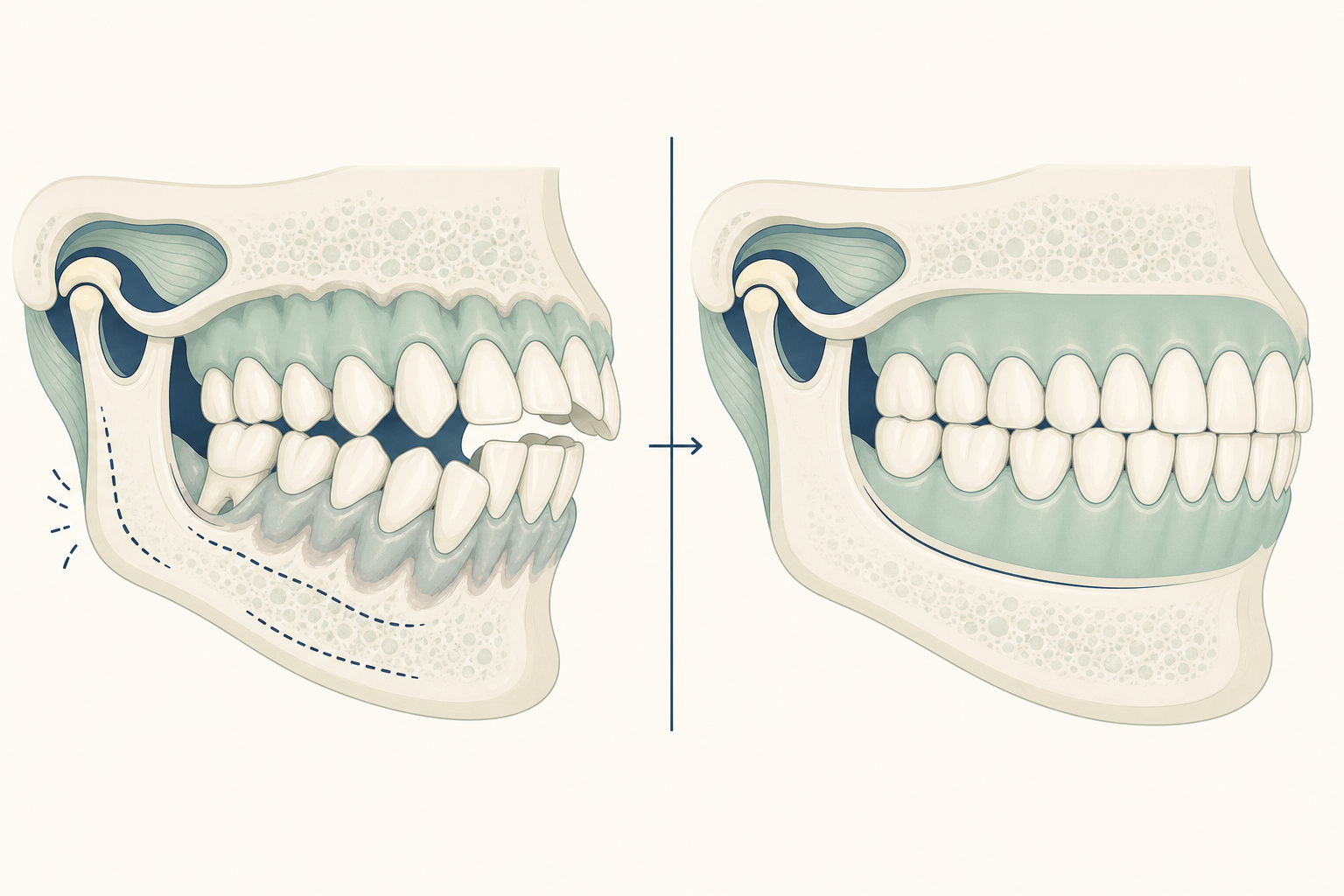
With an underbite, the lower teeth or jaw sit in front of the upper teeth when biting down. Some underbites are obvious, while others are subtle enough to be found only during an orthodontic examination.
[2]What can cause it?
Facial growth, skeletal relationships, tooth position, and the way the jaws and teeth work together can produce chewing, speech, eruption, cleaning, or jaw-movement problems.
[2]What stages might a dentist describe?
These conditions are considered while the jaws are growing and after they have matured. Children have growth-appliance options that guide jaw development; adults can also receive treatment, though severe problems may need a more involved plan.
[2]What can increase the chance of it?
Prolonged thumb sucking, extended pacifier use, tongue thrusting, and chronic mouth breathing can influence how teeth and jaws develop in childhood. A completed jaw-growth pattern can make a severe discrepancy more complex to correct.
[2]How is it diagnosed?
Diagnosis starts with the way the upper and lower teeth meet. Visible lower teeth in front of upper teeth, together with the position of the jaws and facial growth pattern, helps identify an underbite relationship.
[2]How is treatment chosen by stage?
Children can use growth appliances while their jaws are still developing. Adults can be treated for an underbite too; a more severe adult jaw discrepancy may need a more involved treatment plan because jaw growth is complete.
[2]What should I know about costs in Dubai?
The work can range from orthodontic assessment and growth guidance in childhood to a more involved adult treatment plan after jaw growth is complete. The type and severity of the bite relationship determine the clinical work required.
[2]What can happen if it is left untreated?
An untreated underbite can affect oral health, comfort, and quality of life. The bite relationship can make everyday functions such as chewing and speaking more difficult for some people.
[2]Can it be prevented or reduced?
Orthodontics and dentofacial orthopedics include prevention, interception, and treatment of malocclusion and related dysfunction. Identifying prolonged oral habits during childhood can help address influences on developing teeth and jaws.
[2]Frequently asked questions
Can adults be treated for an underbite?
Adults can receive underbite treatment; a severe discrepancy may require a more involved plan because the jaws have finished growing.
[2]