
Dental Nation
Condition guide

Angular Cheilitis

Angular cheilitis is inflammation and cracking at one or both corners of the mouth.

[1][2]

The short answer

Angular cheilitis is inflammation and cracking at the corners of the mouth, often with soreness, redness, or crusting.

[1][2]
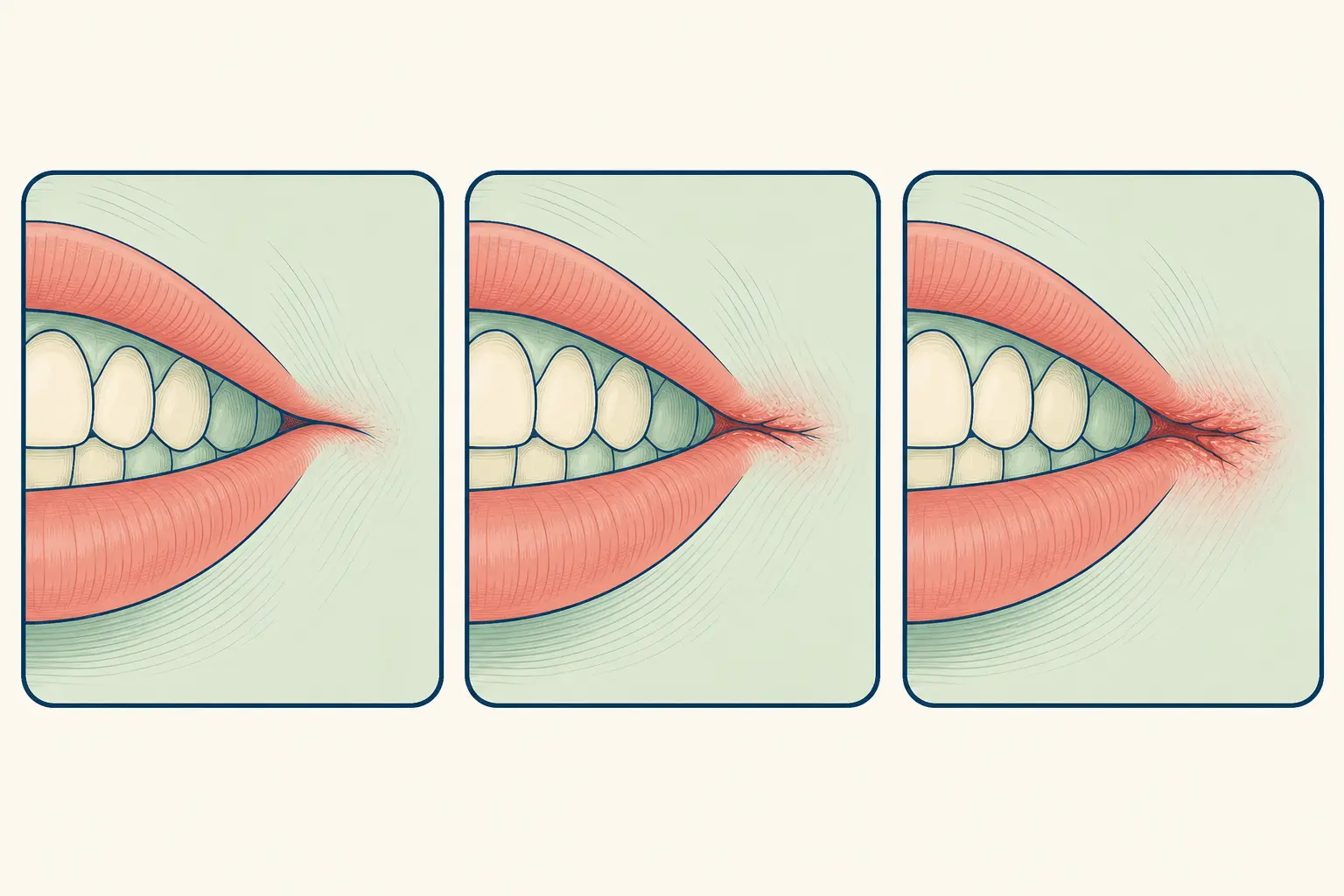
Angular Cheilitis dental educational illustration

What the change looks like
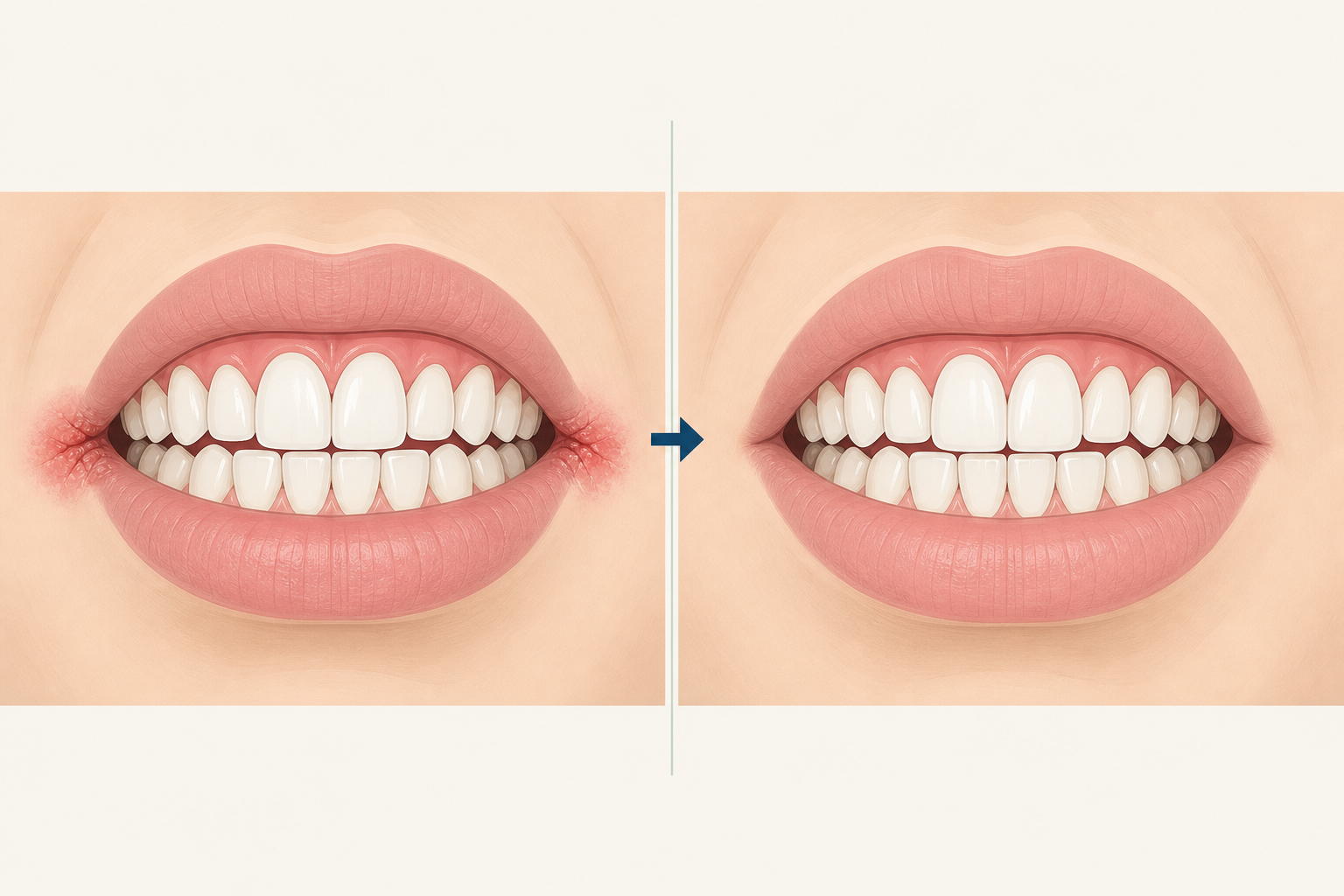
Illustrative diagram: Angular Cheilitis
Illustration — a representative diagram, not a patient photo.
The DN First Look799 AED
Book The DN First Look

What does angular cheilitis feel like?

Common corner-of-mouth findings
FindingWhat may be noticed
Skin changeRedness, cracking, soreness, or crusting at a mouth corner.[1][2]
MovementOpening the mouth can stretch the split and cause stinging.[1][2]

[1][2]

What causes angular cheilitis?

Angular cheilitis can involve moisture, irritation, and infection at the mouth corners. Saliva collecting in the folds can keep the skin wet. Contributing factors vary, so recurrence should prompt a review of the mouth, skin, habits, and relevant health history rather than assuming one cause.

[1][2]

How can angular cheilitis change?

The corner may become irritated, then crack and develop crusting. It can improve and return if the contributing irritation remains. A persistent split, spreading redness, or repeated recurrence deserves diagnosis so treatment can match the cause.

[1][2]
Typical change to discuss
ChangePatient question
New crackDid saliva, licking, irritation, or another change precede it?[1][2]
Recurring crackHas the cause been checked rather than treated repeatedly?[1][2]

[1][2]

When should the corners of my mouth be checked?

Arrange an assessment when cracking is painful, persistent, recurrent, spreading, or accompanied by other mouth or skin changes. Review is especially useful when a product has not helped or when the diagnosis is uncertain. These signs describe the need for examination, not a diagnosis by themselves.

[1][2]

How is angular cheilitis diagnosed?

A clinician examines the mouth corners and asks about timing, recurrence, irritation, saliva, and previous treatment. The appearance can overlap with other inflammatory or infectious conditions. Diagnosis may therefore include a review of contributing factors before a treatment is selected.

[1][2]

What treatment helps angular cheilitis?

Treatment depends on the cause and may include reducing moisture and irritation, protecting the skin, or using targeted treatment when infection is identified. A recurrent case may need a wider review. Follow the treatment instructions given after examination and do not keep applying an unconfirmed medicine to a persistent crack.

[1][2]
Treatment discussion
SituationWhat may need discussion
Irritated cornerReducing moisture and irritation may be part of management.[1][2]
Recurrent or unclear caseExamination can guide targeted treatment and further review.[1][2]

[1][2]

What should I ask about assessment cost in Dubai?

Treatment targets the cause of cracked mouth corners, with protective measures and treatment for infection or nutritional deficiency when those factors are present.

[1][2]

Can angular cheilitis cause problems?

Cracks can hurt when the mouth opens and may recur when irritation continues. Persistent or spreading inflammation should be reviewed because treatment depends on the cause. Pain, bleeding, or a changed lesion makes direct examination more important.

[1][2]

How can I reduce recurrence?

Follow advice that reduces moisture and irritation at the mouth corners, and avoid licking or repeatedly disturbing a crack. If the problem returns, arrange review to identify the contributing factor. Prevention advice works best when the diagnosis has been checked.

[1][2]

Frequently asked questions

Why does angular cheilitis keep coming back?

Recurrence can reflect continuing moisture, irritation, infection, or another contributing factor, so repeated cases need assessment.

[1][2]