
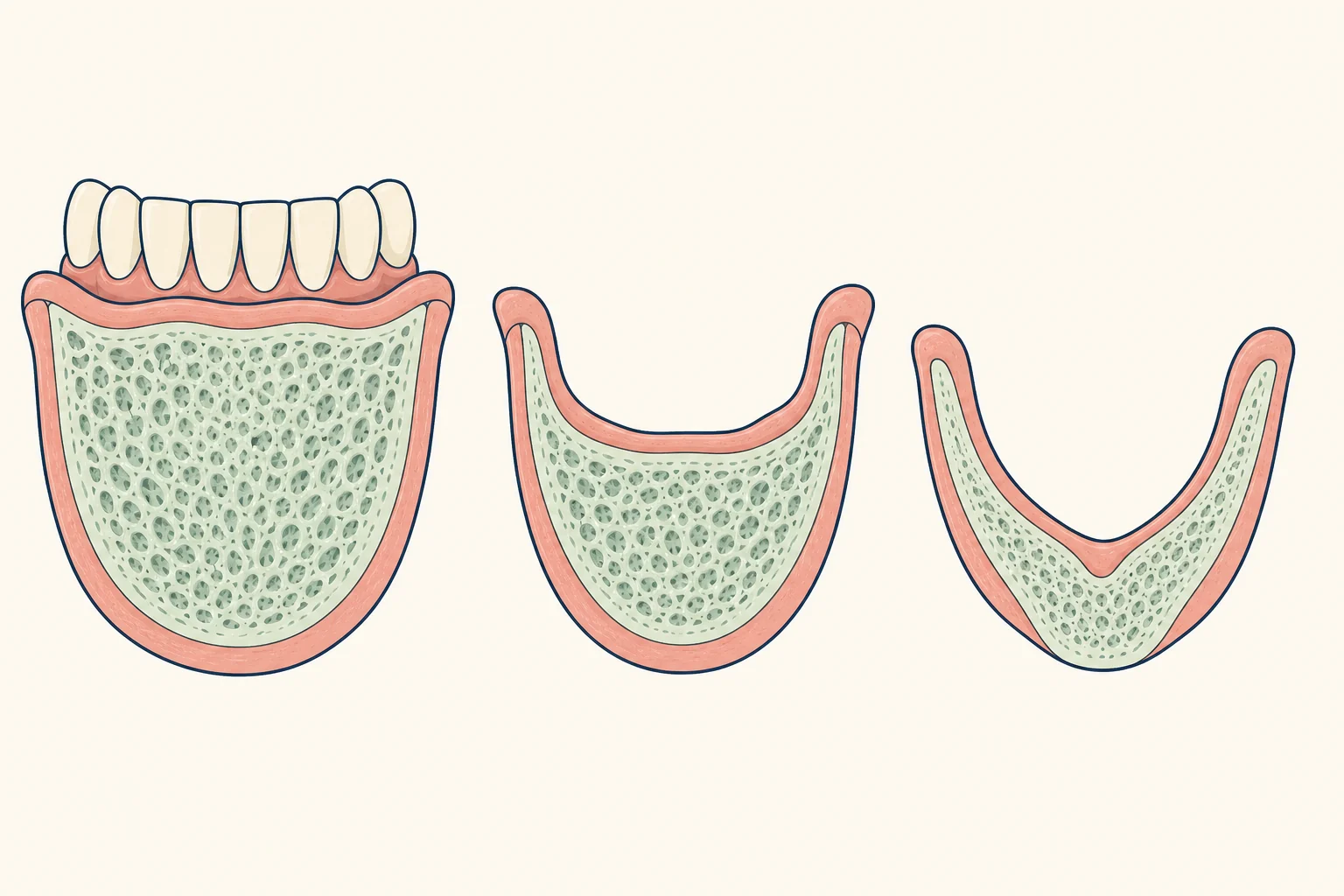
What the change looks like
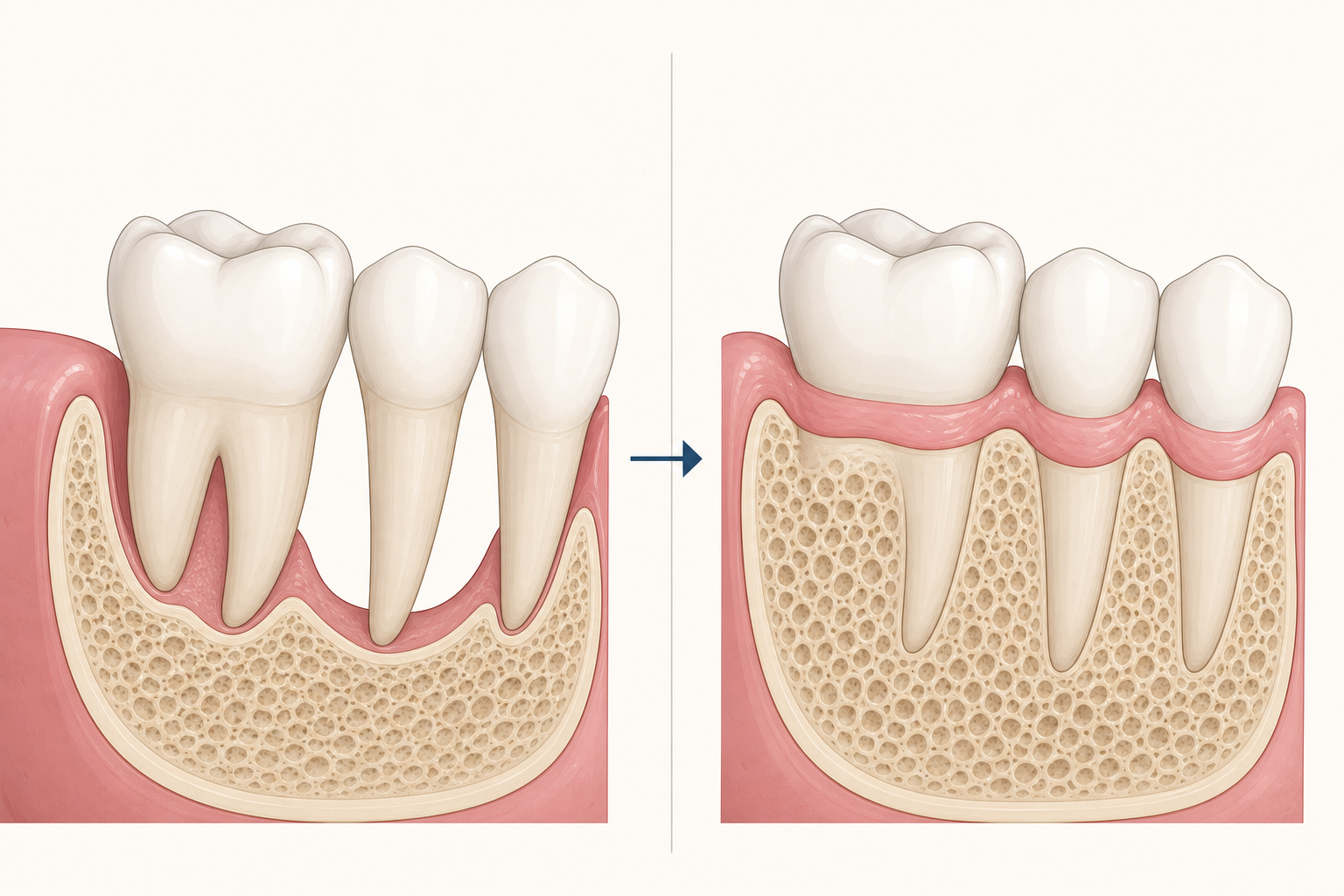
What does alveolar ridge atrophy feel like?
Why does the ridge shrink?
The ridge can resorb after teeth are lost. Age, traumatic damage, disease, osteoporosis, mineral-metabolism disorders and hormone imbalance are among the factors linked with the amount of resorption.
[4]How is ridge loss classified?
What increases the chance of ridge loss?
Full or partial dentures supported by mucosa, or by mucosa and gingiva, are associated with more extensive ridge resorption than partial dentures supported by gingiva and mucosa.
[4]How is it diagnosed?
How is it treated at different stages?
When the upper-jaw sinus limits implant placement, options described include short implants, sinus lifting and bone augmentation. Ridge preservation after extraction may reduce the loss of ridge volume before delayed implant placement.
[4]What affects the cost in Dubai?
Planning may include implant placement alone or may include sinus lifting or bone augmentation when the available anatomy requires those procedures.
[4]What can happen if bone loss affects implant planning?
The lower jaw's inferior alveolar canal contains a nerve and artery. Injury during implant placement can cause pain, altered sensation or excessive bleeding; upper-jaw implant surgery can also perforate the maxillary sinus.
[4]Can ridge loss be reduced?
Frequently asked questions
Why can a missing tooth change the shape of my jaw?
After teeth are lost, the jaw ridge can resorb. Removable denture wear is also associated with ridge resorption.
[4]